Latest news

Setting the stage in the outback - 3/9/2010

Alice Springs, Australia.- After an absence of near seven years, the big bags return to the center of Australia. Since the first days of Febraury, a bunch of scientists and technicians from United States had " flooded" the renewed facilities of the Australian Balloon Launch Station located in the north sector of the Alice Springs Airport. They will took part in the first campaign held at the site since the last launches (devoted to test an early design of the ULDB balloon carrying also an experiment called "Nightglow") performed by NASA's balloon program in 2003.

Between 8 and 12 of Febraury arrived to Alice Springs the sea containers with all the CSBF outfitting materials and equipment. That included also an air shipment to transport equipment coming from the LDB facility in Antarctica. That same week arrived the CSBF technical crew which almost inmmediatelly started the wiring of the main services (telephone, internet, power, and so on) in both the old and new integration buildings, and the installation of the telemetry station. These tasks were all completed completed by 26 February, as well the setup of UPS units in all areas and the installation of the Telemetry antenna.

Next step was to return to an operational status several launch items that were stored permanently in Alice Springs as the launch spool, the balloon trailer and the movable crane that will be act as launch vehicle.

The campaign will include three launches, for the benefit of several Universities in the United States. The first team to arrive to the base was from the University of California, Riverside in charge of TIGRE (Tracking and Imaging Gamma Ray Experiment) a Compton telescope of new design. It is composed of layers of double sided silicon strip detectors that detect charged particles passing through the detector, and layers of cadmium zinc telluride strip detectors. This configuration allows TIGRE to detect large angle Compton scatter events, greatly enhancing the instrument's efficiency, and providing the ability to perform as a gamma-ray polarimeter.

This will be the second flight of TIGRE after a first engineering flight performed at Fort Sumner in 2007. As far as we know, TIGRE was assigned with the first place in the launch list. After the payload surface shipment arrived to Alice Springs the science group started the integration process which is being completed now. A first probable date for launch is the last week of March.

The second team to arrive at the field was from the California Institute of Technology in charge of the NCT (Nuclear Compton Telescope) which as our clever readers guessed is another Compton telescope but with a diffrent aproach than TIGRE: NCT uses twelve 3D imaging, high spectral resolution germanium detectors enclosed on the sides and bottom by an active bismuth germanate well. The core of its working principle is that measuring the position and energy of the interactions of a photon that enters the instrument with high precision, it can be reconstructed through the Compton formula to determine the initial photon direction to within an annulus on the sky. The main goal of the team for this third flight of the instrument will be to observe the Galactic center.

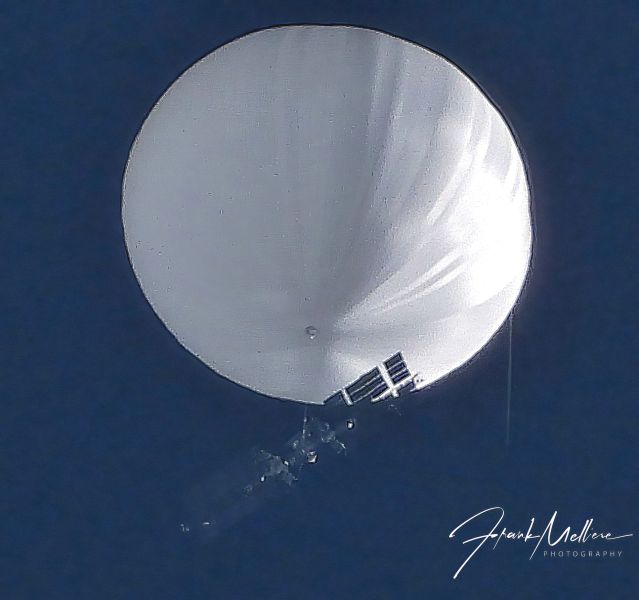
The major part of the payload traveled all the way from United States by ship, but the core of the instrument, the Cryostat arrived to Sidney in a plane with Eric Bellm, a undergraduate student of the NCT project, who made a 3 day trip to Alice Spring to carry it safelly. A detailed account of the trip as well all the news from the campaign can be read in the fantastic blog Dispatches from the Field. By the way we wish thanks to Eric by the awesome picture he share with the world and that we used to ilustrate this newsitem.

The last team to set foot on the base was from the Marshall Space Flight Center, responsible of HERO (High Energy Replicated Optics) the first X-Ray telescope aimed to obtain focused images of astronomical X-ray sources at hard X-ray energies (20-75 keV). The key component are the optics, which are full-shell electroformed-nickel-replicated mirrors coated with iridium to enhance high-energy reflectivity. Althought the payload reached Melbourne, it was not possible to send it from there to Alice Springs due to the bad weather conditions in the area. Also the zone of Alice Spring was hit by severe storms that provoked some flooding around the city, delaying a bit the arrival of the helium cilynders coming from Darwin (in the north part of the country). Initially the shipment was meant to be send to Alice Springs by rail, but the line was closed in several points after the storm and was necessary to switch to road transportation.

Stay tuned for additional data soon.

More information:

:: Australia 2010 campaign page at Columbia Scientific Balloon Facility web site
:: Dispatches from the Field a BLOG by Eric Bellm of the NCT team

More insights on Red Bull Stratos project - 2/26/2010

Santa Monica, California.- On Febraury 23, the scientific team of the Red Bull Stratos project released additional information on the attempt to break several records by the Austrian skydiver Felix Baumgartner. The project made a worldwide presentation on past January (see our news section) and since remained silent on releasing more details of the ongoing effort.

The very complete press package now available at the Stratos website, includes a detailed account of the dangers that the Austrian will face jumping from 120.000 feet, pictures and video of the test in high altitude simulation chambers as well offers more insights on several aspects of the mission.

As occur on these enterprises, there are a lot of things still undisclosed, but the few ones that came to light with this news update, are interesting enough to deserve our own update.

The first revelation of importance is that the program is more complex than anticipated being as stated in the press release "a graduated, multi-stage test program". That means that besides the wind tunnels and low-pressure chambers tests being done by Baumgartner since last year, he will jump wearing his pressure suit from successively higher outdoor altitudes, allowing him and their analysts to assess the effect of the surrounding conditions -and his body's reactions- to make necessary adjustments for the main mission. If truly relevant data want to be obtained, this means that these jumps would be acomplished from altitudes nearing the one of the "big" jump. Altitudes only attainables by balloon. Taking account the balloon and helium price, this creates a dramatic increase in our initial guessing of project's costs.

On this regard Red Bull Stratos will be unique: no other pilot -outside a military program like Kittinger's EXCELSIOR- has had the chance to perform such an incremental approach. Even some of the balloon manned Air Force and Navy programs lacked of it: we would remember as an example the calculated risk took by meteorologist Bernard Gildenberg to launch MANHIGH II when a storm front was coming to the area of flight to avoid a possible program cancellation when the project was empty of funds for to sustain a longer campaign, or the almost heroic effort made by the MANHIGH III pilot Clifton McClure to repack his personal parachute inside the sealed capsule, with the balloon fully inflated overhead and no backup available, also to avoid a probable flight abort. Thus, the first lesson to be learn here is that in the particular field of the manned high altitude balloon flights big money, makes big differences. A difference between success and failure that often means a difference between the life and death.

Back to the press release, it was also disclosed what would be the life support of Baumgartner until reaching the top of the stratosphere: the capsule. Based on safety considerations -and again null money restrictions- the team has choosen a double approach: instead of making the jump from an open gondola, the pilot will be launched wearing the full pressure suit, inside a pressurized gondola as well allowing that any failure of one of the systems would not risk at once the pilot's life.

According to the information made public, the balloon is expected to climb during three hours, entering the stratosphere at approximately an hour into the ascent and once at a height of 120,000 feet, the pilot will depressurize the capsule and inflate his pressure suit. At left we can see an image (click to enlarge) of Baumgartner along with a team from Sage Cheshire the aerospace company in charge of the technical managment of the project and the builders of the capsule. The picture was taken during a pressure test held in past November outside the company's facility in Lancaster, California, 2 miles north of Palmdale regional airport and near the legendary Edwards AFB in the Mojave desert. The capsule's preparation will require at least one unmanned balloon mission to test it in flight, along with the parachutes, crush pads and all the associated rigging including the high resolution cameras to document the event. No known date and place were informed yet on it.

Finally, the press release extends around the dangers that Baumgartner will face. On regard these, and leting aside the known factors of both low pressure and temperature, the science team identified several issues: the tendency to spin uncontrollably (to the point of unconsciousness as almost fatally suffered Kittinger on the EXCELSIOR I jump) and sudden changes in air pressure and resulting instability in the "transonic" speed range. In regard this, is of particular concern the "shock-shock interaction", a condition in which shock waves collide and create a reaction not unlike an explosion's blast wave that sometimes in the past caused aircraft to go out of control or break up. The two proactive measures taken to lessen these factors are the "choreographed step-off" from the capsule to start the fall in an optimal position during the initial and less controlable portion of the mission and a "drogue parachute" developed and tested to stabilize the pilot -if necessary- even at supersonic speed.

For more detailed information, check out the websites at the links bellow.

A final thougt: merely a few weeks after Obama's announce of NASA's fund cuttings and the cancellation of the Moon return program would be wise to pay close attention to the Red Bull effort. Perhaps should not be surprising to find that in a not too distant future this will be the way to pursue space programs: multidisciplinary efforts by various companies partering with a common purpose, counting with a significant private funding as booster and a well timed and worldwide publicitary show around.

Let's see.

All pictures were kindly provided by Digital News Agency a UK based company that manages all the media and press for the project.

More information:

:: Red Bull Stratos official site
:: Red Bull Stratos page at Sage Cheshire web site

Seychelles: three balloons on the air - 2/22/2010

Mahe, Seychelles Islands.- Today was launched from the Airport of Mahe, in Seychelles Islands the third balloon of the technological campaign called "pre-Concordiasi". It carried a driftsonde payload, with dropsondes to be ejected by telecommand. The driftsonde system main goal is to obtain meteorological information on low explored zones. The balloon put airborne today have a payload similar to the one launched on Febraury 8 that kicked off the campaign (image at left).

Previously, over the weekend -exactly on Febraury 19- another balloon was launched, this time carrying a scientific payload devoted to study the ozone depletion and composed of two instruments: a particle counter built at the University of Wyoming, and an ozone sensor developed at the Laboratoire de Meteorologie Dynamique in France. This is the first time that these two instruments are launched together.

The path of the three balloons in flight can be followed in almost real-time using the "Google Earth" program. The instructions to do so are here. Nevertheless, if you don't have it, an static map of the path of each of the balloons, can be seen clicking here.

This information was kindly provided to us by Mr. Albert Herzog from the LMD.

Launch of superpressure balloons in Seychelles - 2/9/2010

Mahe, Seychelles Islands.- Yesterday started at the Airport of Mahe, in Seychelles Islands a technological campaign called "pre-Concordiasi" to launch three super-pressure balloons, two of them of the driftsonde type, with dropsondes to be launched on demand to obtain meteorological information. The objective of the campaign is to fly these balloons in the intertropical belt to provide useful information on the performance of the various components which later will be used during the full fledged Concordiasi campaign meant to launch 20 balloons, from Antarctica in next October.

The French team arrived at the island in January and after some weeks of preparations in a hangar located at the international airport, which is used as integration hall, yesterday Febraury 8, succeeded in perform the first flight. The balloon was released at 15:39 utc (19;39 local time) and currently is flying at 20 km of altitude in a somewhat erratic pattern around the islands as can be seen in this map.

Along with the technical systems onboard balloons to be launched, also will be tested for the first time the new Balloon Control Centre (image at left) built at CNES's Toulouse Space Centre in France to survey the developmenmt of long duration missions. Once a balloon is launched it is tracked initially by the ground station established at the launch site, but once the craft reaches a nominal height the control is handed over to Toulouse which establish a real time link with the balloon and his payload throught an Iridium based communication system. This allow the permanent monitoring of the mission, the reconfiguration in flight of the experiment and the retrieval by the scientific team of the data obtained in real time. The control center will be operational from October 2010 when the Concordiasi effort will kick off at McMurdo Station.

This technical campaign was originally planned for April 2009 but experimented difficulties in the final ground validation of the new systems, forcing to postpone the validation campaign, as well as the scientific campaign.

More information:

:: Concordiasi official site at MeteoFrance server
:: Pre-Concordiasi page at LMD web site

Noted Caltech physicist dies at 52 - 1/27/2010

Pasadena, California.- Andrew Lange, a well known Professor of Physics at Caltech, died at the age of 52. According to the information published yesterday by Los Angeles Times apparently took his own life on last Friday. Housekeepers of an hotel in Pasadena where Lange checked in on Thursday, found him dead the next morning, apparently due to asphyxiation, said the Police.

Lange had been at Caltech since 1993. He graduated from Princeton University with his BA in 1980 and received his PhD from UC Berkeley in 1987. He first came to the Institute as a visiting associate in 1993-94, was appointed a full professor in 1994, and was named the Goldberger Professor in 2001. In 2006 he was named a senior research scientist at the Jet Propulsion Laboratory and in 2008 was appointed chair of the Division of Physics, Mathematics and Astronomy.

The principal focus of Lange's research was the Cosmic Microwave Background (CMB) -a gas of thermal radiation left over from the Big Bang- that filled the entire universe. On this regard he was part of several balloon-borne experiments even before his stay at caltech. Recently he was principal investigator of the american segment of BOOMERANG, a CMB instrument built by a consortium of several Universities around the world (mainly from US and Italy) that in 1998 flew 10 days around the south pole. The mission made headlines in the scientific community after measuring CMB temperature anisotropies with high signal to noise ratio, determining that the geometry of the universe is "flat".

In 2006 he and his Italian partner on the BOOMERANG project Paolo de Bernardis, were awarded with the Balzan Prize in Astrophysics "for their contributions to cosmology, in particular the BOOMERANG Antarctic balloon experiment" and in 2009 he alone received the Dan David Prize on Past Astrophysics-History of the Universe.

More information:

:: Official note at Caltech Today information service
:: An interview with Andrew Lange at ESA website on regard the Boomerang project

Launched the first stratospheric balloon of the year - 1/25/2010

Kiruna, Sweden.-As occur each January, the first balloon of the year was launched from the ESRANGE base located near the town the Kiruna, in the Arctic Polar Circle. The mission started 1:46 local time (0:46 UTC) and after a nominal climbing phase the balloon (with a volume of 400.000 m3) started the levelled portion of the flight maintaining a height of 34 km. After near 14 hours of succesful scientific observations, the payload was separated from the balloon, when flying over Finland.

The gondola impacted the ground 40 km West of Kusamo in Eastern Finland, as can be seen in the image at left.

The balloon transported a gondola containing two instruments: MIPAS-B (Michelson Interferometer for Passive Atmospheric Sounding - Balloon) a balloon-borne version of an advanced Fourier Transform InfraRed (FTIR) spectrometer onboard the European satellite ENVISAT which allows precise limb emission sounding of chemical constituents related to the stratospheric ozone problem and to the greenhouse effect. Complementary, was present on the gondola TELIS (Terahertz and submillimeter LImbSounder) a helium-cooled three-channel heterodyne spectrometer developed at the DLR Remote Sensing Technology Institute. The present flight was a continuation of a similar mission performed in March 2009 to make time dependent measurement of trace gases and cloud properties in the upper troposphere and stratosphere with various remote sensing techniques inside the chemically activated vortex. Also was an objective to perform in-situ validation of Envisat data and coordinated flights with research aircraft that are being part of the Reconcile EU-FP7 arctic campaign at the Arena Arctica facility in the Kiruna airport.

The balloon opeartions were performed within the framework of the EuroLaunch co-operation between the Swedish Space Corporation in charge of Esrange and DLR/Moraba.

More information:

:: Home page of MIPAS-B at University of the State of Baden-Wuerttemberg website
:: Home page of TELIS at DLR website

Attempts to break Kittinger's record this year - 1/22/2010

New York City.-A few hours ago, in NBC's TODAY one of the most popular morning shows of the american TV, was presented a new attempt to break the record of the highest free-fall parachute jump hold since August 16, 1960 by then USAF Captain Joseph W. Kittinger Jr.

The surprise was the presence of Kittinger itself in the studio giving his backing to "Red Bull Stratos" the project being carried out by the Austrian extreme sportsman Felix Baumgartner. He plans to jump from a capsule hanging from a stratospheric balloon at 120.000 feet, wearing a full pressure suit, and from a yet undisclosed spot in the United States. Over the years, Kittinger was allways reluctant to support and even to be associated with the earlier attempts to break his record, specially on regard human safety issues.

Visit msnbc.com for breaking news, world news, and news about the economy

As someone pointed in a ballooning specialized list a few hours ago, "...he must see something promising in the protocols of this attempt...". Bellow can be seen a video of the presentation.

This year marks the 50th anniversary of the EXCELSIOR III jump, and accordingly, Kittinger is planning to celebrate it among other thinghs with the publication of an autobiography entitled "Come Up and Get Me" a phrase he replied by morse code to the ground control of the MANHIGH I mission when he was ordered to descend. The expression brought fear to her superiors about a possible change in behavior from lack of oxygen when in fact it was a humorous expression bordering on the morbid.

The book was wrote in collaboration with Craig Ryan, author of several books on the subject and is prologued by the first man to walk on the Moon: Neil Armstrong.

¿And what about the former efforts?

Lets see what occured with other similar projects in the past. They are ordered taking account of the closeness to the goal achieved.

Project Strato-Jump run by Nicholas Piantanida a truck driver and parachutist from New Jersey. He tried three times. The first on October 23, 1965 failed when a wind shear ripped off the top of his balloon and he had to bailout safely to ground. The second one on Febraury 2, 1966 also followed a similar fate when he reached 123,800 feet, but could not disconnect himself from oxygen tanks to jump. He was to be disconnected from the balloon via radio signal and landed with the gondola under parachute. The third and fatal one attempt was on May 1st of that same year. While he was ascending, his pressure suit failed suffering perhaps the most severe case of explosive decompression ever recorded. The accident leave him in coma until August 29, 1966 when he died at the age of 34 years old.

Le Grand Sault (the big jump in english) run by Michel Fournier a 66 years old, military parachutist and athlete. Originally planned to be done on French soil, the jump moved to Canada in 2002 when authorities refused to allow the jump. The project had three attempts. The first in 2002 when the weather forced to cancel the campaign and in 2003 when the balloon developed a tear during the inflation and became useless before complete the operation. The most recent try was also unsuccesful: when the pilot was seat in his capsule ready for take off, after releasing the balloon it moved to the crane which was holding the gondola but instead pick it up to the sky, it ascended alone without his cargo. The failure was traced to a "squib" which experienced an unexpected firing, setting the balloon free from the capsule. After that Fournier had to delay the launch several times due to budgetary issues. The next attempt was announced for next May.

QinetiQ 1 a project to send two pilots, Andy Elson and Colin Prescot wearing Sokol space suits to surpass the current record that Malcolm Ross and Victor Prather set in the Strato-Lab V mission in 1961. Althought it was not a jump mission it needed almost identical measures to assure the survival of the pilots in the near space environment. A first attempt in 2002 was cancelled due to adverse high altitude weather while the second try took place a year later off the coast of St Ives (United Kingdom) from a military ship. The launch morning while the balloon was being inflated, helium began to escape from the envelope through a tear along one of the seams forcing to halt the operations. After that setback the project never recovered and was finally cancelled.

Stratoquest run by the parachutist Cheryl Sterns. Still no attempt was made. After being very active promoting his project at the beginning of the 2000 decade, ultimatelly she retired from the "competence" althought she still is maintaining his effort alive.
According to his own words "she is ready to prepare her to safely meet this challenge but the most difficult aspect is funding...". No certain date of a probable first attempt.

Space Jump run by Steve Truglia a stuntman from England. He never set a certain date for his attempt. In 2008 while Fournier was near to achieve his goal, he stated on his website that he was ready to make it, but he will wait to know the altitude of the French's jump to go a little higher and beat him. After the Fournier failure he also remained silent and no mention was made again to any other attempt. Let's see if all the publicity around Baumgartner make him to set a when, where and how.

Surely this will be a great year for ballooning. Or at least we hope so.