
Since the very beginning of the scientific research with stratospheric balloons, Italian scientists were among the pioneers in their use. As early as 1952 thanks to the balloons provided by their colleagues from Bristol University, they measured cosmic radiation coming to our earth from space. These first experiments transported emulsion stacks (some of them very big) and later more sophisticated apparatus like spark chambers and detectors. These flights were carried out from different locations in continental Italy like Milan, Padua and even from the Italian island of Sardignia.
By the end of the 60's as the complexity and weight of the experiments started to increase, an idea was born in the research community: Italian science needed to have a dedicated balloon launch facility.
One of the persons who paved the way was Prof. Livio Scarsi, a well respected astrophysicist who worked at Milan's Laboratorio di Fisica Cosmica e Tecnologie Relative headed by Giuseppe "Beppo" Occhialini. In the late 60's Prof. Scarsi moved from Milan to Palermo (Sicily) to lead a small Research Group active in the field of high energy astrophysics with a particular interest in balloon experiments.
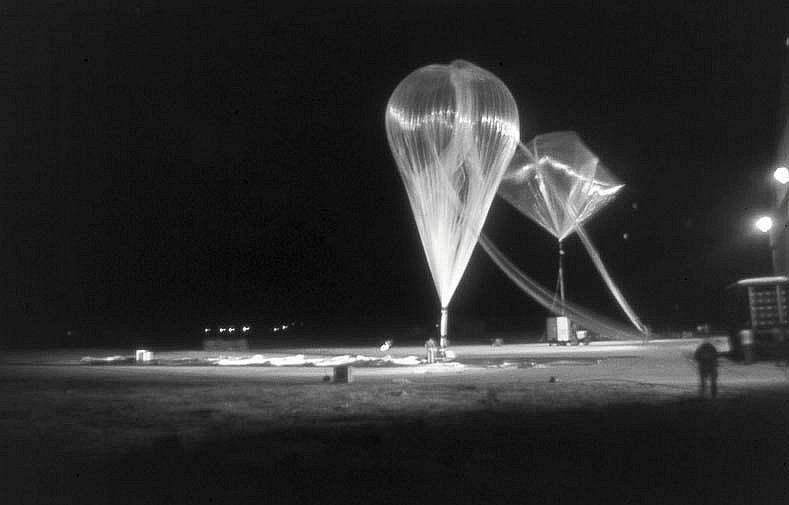
From a geographical point of view the Sicilian territory seemed to be perfect for this activity: it is sourrounded by sea, have open land spaces, a low population density and at the time, was far from important air traffic routes. Thus, between late 60's and early 70's Scarsi's group started to launch balloons from the Trapani-Birgi airport located 13 kms from the city of Trapani, close to the Mediterranean shore. By that time, the balloons and launch services were provided by the balloon division of the French Space Agency CNES. Once launched, the balloons drifted over the sea and at the end of the flight the payloads were recovered from the water surface by a vessel of the Marina Militare Italiana (Italian Navy). At left we can see one of such launches (click to enlarge).
The airport is strategically located on the north shore of the Sicily strait, a place which concentrates all the maritime traffic between east and west Mediterranean Sea. By this reason in early 70's the Aeronautica Militare Italiana (Italian Air Force) built an important Military base in an adjacent terrain. Soon was clear that the only way to avoid interferences with the already established civilian air traffic and the additional military flights would be to move the balloon launch operations to another place. Thus, in summer 1971 the last mission was performed at Trapani-Birgi, closing that part of the Italian scientific research with balloons. Nevertheless, a new chapter was ready to be opened.
From the world war to the edge of the space
The attention of those willing to establish a full time facility was soon captured by an abandoned military airport located not so far from Trapani-Birgi.
It was built at the end of the 1920's decade, and played an important role in the Second World War, as permitted a close control of the strategic Sicily strait. Also was used to support movements of Italian troops to Africa and as home base for German and Italian planes which protected transport convoys.
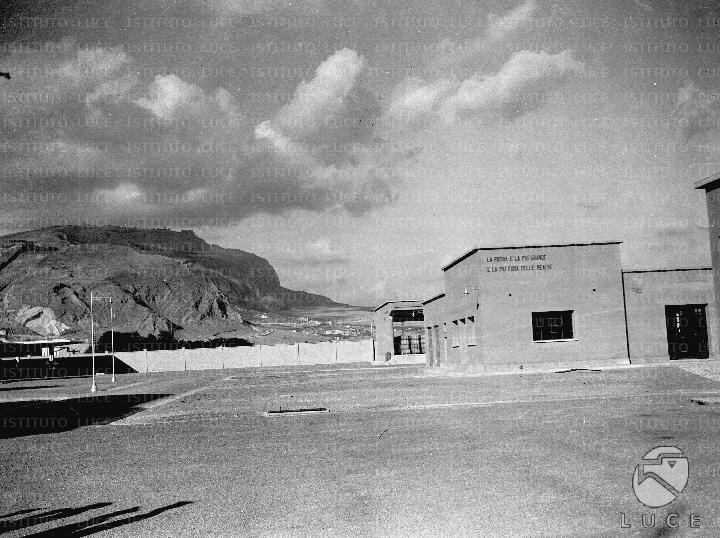
After the war, the air station was still in use, but the proximity of the city of Milo and inadequate facilities that were not appropriate for new aircraft operating there at the time, forced to move all activity to a new airfield built in Cinisi and so, Trapani-Milo was abandoned.
The airport occupies a vast area in the southern part of Monte San Giuliano. Sheltered by the huge Mount Erice, it has good conditions with regard to wind both low and high altitude, allowing the development of flights over the sea. In terms of infrastructure it was in poor condition but fairly usable. This was essentially due to the many Allied bombing raids which suffered during the war -of which are still visible signs- and years of subsequent abandonment.
In 1972, the Servizio Attivitá Spaziali (Space Activity Service or SAS) following directives of the Consiglio Nazionale delle Ricerche (National Research Council or CNR) agreed to proceed with the reconvertion of the old airport. Those were years of great expansion for Italy's research in space matters. Aside the fact that official funding was absorbed mainly by "real-space" efforts like the SIRIO satellite project, small amounts of money were also available for other initiatives, like the balloon program. Thus in 1975 was received a initial injection of state founds nearing 90 millions of lires to materialize the project of the launch station.
The Trapani-Milo base -as will be know to differenciate it from the former launch site- was formally inaugurated on 24 July 1975. His first director was Mr. Marco Malavasi.
A transatlantic launch station
Since the dawn of the scientific ballooning, several missions instead of ending as planned, managed to stay aloft for longer times and crossed the Atlantic to Europe and viceversa. There are testimonies of rogue american balloons that traveled as far as Norway, England or Africa, as well balloons launched from Europe -mainly France- found in far places as Puerto Rico or Montana. However, these happenings were merely accidental. Nevertheless, in 1974 a exploratory project was started between Italy, the United States and United Kingdom to study the possibility to perform a transatlantic crossing using balloons. Those were times when astrophysicist were eager to obtain longer exposure periods for their instruments at near space altitudes to try to detect very rare phenomena in the high energy spectrum domain, so the idea soon obtained a wide support from the scientific community. The plan was to launch the balloons from the Trapani-Milo base in summer to allow them to be carried westward by the moonsonal winds. After crossing the Mediterranean basin and then passing over Spain and Portugal, they would cross the entire Atlantic Ocean to finish his flight on the United States, where they would be terminated and recovered if possible in a low populated area.
A Memorandum of Understanding was signed among the states that participated of the endeveaour, drawing clear responsabilities. The United States, through the National Science Foundation, funded the NSBF (National Scientific Balloon Facility) to furnish the balloon, helium needed, launch hardware and crew and took care of the entire American segment of the mission. Great Britain, through the British Science Research Council, was in charge of the payload, which was an experiment from the University of Bristol on cosmic X-rays. Finally on the Italian part, aside the use of the base's facilities and the availability of a full supporting ground operation crew, an important collaboration was received from the Aeronautica Militare which offered radar coverage over the initial portion of the mission.
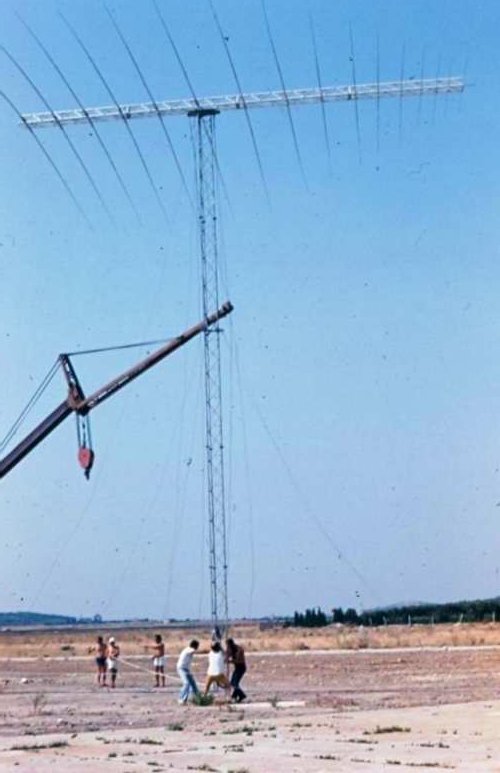
The tracking of the flight was done using the worldwide OMEGA navigation system while for telemetry and scientific data transmission was used a low bit-rate HF system which except for some gaps in mid-ocean, worked acceptably well. One of the HF receiving stations was located at Trapani, while in the other side of the Atlantic the NSBF was allowed to use the facilities of the Naval Research Laboratory in Chesapeake Bay, Maryland. At left above can be seen a picture of the antenna array at Trapani while being mounted (click to enlarge).
Exists a never confirmed history which points that at some time during those years one of the transatlantic balloons launched from Sicily, "slipped" unnoticed by air traffic controllers into the United States east coast air space
The first balloon was launched on 5 August 1975 and performed the crossing in 81 hours, traveling near 8.500 kms to Lexington, Kentucky, where the payload was recovered. With this historical mission, a double landmark was set. First was demonstrated the feasibility of performing such a mission with a heavy balloon and second, as a result of the succesful flight the budget assigned for the Trapani facility was increased by 300 millions of lires. The activity of the base became progressively more extensive since several scientific groups at the time expressed great interest to use the "long duration balloon facility" -as often was denominated in the specialized literature- to expose their instruments.
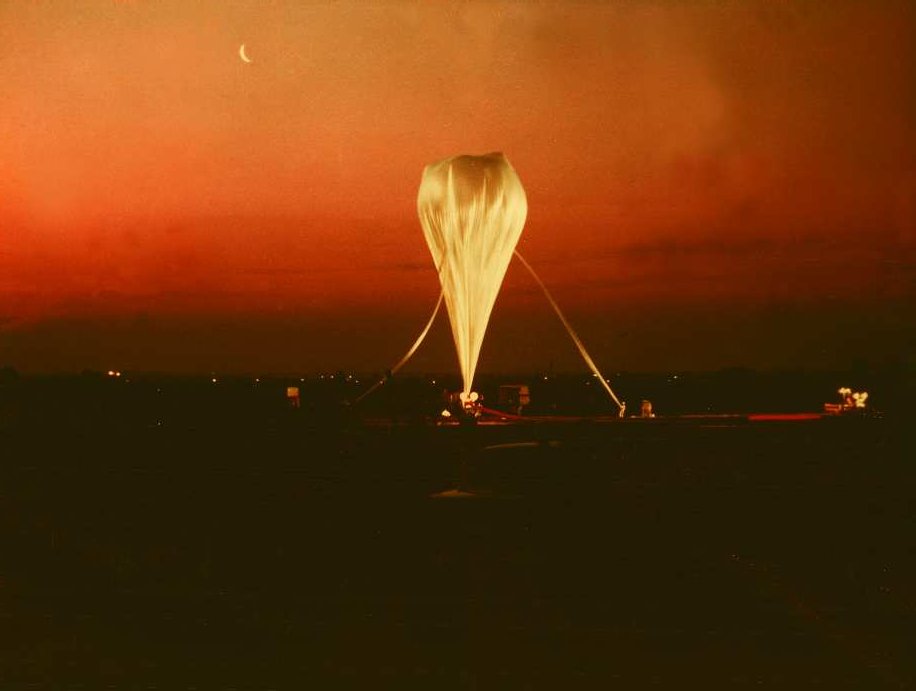
A second campaign the next year, performed two more flights which lasted 75 and 104 hours aloft. One of them -launched on 16 August- was carrying a multi-instrumented gondola with several experiments from Italian Universities. That mission made history because by chance during the flight was detected for the first time a radio frequency gamma-ray burst of non-solar origin. Above at right can be seen the pre-launch operations of the flight while the beautiful image below shows the balloon at dawn while being inflated (both images click to enlarge).
Beside the success, the intrinsec limitations of the low bit-rate data transmission system and the poor capability to send commands to the balloons, casted a shadow of doubt over the future of these kind of missions. The last attempt to perform a transatlantic flight took place in the summer of 1980. The payload was a large area Hard X-Ray detector known as HXR-80 developed at IAS-Frascati and was launched on July 19th. Nevertheless, a failure in the on-board navigation and telemetry system forced to bring it down over Spain before starting the Ocean crossing.
Exists a never confirmed history which points that at some time during those years one of the transatlantic balloons launched from Sicily, "slipped" unnoticed by air traffic controllers into the United States east coast air space. According to the history, this provoked the Air Authorities (FAA) to forbid the transit of any other balloon coming from the other side of the Ocean. Besides the lack of hard evidence on the matter, the tale is not totally incoherent with the policy of that times: in the early 80's NASA often reviewed their own domestic flights rules, and established very strong restrictions in regard of heavy payloads being flown over populated areas. True or not, after 1980 these flights were never intended again.
Transmediterranean flights: the ODISSEA agreement
Let's return back in time a couple of years. While the transatlantic balloon missions were the "stars" of those days, another flight scheme was implemented to offer to the scientific community long duration flights. Although shorter -if compared with the 3-4 days of the flight to United States- the launches performed from Sicily to Spain crossing the mediterranean sea in about 24 hours, proved to be not only more reliable and easy to implement but had, in perspective, a better science return and a much longer existence.
This is what was widely known as the "ODISSEA" effort which involved a three part agreement between Italy, France and Spain. By the Italian side -as ocurred with the former transatlantic missions- the collaboration consisted in the use of the Trapani-Milo launch base, all the necessary hardware, a ground crew and initial tracking after launching.
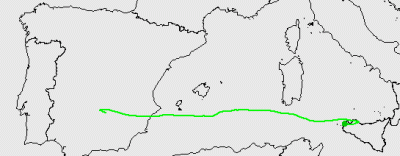
The French were in charge of the launch operation itself, providing the operational staff, the balloons and helium used. Finally the Spanish side offered trough the Comisión Nacional de Investigación del Espacio (CONIE) and after 1986 trough INTA (Instituto Nacional de Tecnica Aeroespacial) tracking/telemetry coverage over the Mediterranean sea using two stations, one located in the Son Bonet airfield in Palma de Mallorca (39º 36'N 2º 41'W) and the other in El Arenosillo (37º 6'N 6º 44'W), a launch rocket facility located near Huelva. CONIE/INTA also was in charge of the recovery operations once the payloads touched Spanish soil. For the rescue operations they counted with aerial support from the Ejercito del Aire which provided an helicopter based in Armilla Air Base in Granada, and in late years when recoveries were performed at sea from the Spanish Navy.
The initiative's name is -according to some sources- due to Mr. Armand Soubrier, chief of the balloon sector of CNES at the time, and was inspired in the infamous epic poem which Homer wrote in the eight century BC probably as a metaphore of the exploratory spirit fueling the balloon effort. But the relationship not ends there. If we see the launch record in the bottom of this page, we will find that some of the missions names are -as usual- acronyms derivated from the description of the scientific instruments itself (i.e: FIGARO which stands for French-Italian GAmma Ray Observatory) but others were named after characters found in Homer's masterpiece: ULYSSES, NAUSICAA, POLIFEMO, CIRCE or TELEMAQUE to name a few. Even the launch vehicle used in Trapani-Milo base to transport and hold the payloads during launches was baptized as "PENELOPE" honoring the faithful wife of Odysseus.
Like occured with the oceanic crossings, the flights were carried out in summer when the winds blow from east over a more or less straight line following the 38º parallel. Generally speaking, the major part of the flight was over open sea overflying land just at the end of each mission.
The first of such flights was launched from Trapani-Milo in August 6, 1977 traveling in 20 hours to Spain. That maiden flight marked the start for a succesfull cooperative effort between the 3 countries which allowed the realization of more than 40 balloon-borne missions for several laboratories and Universities from Europe and the rest of the world, in a program that spanned through the entire decade of 80's and the first years of the following. The Odissea agreement suffered in 1992 the retirement of the French, but far from ending, the transmediterranean balloon flights started a new phase. A phase which would be marked by an operative independence.
The modern era
In 1988 was created the Agenzia Spaziale Italiana (Italian Space Agency or ASI) which englobed all the space related tasks in the national order. Among the responsabilities of the new organism was the operation of the, by then, well established stratospheric balloon launch base of Trapani-Milo.
As already mentioned, the base was created primarily to perform the transatlantic flights in collaboration with NASA balloon program and later consolidated his activities under the Odissea agreement. During both cooperative efforts Italian teams developed the necessary "know-how" in all phases of the launch, flight, tracking and recovery process, so when in early 90's decade France withdraw from Odissea, Italy decided to take over the entire management of the balloon operations to allow the continuation of the transmediterranean flights.
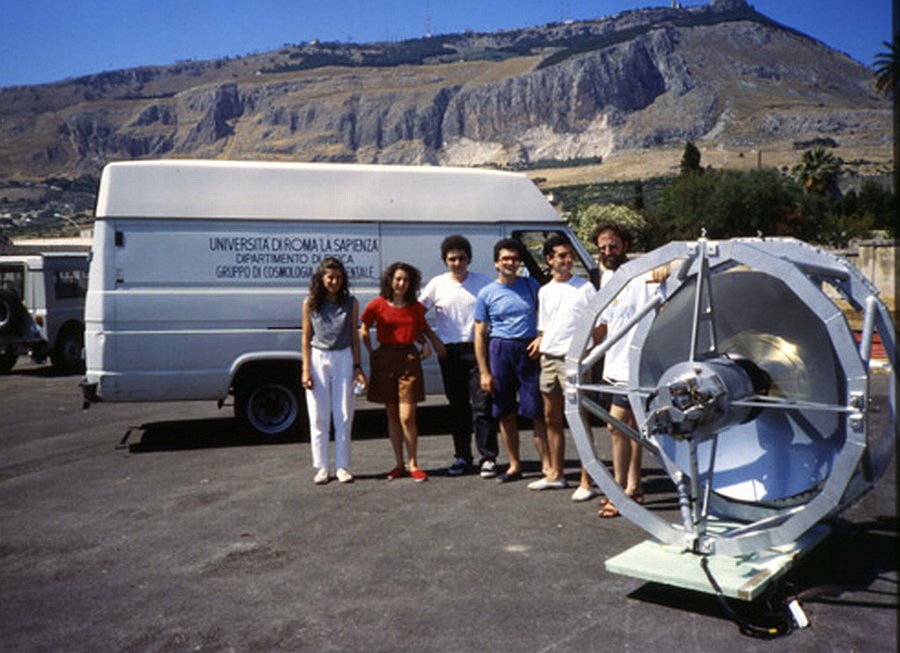
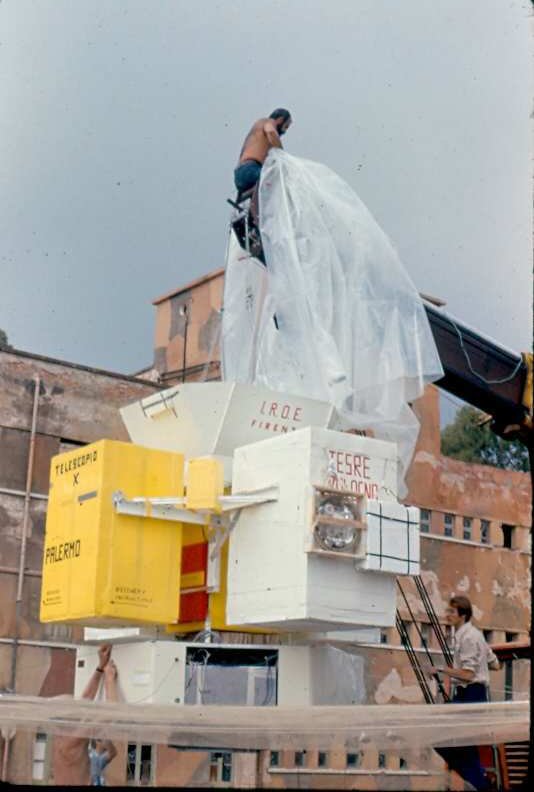
The first flight carried out under full italian control was the ARGO mission, developed by Rome University (La Sapienza), ENEA Frascati, and IROE-CNR. It consisted in a telescope built to detect anisotropies in the Cosmic Microwave Background at different angular scales. At left can be seen a picture of the instrument in Trapani prior to the flight (click to enlarge). The telescope was launched on August 4, 1993 using a one million cubic meter balloon being succesfully recovered 20 hours later in Spain by a local team. As a direct scientific result of the flight, high quality data was obtained while in the technical side was clear the fact that the Italian balloon program had matured enough to walk on his own.
Two years later a new kind of mission would be intended. As balloons launched from Trapani in most cases were flown over open sea spaces, at some point was studied the posibility to carry out balloon flights transporting instruments and payloads to be droped from high altitudes. During those years the French firm Aérospatiale was working on behalf of the European Space Agency (ESA) in a capsule (which resembled the Apollo capsule) known as the Atmospheric Reentry Demonstrator (ARD) designed to test and qualify new technologies and flight control capabilities for atmospheric reentry and landing. Although the full scale mission was projected to be tested in a real reentry from Earth's orbit after being launched by an Ariane rocket, a first drop test from a balloon was planned to be performed at sea.
The mission was comissioned to ASI by Alenia Spazio, an italian firm participating of the project which was in charge of the subsystem of Descent and Recovery. The balloon was meant to be launched from the Trapani-Milo base whith the release projected to be done over the sea near Marettimo island close to the Sicilian west coast. The mission's profile and the heavy nature of the payload forced to make several changes to the existent hardware and the incorporation of additional security measures to avoid any incident during the flight. This included a very precise forecast of meteorological conditions to rule out the risk of a sudden trajectory change from the projected landing zone at sea.

The capsule was integrated to a gondola specially built for ARD to allow the addition of telemetry hardware and ballast without affecting the craft's attitude. Also the flight train was carefully balanced to counteract any instability while the launch procedures were reviewed in order to guarantee security and reliability. At right we can see a picture of the ARD capsule prior to the 1996 flight (click to enlarge).
The first test was carried out in 1995 but a failure in the balloon prevented it to achieve the desire altitude/trajectory. Nevertheless the next year the mission was performed succesfully, marking a new milestone in base's history, which incorporated these drop tests to the base's portfolio of services in a regular basis.
The confidence and experience gained during the ARD launch campaign also redunded in the addition of other two launch schemes to the bases's flight services. The first called "local flights" are short duration missions carried out in "turnaround" periods when the stratospheric winds change their course and stall for a week or two, allowing minimal displacement from the launch point. The second launch scheme was established after years of studying the atmospheric conditions. It was found that during some months at a height of 20 kms the winds blown in one direction while at 40 km they blow in the inverse direction. This discovery led to the creation of the concept of "Boomerang Flights" which is a very common mission profile performed in several other balloon programs worldwide. After launched, the balloon is allowed to ascent only up to 20 kms, once leveled at that height (by valving some gas) it drifts with the prevailing winds traveling away from the launch site. After some time of flight -just before lossing the line of sight contact with the ground station- ballast is dropped by command to let the balloon reach a new ceiling at 40 km where it is caught by winds running in the opposite direction, making the balloon to return near the launch site for a less complicated recovery task. The first test flight of this technique took place in Trapani in 1998, although it would not be a widely used feature in later years.
Infrastructure of the balloon base
At the height of its activity (in late 90's), the Trapani-Milo base was one of the most advanced launch facilities for stratospheric balloons in Europe if not in the world.
Below can be seen an actual satellite image of the former Base's layout. The long inclined portion of clear terrain is the former strip of the military airport. Remarkably, still are clearly visible the marks of explosions left by the allied bombing raids we mentioned before.
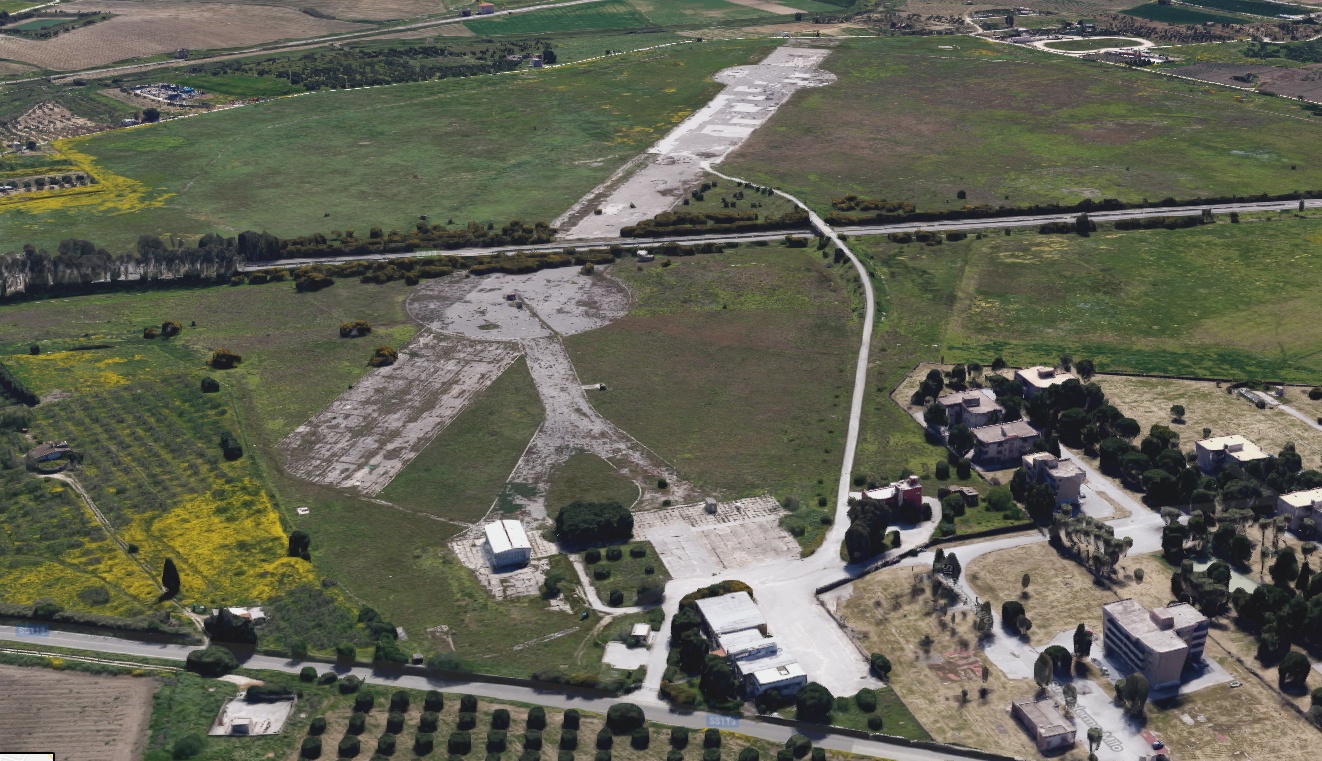
The total surface of the terrain occupied by the base was 95 Hectares. It was split near the middle by the "Autostrada A29", a highway running in East-West direction which was built in 1976 to connect the cities of Trapani and Mazara del Vallo.

The "southern" part of the complex comprised the launch area while the "northern" one is where were located all the operative buildings. Both sides were connected each other by a bridge passing over the highway which allowed to transport the payloads and balloons to the launch area as can be seen in the image at left (click to enlarge).
The launch area had a diameter of 600 meters, and was entirely enlightened for nocturnal flights, with direct visibility from the control center. The launch vehicle was built using a heavy duty motorized crane and was used to transport and hang the payloads to be launched. It was first introduced in early 80's, and suffered additions and improvements over the years. It managed weights of up to 2500 Kg, while the launch spool mounted in the rear end of the helium truck was able to hold balloons ranging between 100.000 and 1.100.000 cubic meters of volume.
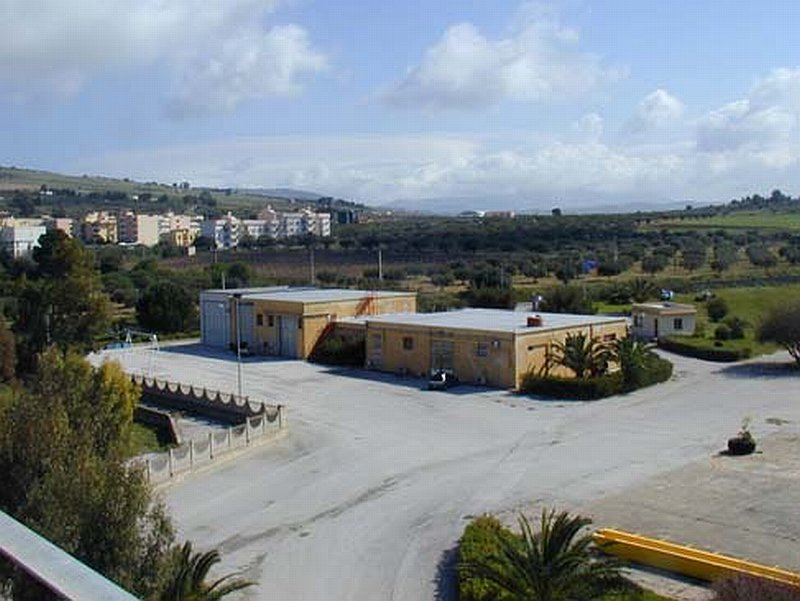
Four hangars were available with a total work space of 900 square meters. They were adapted from the original War times barracks to be used for payload integration and tests.
Each building was greatly improved with the years, evolving from the quasi-spartan conditions of the beginnings. In the last years of activity of the base these buildings were equipped with direct network access, air conditioning, electric and mechanical equipment as well as overhead travelling cranes. One of the hangars also hosted a thermal chamber as well a vacuum chamber, allowing to test in near-space conditions the behaviour of the payloads and instruments to be flown. Also was available a fully equipped workshop, an electronics laboratory, and outside the hangar zone was located an amagnetic suspending system which was used for gondola pointing tests during integration time. A general view of these buildings circa 1995 can be seen in the image at right (click to enlarge).
At his full capacity the integration area was able to host up to 5 scientific payloads at the same time with their respective working teams. In the same sector of the base was located the biggest building of the entire facility which can be seen in the lower image at left (click to enlarge). It served as Helium recovery installation and stock building for the different vehicles which were used in the operations.
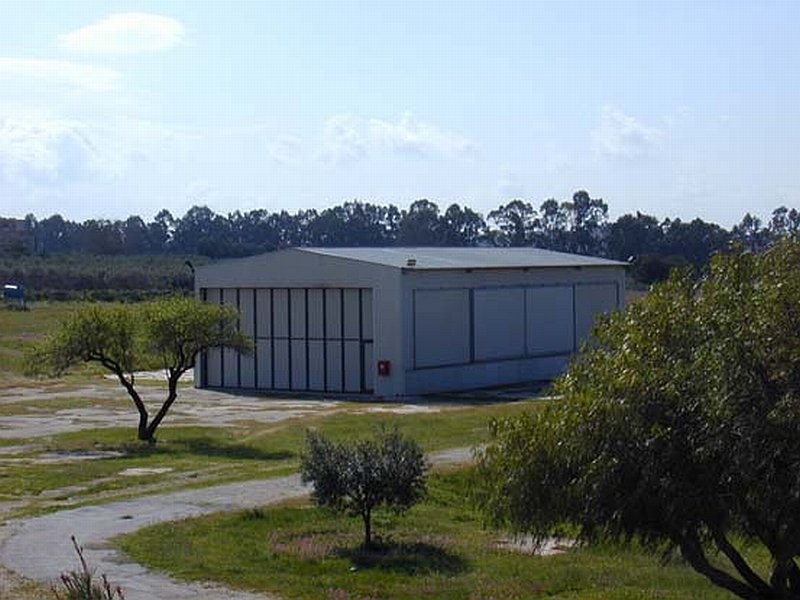
As occured with the rest of the installation, along the years, the communication systems used for balloon operations evolved, suffered technological changes, ampliations and many improvements. In the last years of operations of the base the systems for telemetry and telecommand (TM/TC) operated in the UHF band. The onboard system on balloons was composed by two modulation phase transmitters (400,17 & 401,16 Mhz) and a PCM encoder, and two receptors & antennas. For localization GPS systems were included on each gondola along with an ARGOS transmitter beacon. At the end of the decade of 1990 was started a project to switch from the UHF system to a 'S' band system.
Two flights for the qualification phase in 1998 and 1999, were followed by a Transmediterranean flight in the summer of 2002 on which was used for the first time the 'S' band system with the UHF telemetry acting as a backup. During the flight only the Trapani ground station was employed to track the balloon to Spain. To the aforementioned capabilities were also added two vans configured to serve as mobile stations to link the balloons in flight with the ground control center.
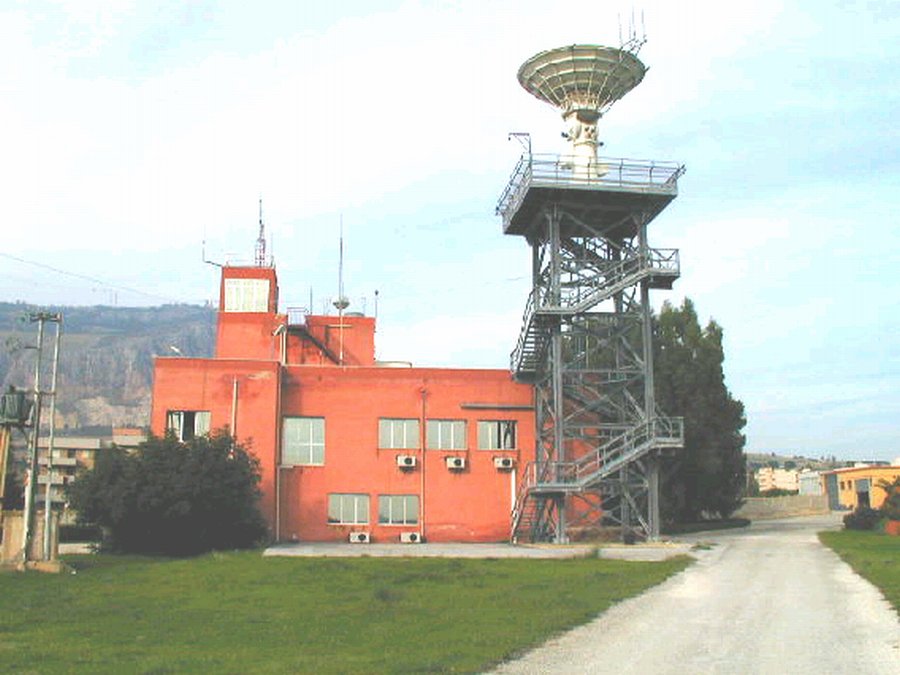
Finally, the last building in the northern area of the base comprised the Control Center and offices which were the headquarters of the entire facility. There, was located a full operative meteorological center including a Vaisala sounding station and the Telemetry room and Control center. Also the high bit rate real time data acquisition system, real time flight data Digital/Analogical recorder, flight control and balloon tracking systems, and the whole equipment of TM/TC were hosted in the building. Outside the building was a three story tall tower where was mounted the 'S' band system antenna (see picture below).
Despite the impressive development achieved by the Trapani-Milo balloon base closing the 90's decade, the first years of the new century would see the final act for this installation.
Last years
A Trans-Mediterranean flight campaign was held in the summer of 2002 with three balloons launched from Italy to Spain and in June 2003 was conducted a mission for testing a mock-up model of the Huygens descent module, in a local flight over Sicily. Amazingly, at the peak of his development, these missions would be the last ones carried out at the "Base de Lancio di Palloni Stratosferici Luigi Broglio" (Luigi Broglio Stratospheric Balloon Launch Base) as would be the official denomination of the facility since July 2001. The renaming was to honour the memory of Italy's Astronautics most prominent figure who died that same year.
With the turn of the century, one of the institutional objectives of the agency for Trapani-Milo base was to transform it into a center of excellence dedicated to primary activities related to stratospheric balloons under European standards. The agency wanted to expand the range of activities carried out including support and guidance for small space missions, assistance to enable access to space to developing countries and the support of several national programs.
In the context of this vision, several projects were initiated by the base administration. Some of them were focused in technical issues and others in more operative and strategic matters. In regard the first kind, three telemetry systems (IRIASI, IRILASI and STRADIUM) were tested and qualified to be used in future missions. Also were performed some studies for HIPEG, an advanced gondola azimuth pointing system, new onboard power systems based on fuel cells for longer duration power, implementation of non dynamic balloon launch systems, the use of unconventional parachutes and the upgrading of computational tools for flight dynamics analysis and flight trajectories forecasting.
In regard operations, besides the continuation of the local as well the Trans-Mediterranean balloon flights, it was studied to perform drop test of heavy payloads over the sea performing such missions over restricted air/sea space managed by Salto de Quirra military facility in Sardinia and in the vecinity of Malindi Station in Kenya, Africa. Although a first balloon launch mission was planned to be performed from Trapani-Milo in 2007 to test a model of a future space plane belonging to the USV (Unmanned Space Vehicle) program, the mission was finally carried out twice in 2007 and 2010 using as launch base the Tortoli-Arbatax airport in Sardinia.
A final project was the realization of long duration balloon flights under agreement between ASI and ASC (Andoya Space Center from Norway) to use Longyearbean airport in Svalbard Islands to perform balloon launches in summer and winter as part of an initiative to create a new Italian / Norwegian stratospheric balloon launch center in the Arctic, denominated Nobile/Amundsen.
The plans for the base were even part of the financial report of ASI's controling board for the period 2004-2005 under the chapter "Instrumental Resources and Infrastructure" where was stated that the facility was available "to offer a privileged and efficient access to the stratospheric space to the national and international community".
However, all these intentions would be severely affected by the economical crisis that hit the European Union near the end of the decade. In early 2010, rumors began to circulate, linked to the Italian financial crisis and budget cuts for science projects. Those rumors included the possible closure of the base by the Italian Space Agency later that year. Unfortunately, the rumors were totally true.
The end
On June 24, 2010 ASI's Board of Directors signed the resolution number 56 decreeing the permanent closure of the Trapani-Milo balloon launch base because of the maintenance costs of such an infrastructure and the decreased interest of scientists by the kind of activities carried out there.
The decision was based on:
- the preference of the scientific community for long duration balloon missions,
- the lack of possibilities to maintain an adequate launch capability -in view of base's geographic characteristics and available resources- ,
- the lack of economic sustainability in the fact of maintaining a balloon launch base only for national use,
- the progressive decrease in the number of launches at the base,
- the limited operating dimensions of the base over the past years, and
- the limited size of the site in relation to major international balloon launch bases in the field.
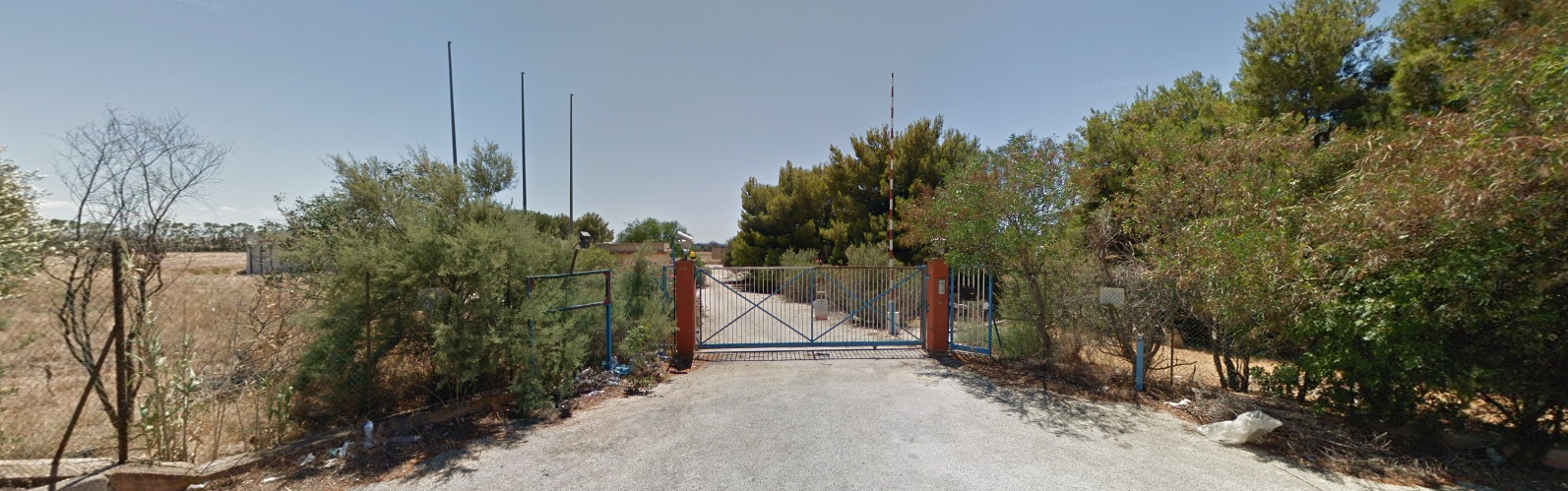
That was the closing act for the history of one of the most important centers for launching stratospheric balloons in Europe. The remains of the former base looks very sad nowadays, being reclaimed again by nature as can we see in this picture taken by one car of Google's street View project in June 2017.
But what occured to the rest of the infrastructure?.
Two years after the effective closure in a meeting held on October 29, 2012 ASI's Board of Directors resolved the final disposal of the Luigi Broglio base effective on October 31th of that year. By this, ASI direct management of stratospheric balloon activities ceased, and the responsability of the continuation of the operations involving balloons elsewhere the Trapani-Milo base was handed on to "La Sapienza" University.
Also in that meeting was signed the procedure for the return to the Italian State of the entire facility: ASI was committed to clear the site of all the non-reusable goods to be destined for landfill, while the reusable goods (equipment, furniture, vehicles) would be transferred to the Centro Spaziale Luigi Broglio of Malindi, Kenia, the Centro di Geodesia Spaziale di Matera, the ASI headquarters in Rome, the University of Rome "La Sapienza", and the headquarters of the Consiglio Nazionale delle Ricerche in Mazara del Vallo.
While all the disposal was being carried out, a final twist of fate would link the base to the history of ballooning: according to almost two reliable sources I've consulted -whom prefer to remain anonymous- the balloons used in the last flight of the Red Bull Stratos project that allowed the Austrian skydiver Felix Baumgartner to perform his historic stratospheric jump in October 2012 were originally part of the stock of the Italian base when it was closed.
Table of balloons launched from Trapani-Birgi (incomplete)
| Date | Hour | Flight Duration | Experiment | Payload landing place or cause of the failure |
|---|---|---|---|---|
| 7/9/1967 | --- | MULTIPLATE SPARK CHAMBER | --- No Data --- | |
| 7/12/1967 | --- | MULTIPLATE SPARK CHAMBER | --- No Data --- | |
| 7/16/1967 | --- | MULTIPLATE SPARK CHAMBER | --- No Data --- | |
| 7/19/1967 | --- | MULTIPLATE SPARK CHAMBER | --- No Data --- | |
| 7/23/1971 | 23:00 utc | --- | GAMMA RAY TELESCOPE | --- No Data --- |
Table of balloons launched from Trapani-Milo (incomplete)
| Date | Hour | Flight Duration | Experiment | Payload landing place or cause of the failure |
|---|---|---|---|---|
| 8/5/1975 | 5:02 utc | F 84 h 10 m | NUCLEAR EMULSIONS + GAMMA RAY DETECTOR | 32 kilometers E of Lexington, Kentucky, US |
| 7/29/1976 | 19:30 utc | 3 d 3 h | HXR-76 (Hard X-Rays 1976) | Radio contact with the balloon lost after 75 hours aloft. Payload never recovered. |
| 8/13/1976 | 4 d 11 h | GAMMA RAY DETECTOR | Near Gardner, Massachusetts, USA | |
| 8/6/1977 | 4:45 utc | 22 h 20 m | TECHNO | In Aracena, Sevilla, Spain |
| 8/11/1977 | 20:55 utc | 21 h | PAM | In Puerto Real, Cadiz, Spain |
| 7/20/1978 | 5:51 utc | 18 h | PAF | In Caceres, Montanchez, Spain |
| 7/28/1978 | 18:36 utc | 17 h 25 m | AGLAE | In Alcala, Sevilla, Spain |
| 8/10/1978 | 4:29 utc | 18 h 37 m | CELIMENE I - HXR78 | In Valenzuela, Cordoba, Spain |
| 8/20/1978 | 2:23 utc | 24 h 37 m | CESAR GAMMA RAY TELESCOPE + CLEOPATRE | In Santa Ollala, Madrid, Spain |
| 8/5/1979 | 4:34 utc | 1 h 30 m | NAUSICAA I | Balloon failure. Recovered near Rocca Palumba, Sicily, Italy |
| 8/26/1979 | 2:48 utc | 17 h | CELIMENE II - HXR79 | In Cullar de Baza, Granada, Spain |
| 8/28/1979 | 2:35 utc | 27 h 5 m | NAUSICAA II | In Hornachuelos, Cordoba, Spain |
| 7/5/1980 | 3 h | ERCOLE - BALLOON TEST | In Sicily, Italy | |
| 7/19/1980 | 17 h 50 m | ULISSE 80 | In southern Spain | |
| 7/25/1980 | 19 h 20 m | NAUSICAA | In Huelva, Spain | |
| 7/31/1980 | --- | ERCOLE - BALLOON TEST | Aborted flight. Balloon failure | |
| 8/4/1980 | 18 h 38 m | ENEA | In Merida, Badajoz, Spain | |
| 8/10/1980 | F 19 h | HXM-80M / CIRCE | In Spain | |
| 6/29/1981 | 18 h 5 m | CLYTONEE | 100 km N of Sevilla, Spain | |
| 7/6/1981 | 2 h | POLIFEMO | Near Sciacca, Sicily, Italy | |
| 7/14/1981 | 16 h 28 m | MINIZEBRA | 50 km N of Huelva, Spain | |
| 7/21/1981 | 16 h 02 m | POKER-HXR81M | Near Llerena, 100 km N of Sevilla, Spain | |
| 8/3/1981 | 15 h 02 m | ULYSEE | 60 km N of Sevilla, Spain | |
| 8/6/1981 | 6:30 utc | 23 h 30 m | TXC (Transient X-RAY Camera) - ENEA | 60 km N of Sevilla, Spain |
| 7/14/1982 | 20 h 52 m | ALIOS 82 | In Huelva, Spain | |
| 8/2/1982 | 10 h 40 m | TIFANI (Telescope Infrarouge Froid pour l'Astronomie des Nuages Interstellaires) | Recovered from the Mediterranean sea, west of the port of Sóller in Mallorca | |
| 8/8/1982 | 23 h 33 m | COSMIC MICROWAVE BACKGROUND OBSERVATION | --- No Data --- | |
| 8/10/1982 | 6:30 utc | 22 h 23 m | XG EXPERIMENT | In Yecla, Murcia, Spain |
| 8/12/1982 | 2 h | BIOLOGY EXPERIMENT | --- No Data --- | |
| 7/1/1983 | 21 h 40 m | ALIOS 83 | Near Sevilla, Spain | |
| 7/11/1983 | 20 h 15 m | TELEMAQUE | Near Sevilla, Spain | |
| 7/26/1983 | 20 h 27 m | ELENA | Near Sevilla, Spain | |
| 6/26/1984 | 6:46 local | 19 h 20 m | ALIOS 84 | In Real de la Jara, 60 km NE of Huelva, Spain |
| 7/10/1984 | --- | TIFANI (Telescope Infrarouge Froid pour l'Astronomie des Nuages Interstellaires) | Lost in the Mediterranean sea, 250 km from Spain's coast | |
| 7/22/1984 | 7:13 local | 20 h 20 m | POKER 84 | 60 kms south of Salamanca, Spain |
| 7/30/1984 | 7:11 local | 18 h 20 m | ARGO | 50 km E of Jerez, Spain |
| 8/6/1984 | 7:42 local | ~ 20 h | TELEMAQUE | north of Villar del Rey, Spain |
| 8/12/1984 | 3 h | HERCULE | --- No Data --- | |
| 7/4/1985 | 1 h 5 m | ALIOS 85 | 30 km from the launch site | |
| 7/17/1985 | 21 h 14 m | NAUSICAA | In the Cordoba zone in Spain | |
| 7/24/1985 | --- | MIFRASO (Milano - FRAscati - Southampton) | Near the launch site, Sicily, Italy | |
| 8/5/1985 | 23 h 22 m | POKER 85 | In the Granada zone in Spain | |
| 7/2/1986 | 20 h 38 m | ALIOS 86 | --- No Data --- | |
| 7/11/1986 | 5:00 utc | 20 h 6 m | FIGARO II (French Italian Gamma Ray Observatory) | In Sevilla region, Spain. |
| 7/29/1986 | 5:30 utc | 19 h 32 m | MIFRASO (Milano - FRAscati - Southampton) | Near Sevilla, Spain |
| 7/7/1987 | 19 h 42 m | THEMIS | Near Sevilla, Spain | |
| 7/15/1987 | 7:00 utc | 20 h 52 m | MIFRASO (Milano - FRAscati - Southampton) | Near Sevilla, Spain |
| 7/29/1987 | 6:15 utc | 22 h 5 m | ARGO | Near Sevilla, Spain |
| 8/4/1987 | 18:40 utc | 18 h 10 m | AROME | Near Sevilla, Spain |
| 12/7/1987 | --- | TECHNOLOGICAL FLIGHT | --- No Data --- | |
| 8/1/1988 | ~ 2 h | TIMR (Thermal Infrared Multichannel Radiometer) | In the sea, near Sicily, Italy | |
| 7/13/1989 | 4:52 utc | 23 h 15 m | ILIADA | In Huelva, Spain |
| 7/16/1989 | --- | MIFRASO (Milano - FRAscati - Southampton) | Balloon failure just after the launch. Aborted mission. | |
| 8/9/1989 | 22:45 local | 22 h 51 m | ARGO - MINI-TIR | In El Bosque, near Jerez de la Frontera, Spain |
| 6/27/1990 | 1 h 19 m | AROME | Balloon burst at 22 km. Payload recovered from sea the next day. | |
| 7/9/1990 | 4:33 utc | 22 h 47 m | FIGARO II (French Italian Gamma Ray Observatory) | --- No Data --- |
| 7/22/1990 | 20 h 41 m | THEMIS | In Spain | |
| 7/25/1990 | 20 h 22 m | TRIP (Telescope Raffreddato Infrarosso Pallone) | In Spain | |
| 8/6/1990 | 23 h 57 m | ILIADA | In Spain | |
| 7/22/1991 | 20 h 1 m | TECHNOLOGICAL FLIGHT | --- No Data --- | |
| 7/30/1991 | 18 h 53 m | TECHNOLOGICAL FLIGHT | --- No Data --- | |
| 7/30/1992 | 18:30 utc | 15 h | AROME | In Spain |
| 8/14/1992 | 23 h 1 m | LAPEX (Large-Area Phoswich balloon Experiment for hard-X-ray astronomy) | --- No Data --- | |
| 8/4/1993 | 18:10 UTC | 20 h 15 m | ARGO | Near Ojos Albos, Avila, Spain |
| 6/??/1995 | --- | PAYLOAD UNKNOWN | Balloon failure | |
| 7/29/1995 | 7:00 utc | 26 h 7 m | HEAT (High Energy Astronomical Telescope) | Payload impact in the Atlantic Ocean 500 km W of Portugal shore at coordinates 37°16' N - 14° 36"W. Never recovered |
| 8/10/1995 | 21 h 7 m | CRASH (Cosmic Rays And Strange Hadronic matter) | In Munera, Albacete, Spain | |
| 8/20/1995 | 8:00 local | --- | ARD (Atmospheric Reentry Demonstrator) | On the Jonic Sea between the citys of Catania and Syracuse, Sicily, Italy |
| 7/14/1996 | 8:00 local | --- | ARD (Atmospheric Reentry Demonstrator) | On the sea near Marettimo island 80 km from Sicily's coast, Italy |
| 7/23/1997 | 20 h 27 m | CRASH (Cosmic Rays And Strange Hadronic matter) | In Los Barrios, Cadiz, Spain | |
| 8/6/1997 | 1:28 utc | 3 h 53 m | HASI (Huygens Atmospheric Structure Instrument) - PWA | On the Mediterranean Sea |
| 8/10/1997 | 3 h 45 m | TRANSMED | In Marettimo, Sicily, Italy | |
| 7/30/1998 | 00:55 local | 5 h | BABY (BAckground BYpass) | In the Mediterranean Sea, SW from Sicily, Italy |
| 6/??/1999 | --- | BOOMERANG | --- No Data --- | |
| 7/5/1999 | 6:00 | 17 hs | COBY II | In Spain |
| 7/17/1999 | 21:22 local | ~ 24 hs | ARCHEOPS | Near Granja de Torre Hermosa, Badajoz, Spain |
| 8/2/1999 | 20:22 utc | ~ 14 h | IBEX (Infrared Balloon-borne EXperiment) + GPSR-MEBEX | Near Nerpio, a town in the Sierra de Segura, Albacete province of Huelva, Spain. |
| 6/19/2000 | 06:00 | 05 h 25 m | BOOMERANG | On the Mediterranean sea. |
| 7/10/2000 | 06:16 | ~23 h | BIRBA (Biological Radiation on Balloon) | In Spain |
| 12/14/2000 | 6:00 utc | --- | SINTESYS | --- No Data --- |
| 6/15/2001 | 6:19 utc | ~ 3 h | HASI (Huygens Atmospheric Structure Instrument) | In southern Sicily, Italy |
| 7/2/2001 | 05:47 | ~21 h | BIRBA (Biological Radiation on Balloon) | On the Atlantic Ocean W of Gibraltar strait |
| 7/14/2001 | 05:54 | ~ 4 h | BIRBA (Biological Radiation on Balloon) | En Sicilia, Italia |
| 7/23/2001 | 20:00 | 5 h | BABY (BAckground BYpass) | En Sicilia, Italia |
| 5/30/2002 | 6:56 utc | 4 h 10 m | HASI (Huygens Atmospheric Structure Instrument) | In southern Sicily, Italy |
| 6/23/2002 | 09:20 local | 24 h | BIRBA (Biological Radiation on Balloon) | In Spain |
| 7/10/2002 | 23:09 local | ~ 12 h | BABY (BAckground BYpass) | In Spain |
| 7/29/2002 | 21:00 | 20 h | IBEX (Infrared Balloon-borne EXperiment) | In Sierra Nevada, Spain |
| 6/7/2003 | 6:54 utc | ~ 4 h | HASI (Huygens Atmospheric Structure Instrument) | In southern Sicily, Italy |
StratoCat is an independent, non-commercial project maintained to preserve and share the history of scientific and stratospheric ballooning. If you find the site useful, you can help keep it running with a small donation toward its operating costs. Every contribution, even the equivalent of a cup of coffee, is greatly appreciated.