
Purpose of the flight and payload description
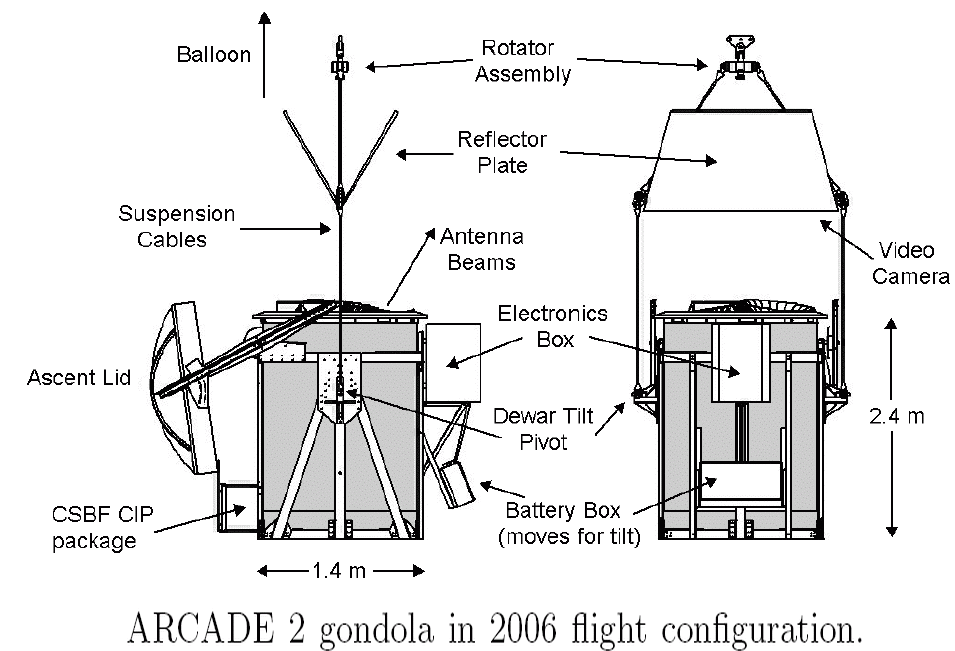
The ARCADE experiment is an instrument created to observe the radiation remannant from the Big Bang that originated the Universe. This radiation known as the cosmic microwave background (CMB) is present everywhere in the sky as a faint emission whose temperature aproaches the absolute zero: 2.7 K.
The only way to measure such a wake radiation is to use very sensitive detectors which must be cooled as close as possible to these temperatures.
All previous measurement programs below 60 GHz needed significant post-flight corrections in the data obtained due to the fact that the instruments itself introduce spurious signals (heat) that affect the data gathering process.
ARCADE design instead of being focused in the use of more sensitive state-of-the-art detectors, was created with one clear objective: to be fully cryogenic, so the microwave emission from any component of the instrument are negligible reducing at the minimum the need for data correction. Maintaining such a large volume and mass at cryogenic temperatures in an open environment without significant atmospheric condensation presents considerable instrumental challenges.
The instrument core is contained within a large (1.5 m diameter, 2.4 m tall) open bucket dewar filled with liquid helium. All internal and external components are maintained at temperatures near 2.7 K through the use of the liquid helium contained which circulates by a network of superfluid pumps.
Boiloff helium gas is used for the initial cool-down of components on ascent, and directed in flight to discourage the condensation of ambient nitrogen on the aperture.
The incoming emission enter the instrument trought corrugated horn antennas for each frequency band .These antennas hang from a flat horizontal aluminum aperture plate at the top of the open dewar. There are seven observing channels, one each at 3, 5, 8, 10, 30, and 90 GHz, and an additional channel at 30 GHz with a much narrower antenna beam.
The experiment performs a doubly nulled measurement, with the radiometric temperature of the sky compared to the physical temperature of an external calibrator. This is achieved by mean of a carousel structure containing both a port for sky viewing and the external calibrator which sits atop the aperture plate and turns about a central axis to alternately expose the horns to either the sky or the calibrator.
The external calibrator consists of 298 cones, each made of steelcast absorber cast onto an aluminum core measuring 88 mm long and 35 mm in diameter.
The corrugated horn antennas are sliced at the aperture to point 30º from zenith when hung from the flat aluminum aperture plate. This is so the antenna beam boresights are directed away from the flight train and so that they trace out a circle 60º on the sky as the dewar rotates below the balloon.
The horns are arrayed on the aperture plate in three clusters, with the 3 GHz horn occupying one, the 5 and 8 GHz horns occupying a second, and the remaining horns, the "high bands", occupying the third.
The sky port in the carousel is surrounded by reflective stainless steel flares which shield the edge of the antenna beams from instrument contamination and direct boiloff helium gas out of the port to discourage nitrogen condensation in the horn aperture. The carousel is turned with a motor and chain drive, with the motor mounted outside of the dewar.
The dewar is mounted in an external frame supported 64 m below the balloon. Boxes containing the read out and control electronics and batteries are also mounted there. The external frame is suspended by two vertical cables from a horizontal spreader bar 1.14 m above the top of the dewar, which itself is suspended by two cables from a rotator assembly which maintains the rotation of the payload below the balloon at approximately 0.6 RPM.
The rotator assembly is suspended from a truck plate, above which is the flight train. Reflector plates of metalized foam are mounted on the spreader bar to shield the edge of the antenna beam from the flight train. The total mass at launch, including liquid helium, is 2400 kg.
A fiberglass lid mounted on the frame is closed to cover the dewar on ascent and descent and opened for observations. Thermometry, heater, and other signals are interfaced between the dewar and the exterior electronics box via cabling and a collar of insulated connectors at the top of the dewar. Three-axis magnetometers and inclinometers mounted on the frame, along with GPS latitude, longitude, and altitude data recorded by CSBF instruments, allow the reconstruction of the pointing of the antenna beams during flight.
A video camera mounted on the spreader bar above the dewar allows direct imaging of the cold optics in flight. Two banks of light-emitting diodes provide the necessary illumination. The camera and lights can be commanded on and off. During lapses in which the camera and leds are on the data is not used for science analysis.
When the instrument is ready for flight, the lid is closed and the dewar is cooled with nitrogen to around 100 K. Then the ground team fill the dewar with around 1900 liters of liquid helium, operation which takes several hours. They await a launch opportunity, with the helium level topped off each day. The instrument is launched with the carousel in the "ascent" position that aligns the vent holes in the aperture and carousel, which directs boil-off gas across the back of the external calibrator, providing a powerful cooling source for its large thermal mass. Once float altitude is reached the instrument lid is open for observing, moving the carousel to a new position frequently (around once every five minutes).
After the observation is concluded and before the separation of the payload from the balloon is carried out the lid is closed again.
Details of the balloon flight
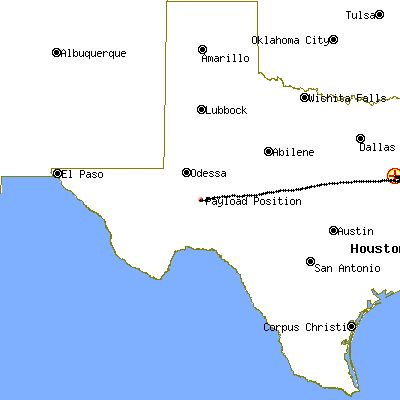
Balloon launched on: 7/28/2005 at 1:42 utc
Launch site: National Scientific Balloon Facility (NSBF), Palestine, Texas, US
Balloon launched by: National Scientific Balloon Facility (NSBF)
Balloon manufacturer/size/composition: Zero Pressure Balloon W 29.470.000 cuft - SF3-29.47-.8/.8/.8-NA
Balloon serial number: W 29.47-2X-58
Flight identification number: 1591P
End of flight (L for landing time, W for last contact, otherwise termination time): 7/29/2005 at 10:12 utc
Balloon flight duration (F: time at float only, otherwise total flight time in d:days / h:hours or m:minutes - ): 9 h 11 m
Landing site: 51 miles ENE of Fort Stockton, Texas, US
Payload weight: 5066 lbs
Overall weight: 6000 lbs
The launch was acomplished by dynamic method using launch vehicle (Tiny Tim) on July 28th (utc) after a long wait by right meteorological conditions and one aborted flight.
After a nominal ascent phase the balloon reached the float altitude of 120.800 ft and started a drift to the west of the state (click the map on left to see the path of the balloon).
After 9 hours of flight at 10:12 utc on July 29th the separation command was sent. The gondola impacted ground 51 miles East Northeast of Fort Stockton, Texas (31-06.5 N / 101-54.8 W) at 10:53 utc.
That was a night termination using the SAPR system for parachute separation. Telemetry indicated a normal SAPR functioning.
This was the second flight of the instrument and the first one devoted to make scientific observations.
During the flight, the instrument performed welll but the carousel became stuck in one position soon after observing commenced. The cause was traced to the output torque of the carousel motor exceeding the maximum torque of the attached gear box, stripping the gears. This was remedied for the next flight in 2006.
During this flight, also the magnetometers failed, so the pointing path was reconstructed with a combination of the data from the inclinometers and radiometric observations of the Galactic plane crossings.
External references
- ARCADE website Goddard Space Flight Center, NASA
- Arcade Website II Experimental Cosmology Group, UCSB
- A Compact Radiometric Microwave Calibrator Review of Scientific Instruments, Volume 77, Issue 6, pp. 064905-064905-6 (2006).
- ARCADE: Absolute Radiometer for Cosmology, Astrophysics, and Diffuse Emission Proceedings of the Fundamental Physics With CMB workshop, UC Irvine, March 23-25, 2006
- Design and performance of sliced-aperture corrugated feed horn antennas Rev. Sci. Instrum., Vol. 76, No. 12 2005
Images of the mission
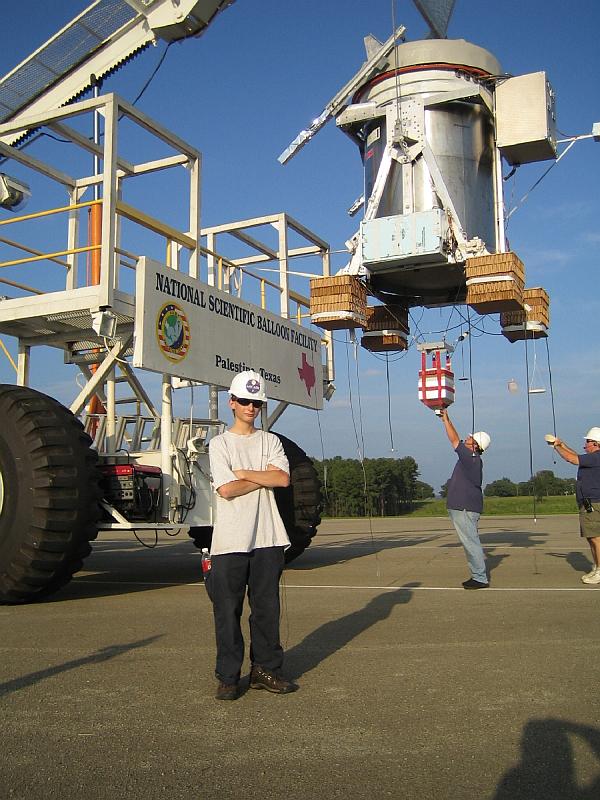
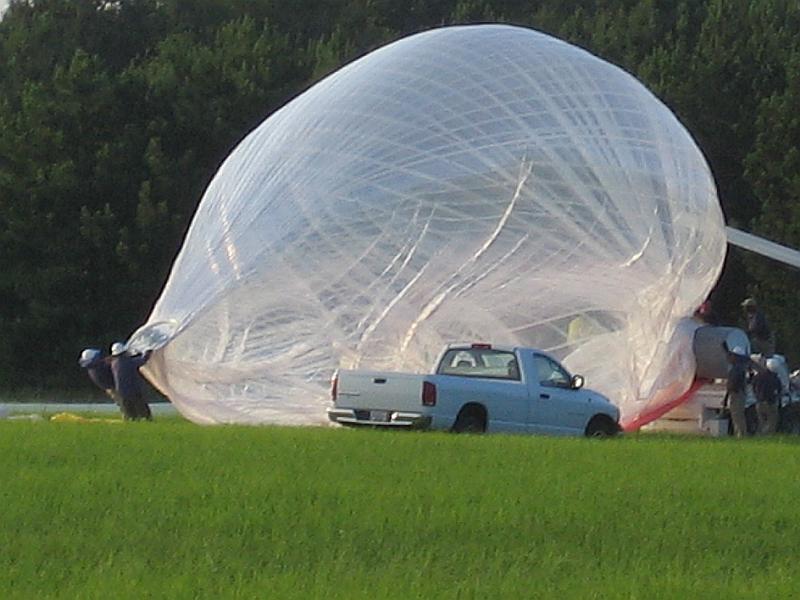
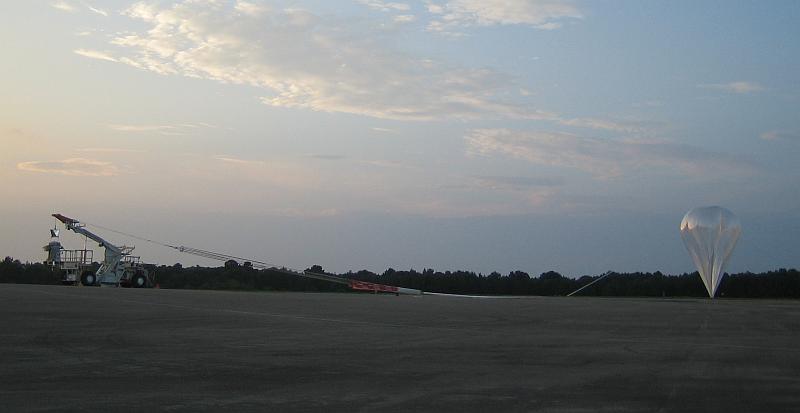
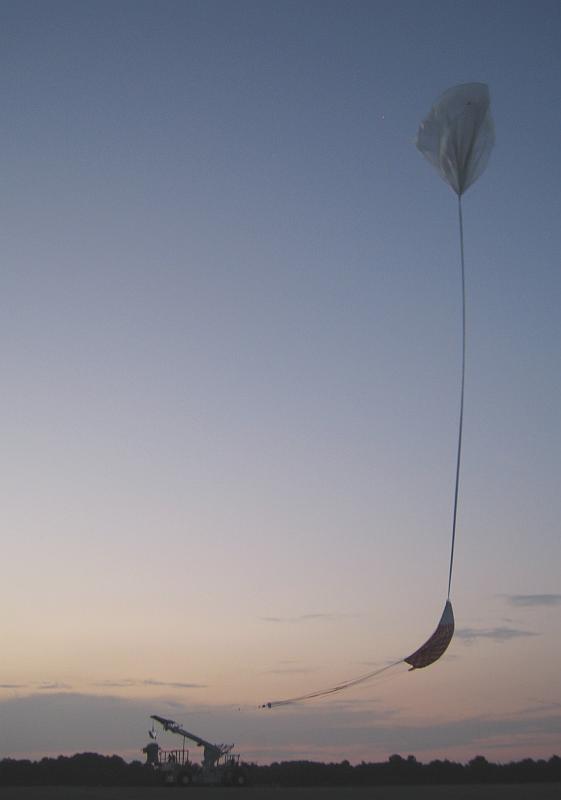
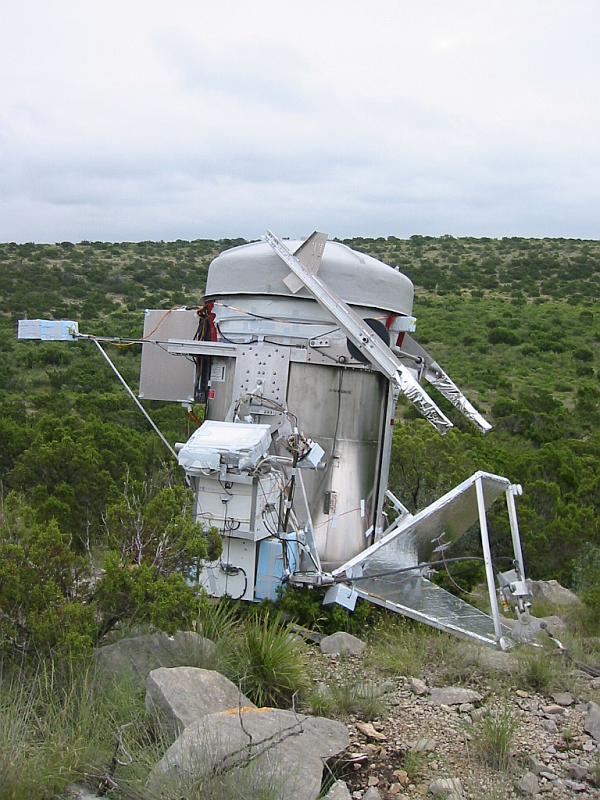
If you consider this website interesting or useful, you can help me to keep it up and running with a small donation to cover the operational costs. Just the equivalent of the price of a cup of coffee helps a lot.