
Purpose of the flight and payload description
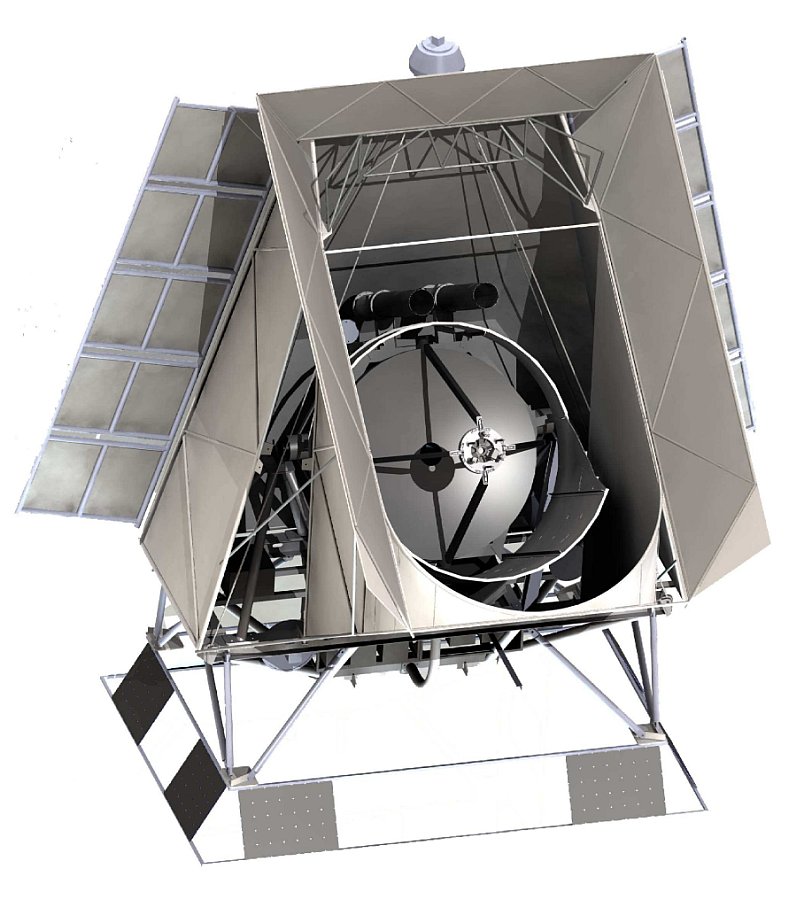
Is a stratospheric telescope conceived to measure photometric redshifts, rest-frame FIR luminosities and star formation rates of high-redshift starburst galaxies, thereby constraining the evolutionary history of those galaxies that produce the FIR/submillimeter background, also to measure cold pre-stellar sources associated with the earliest stages of star and planet formation and to make high-resolution maps of diffuse galactic emission over a wide range of galactic latitudes. A final goal is to observe solar system objects including planets, large asteroids, and trans-Neptunian objects.
The instrument is composed of a Cassegrian Telescope that incorporated a carbon fiber spherical primary mirror with a diameter of 2 meters and a mass of 32 kg. It was designed and built as a technology prototype for the 3.5 m Herschel telescope. An aluminum correcting secondary mirror, with a diameter of 50 cm, was designed to give a diffraction limited performance over a 14' × 7' field of view (FOV) at the telescope focus.
Two of the re-imaging cold elements, M3 and M5, are ellipsoidal mirrors; M2 and the other cold element, M4, compensate for most of the spherical aberration of the primary, whereas M3 and M5 contribute to achieve the correct focal ratio.
The cryostat houses most of the receiver system. It is constructed of aluminum and G10 woven fiberglass reinforced resin epoxy and is maintained at vacuum to prevent thermal convection. Each thermal stage is light-tight except the optical path, which is thermally protected with infrared blocking filters. Liquid baths of nitrogen and helium maintain the temperatures of the 77K and 4.2 K stages. In flight, an absolute pressure regulator is used to maintain approximately 1 atm above each bath. A vapor cooled shield is located between the nitrogen and helium stages which is cooled by boil-off gas from the helium bath and reduces the thermal loading on the helium stage. The cryostat holds 43 liters of nitrogen and 32 liters of helium and has an 11.5 day hold time.
The BLAST focal plane consists of arrays of 149, 88, and 43 detectors at 250, 350, and 500µm, respectively. The arrays are cooled to a temperature of 270mK. Each array element is a silicon nitride micromesh "spider web" bolometer. The detector arrays, the feeds, and the mounting scheme are based on the SPIRE instrument design.
The detectors are read out with an AC-biased differential circuit and then the data acquisition electronics demodulate the signals to provide noise stability to low frequencies, allowing to observe the sky in a slowly-scanned mode which is the best method to observe large regions of sky. The data is collected using a high-speed, flexible, data acquisition system which can synchronously sample up to 600 channels. Each channel consists of a buffered input and an analog to digital converter. The output from 24 channels are then processed by a logic device which demodulates each input and are stored to disk.
All these elements are mounted in a specially built gondola composed by three main components: an outer frame, suspended from the balloon flight train by cables and a pivot motor; an inner frame which is attached to the outer frame at two points along a horizontal axis; and a set of Sun shields that attach to the outerframe. The frame is constructed of light-weight aluminum tubing and I-beam.
The outer frame is pointed in azimuth using two elements: a reaction wheel with a diameter of 1.5 m made of 7.6 cm thick aluminum honeycomb and a vertical axis pivot at the attachment of the gondola to the flight train, which also minimizes the external torque from wind shear acting on the gondola and balloon rotation. It also provides mounts for various electronics boxes, including the flight computers, the CSBF electronics, various pointing sensors, and flight batteries.
The inner frame is made from thin-wall aluminum box beam. It supports the telescope, cryostat, detector read-out electronics, gyroscopes and star cameras. It is attached to the outer frame at two points, defining an axis of rotation controlled by a motor mounted on one side of the inner frame at the attachment point to the outer frame. A free bearing provides the connection point on the other side.
BLAST is designed to operate autonomously without need of ground commanding. Telescope control is provided by a pair of redundant flight computers with Intel Celeron processors, running Linux as operative system. The computers are kept at near atmospheric pressure to allow the hard drives to function properly and to provide the appropriate thermal environment for the CPUs. The communication link between the telescope and the ground is provided by CSBF through a number of line-of-sight (LOS) transmitters and satellite links.
The primary pointing sensors for BLAST are a pair of CCD-based star cameras and Fiber-Optic rate gyroscopes. The star cameras provide absolute pointing and the gyros provide velocity information which can be integrated to allow interpolation of the gondola's attitude between star camera solutions. Coarse attitude determination is provided by several additional sensors: in elevation, there is an encoder on the elevation axis and a tilt sensor on the inner frame; in azimuth, there is a Sun sensor, a differential GPS unit, and a flux gate magnetometer.
Solar panels mounted at the back of the telescope on the support structure for the Sun shields, provide power to the flight electronics by charging NiMH batteries. The panels face the Sun from only one side and are radiatively cooled to the sky from the other side.
Details of the balloon flight
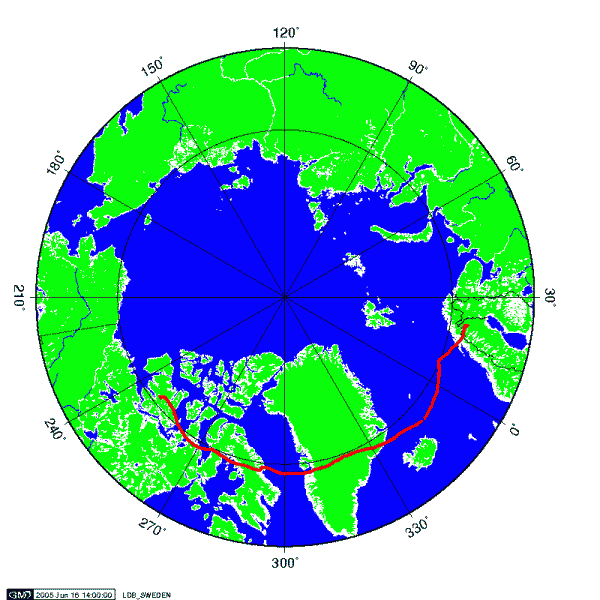
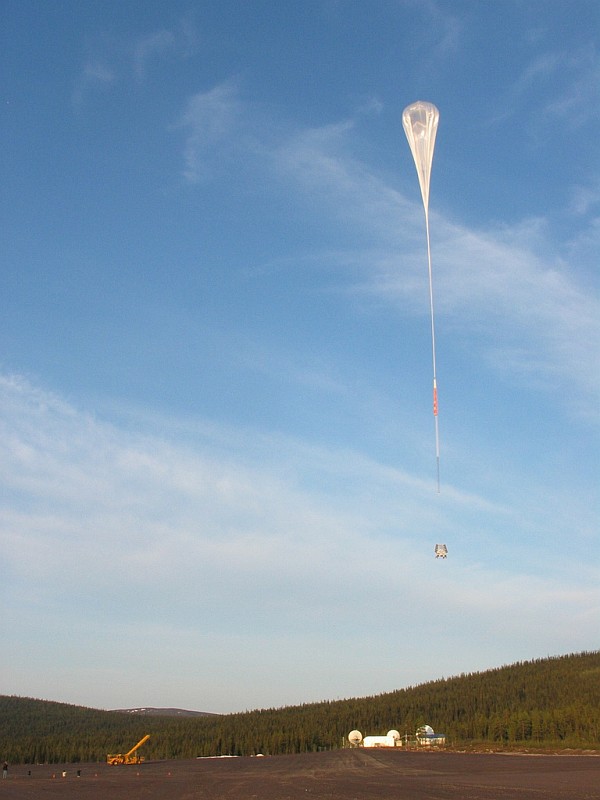
Balloon launched on: 6/12/2005 at 1:09 utc
Launch site: European Space Range, Kiruna, Sweden
Balloon launched by: National Scientific Balloon Facility (NSBF)
Balloon manufacturer/size/composition: Zero Pressure Balloon Raven W 39.570.000 cuft - (0.8 mil)
Balloon serial number: W39.57-2-25
Flight identification number: 545N
End of flight (L for landing time, W for last contact, otherwise termination time): 6/16/2005 at 5:30 utc
Balloon flight duration (F: time at float only, otherwise total flight time in d:days / h:hours or m:minutes - ): 4 d 5 h 6 m
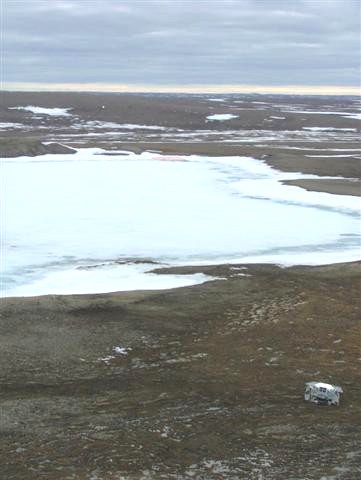
Landing site: On Victoria Island, 170 miles NW of Cambridge Bay, Northern Canadá
Payload weight: 3835 lbs
Overall weight: 6000 lbs
This flight was the first transatlantic mission performed under the agreement signed between NASA and the SSC for the use of the Kiruna base to launch such missions by the american agency.
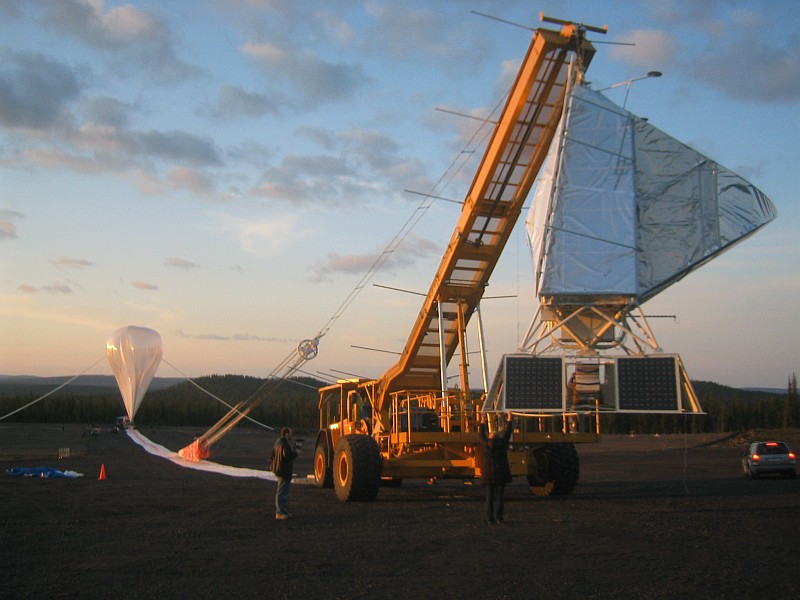
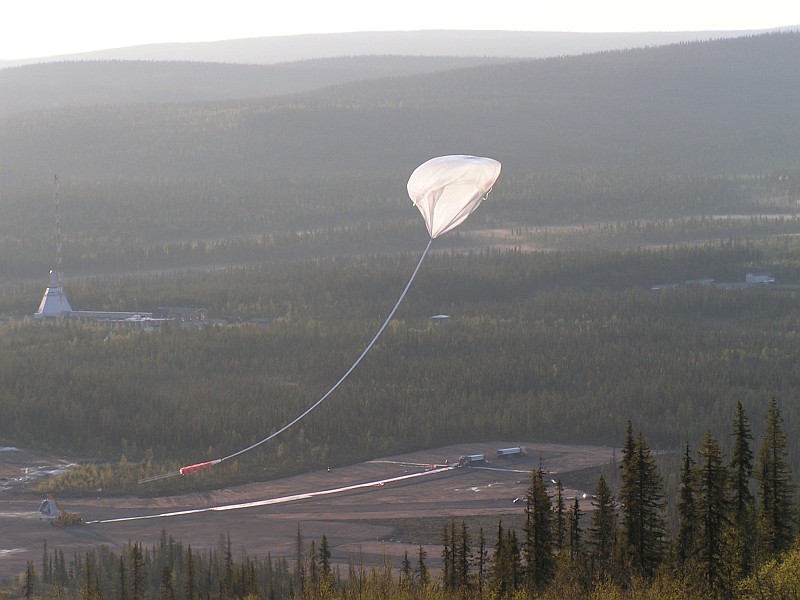
The balloon was launched after various delays due to bad weather on June 12th at 1:09 utc, using the dynamic method with assistance of the "Hercules" launch vehicle. After a nominal ascent phase a float altitude of 128.000 ft was achieved. Then the balloon started a slow westward drift over the Atlantic Ocean towards Northamerica.
Althought the mission was planned to endure between 5 and 9 days, at the fourth day of travel it was decided to end the flight when flying over Northern Canada because the balloon experienced a speed much higher than anticipated. Had the flight continued, BLAST would have been carried across the Arctic Ocean. The Victoria Island was selected as the "point of no return" because the island is so large, that is the best place available to land the payload.
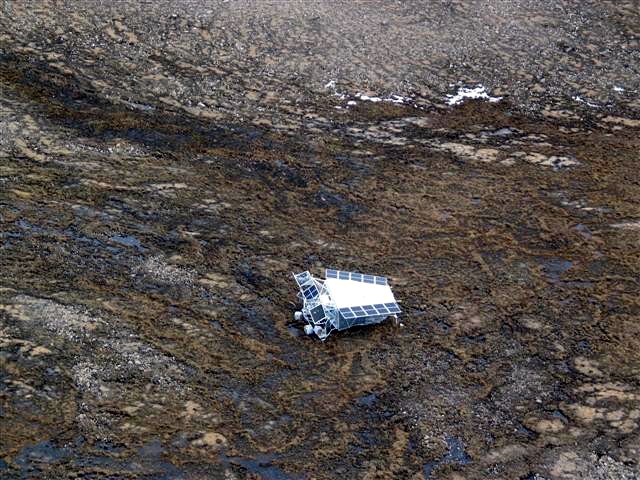
The cutdown command was sent by satellite from the NSBF's Operations Center in Palestine, Texas, at 5:30 utc on June 16th. The gondola impacted ground at 6:15 utc on Victoria Island, 170 miles NW of Cambridge Bay (71º 9' - 110º 49'). The payload tipped over on impact but did not drag. Both onboard NSBF Iridium transceivers continue to transmit NSBF housekeeping data after landing.
The recovery of the gondola was achieved using a heavy lift helicopter.
This was the first scientific flight of the instrument. After launch the ascent was rather slow, which was initially a problem since the instrument got really cold when going through the tropopause, freezing some of the electronics onboard. After some time at float, however, staring at the sun, things seems to have thawed out, and started working again. The other thing of note during ascent was the remaining charge in the flight batteries. Since was spent so long on the flightline before launch, the batteries got depleted more than anticipated so the ground team started pointing in azimuth significantly before got to float, in an attempt to keep the solar panels pointed at the sun. Later it turned out a very wise action so the instrument was able to recharge the batteries.
The first hours while the balloon was in direct connection with the Kiruna base were spent trying to characterise the telescope and made some quick sky maps. Others problems arose first when the internet connection in Kiruna died (it was vital to establish connection with the CSBF Texas site wich would be the only link with the gondola after loss the line of sight link) and also an electrical storm wich occured in Palestine, which brought the link to the gondola down for some time.
At middle of the flight the ground team managed to obtain the first maps from the line-of-sight data, but they showed the sensitivity was lower than initially expected. That meant that they need to control the telescope manually from the ground rather than just letting it run automatically, something specially complicated due to the network link instability.
Once over Canada the speed of the balloon remained high than expected forcing to cutting down the payload from balloon a day earlier than hoped and thus reducing the amount of data obtained. By the time the balloon reached Victoria Island the speed dropped dramatically, and the operation team in Palestine, Texas decided to delay termination allowing to find more fields to scan, but a bit later they advised the scientific team to shut down BLAST for termination as quickly as they could: the balloon had taken an unexpected turn to the south, into an area of the island full of lakes, instead of the more northerly plateau originally planned for landing. The instument was turned off at once, locked and separated immediately from the balloon.
At landing the primary mirror suffered extensive damage.
In all, BLAST acquired near 100 hours of data on Galactic targets, providing some of the first arcminute resolution images at these wavelengths. Surveys of five star forming regions were conducted, including the well-studied Cygnus-X field, three regions of intermediate/high-velocity cirrus, the Cassiopeia-A supernova remnant, and several individual bright targets.
External references
- BLAST website University of Pennsylvania
- A Balloon With a View The Pennsylvania Gazette
- A Balloon-borne Large Aperture Submillimeter Telescope document for for the BLAST Collaboration
- AKARI and BLAST Observations of the Cassiopeia A Supernova Remnant and Surrounding Interstellar Medium Submitted to the Astrophysical Journal
- BLAST Autonomous Daytime Star Cameras the SPIE, Volume 6269, id. 62693H (2006)
- BLAST Observations of the Low-Mass Star Forming Region IC 5146 (in PDF Format)
- BLAST telescope entry in Wikipedia Wikipedia (english version)
- BLAST: A Balloon-borne, Large-aperture, Submillimetre Telescope Ph.D Thesis by Don Wiebe, University of Toronto (2009)
- BLAST: the movie Documentary by Paul Devlin
- BLAST05: Power Spectra of Bright Galactic Cirrus at Submillimeter Wavelengths Astrophysical Journal 708 (2010) 1611-1620
- Correlations in the Cosmic Far-infrared Background at 250, 350, and 500 µm Reveal Clustering of Star-forming Galaxies Ph.D Thesis by Marco Paolo Viero, University of Toronto (2010)
- Evolution of the star formation histories of BLAST galaxies Submitted to MNRAS Letters
- High Angular Resolution Observations of Four Candidate BLAST High-Mass Starless Cores submitted to the Astrophysical Journal on January 22, 2010
- High Angular Resolution Observations of Four Candidate BLAST High-Mass Starless Cores Submitted to the Astrophysical Journal on January 22, 2010. Accepted for publication on April 15, 2010
- Interview with BLAST's PI Dr. Mark Devlin (podcast) Periodicity 30: BLAST-- Balloon-borne Telescope
- List of balloons launched from ESRANGE SSC Space website (via Archive.Org)
- Observing the galactic plane with the Balloon-borne Large-Aperture Submillimeter Telescope Ph.D. Thesis by Gaelen Marsden, University of British Columbia, 2007
- Pictures and video footage of BLAST gondola launch D.V.Wiebe's fotolog
- Probing the Interstellar Medium and Massive Star Formation using Submillimeter Dust Emission Ph.D Thesis by Arabindo Roy, University of Toronto (2011)
- SANEPIC: A Map-Making Method for Timestream Data From Large Arrays Submitted to the Astrophysical Journal
- Submillimeter Number Counts From Statistical Analysis of BLAST Maps Cosmology and Extragalactic Astrophysics (astro-ph.CO); Instrumentation and Methods for Astrophysics
- Temperature Profiles and the Effect of AGN on Submillimeter Emission from BLAST Observations of Resolved Galaxies Submitted to ApJ
- The Balloon-Borne Large Aperture Submillimeter Telescope (BLAST) 2005: A 10 deg^2 Survey of Star Formation in Cygnus X Galaxy Astrophysics (astro-ph.GA)
- The Balloon-borne Large Aperture Submillimeter Telescope (BLAST) 2005: A 4 sq. deg Galactic Plane Survey in Vulpecula (l=59) Astrophys.J. 681 (2008) 428-452
- The Balloon-borne Large Aperture Submillimeter Telescope (BLAST) 2005: Calibration and Targeted Sources Astrophys.J. 681 (2008) 415-427
- The Balloon-borne Large Aperture Submillimeter Telescope :BLAST Ph.D. Thesis by Enzo Pascale, University of Toronto, 2007
- The Balloon-borne Large Aperture Submillimeter Telescope: BLAST Astrophys.J. 681 (2008) 400-414
- The Balloon-borne Large Aperture Sub-millimetre Telescope The Promise of the Herschel Space Observatory. Eds. G.L. Pilbratt, J. Cernicharo, A.M. Heras, T. Prusti, & R. Harris. ESA-SP 460, p. 305
- The Balloon-borne Large-Aperture Submillimeter Telescope for Polarization: BLAST-pol SPIE Conference Proceedings
- The BLAST Survey of the Vela Molecular Cloud: Physical Properties of the Dense Cores in Vela-D Astrophysical Journal 707 (2009) 1836-1851
- The local FIR Galaxy Colour-Luminosity distribution: A reference for BLAST, and Herschel/SPIRE sub-mm surveys (in press)
- Understanding the Earliest Stages of High-mass Star Formation Ph.D Thesis by Alana Rivera Ingraham, University of Toronto (2014)
Images of the mission
StratoCat is an independent, non-commercial project maintained to preserve and share the history of scientific and stratospheric ballooning. If you find the site useful, you can help keep it running with a small donation toward its operating costs. Every contribution, even the equivalent of a cup of coffee, is greatly appreciated.