
Purpose of the flight and payload description

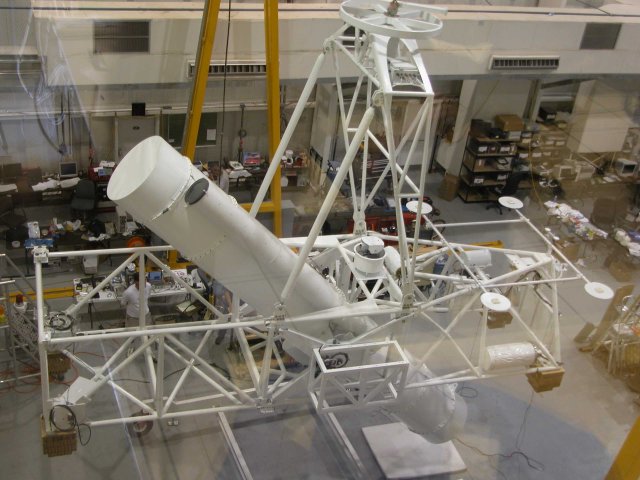
HERO was an X-Ray telescope and the first one aimed to obtain focused images of astronomical X-ray sources at hard X-ray energies (2075 keV).
The key component (the hard X-ray optics) are full-shell electroformed-nickel-replicated (ENR) mirrors coated with iridium to enhance high-energy reflectivity. As the critical grazing angle for reflection varies approximately inversely with energy, these mirrors employ smaller angles than their low-energy counterparts and consequently have smaller diameters and collecting areas per shell. The mirrors have a 6 meter focal length.
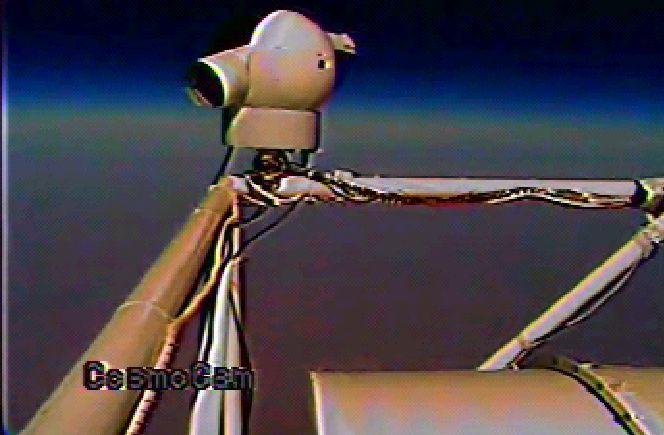
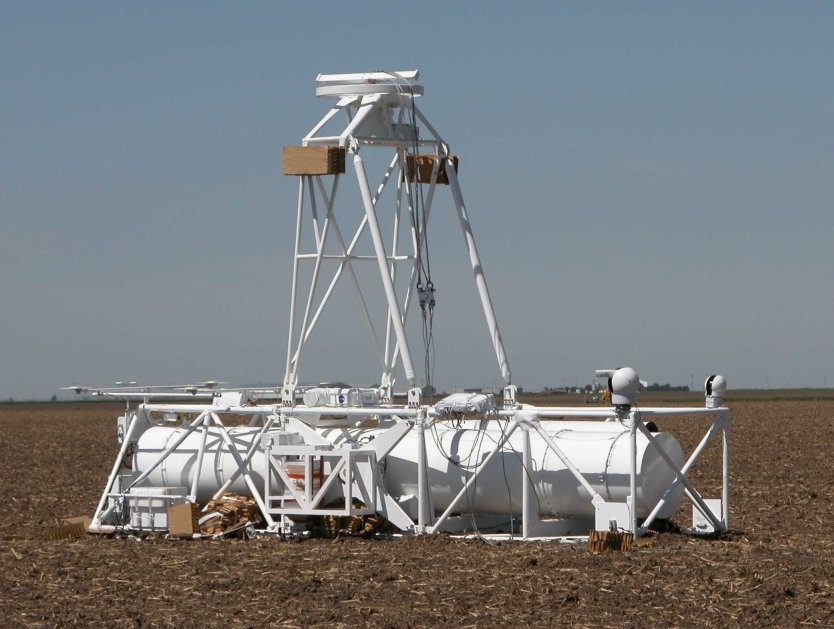
To exploit the full potential of the HERO optics necessitates a balloon gondola that can provide commensurate pointing accuracy, stability, and pointing knowledge. The HERO gondola utilizes a coarse aspect system for slewing based on a differential global positioning system (GPS) and a fine inertial-mode pointing system that uses a novel day/night aspect camera system to update onboard gyroscopes. The total payload dimensions are 25 feet long, 6.5 ft wide and 16 ft high.
Details of the balloon flight
Balloon launched on: 5/9/2005 at 14:18
Launch site: Scientific Flight Balloon Facility, Fort Sumner, (NM), US
Balloon launched by: National Scientific Balloon Facility (NSBF)
Balloon manufacturer/size/composition: Zero Pressure Balloon Raven - 39.570.000 cu ft - (0.8 Mil.)
Balloon serial number: (912) W 39.57-2-36
Flight identification number: 541N
End of flight (L for landing time, W for last contact, otherwise termination time): 5/10/2005 at 14:46
Balloon flight duration (F: time at float only, otherwise total flight time in d:days / h:hours or m:minutes - ): 25 h 14 m
Landing site: 36 miles SW of Dodge City, Kansas, USA
Payload weight: 3324 lbs
Overall weight: 5313 lbs
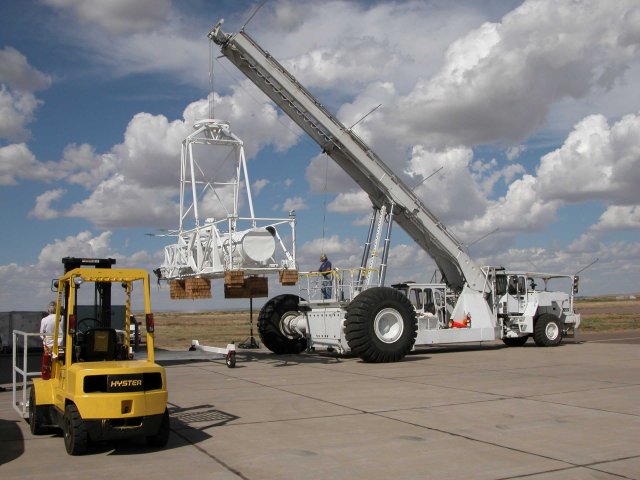
The balloon was launched by dynamic method assisted by launch vehicle after several days of weather related delays, on May 9th at 14:18 utc.
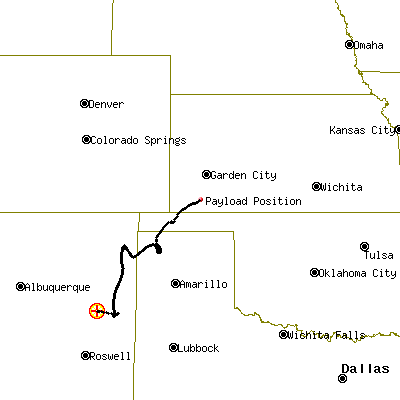
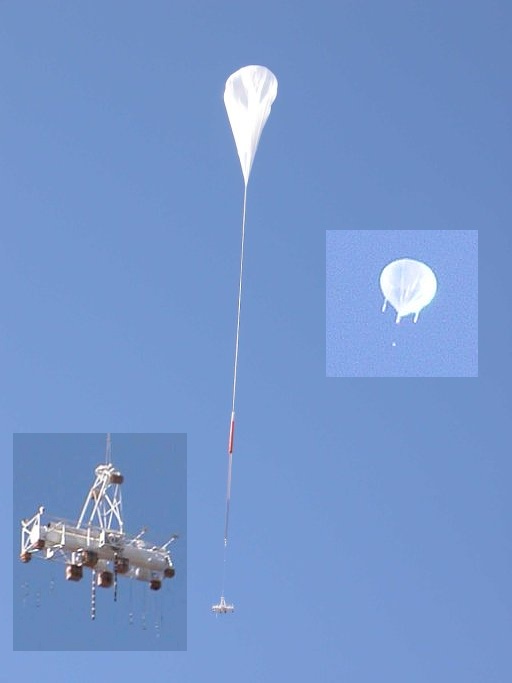
After a nominal ascent phase to float altitude (128.700 ft) the balloon started a northern path along the Texas border (click on the left image to see the flight path map).
After crossing during the naight the north part of Texas and the west side of Oklahoma the balloon entered to Kansas were the flight was terminated sending the separation command at 14:46 utc don May 10th. The termination was made using the visual parachute separation procedures.
The payload landed safely at 15:32 utc at coordinates Latitude 37-29.1 N / Longitude 100-47.4 West, 36 miles southwest Dodge City, Kansas.
During this flight, the science instrument functioned normally for over seven hours but then, experienced an unknown electronic failure that led to a loss of commanding of the pointing system.
External references
- HERO website Marshall Space Flight Center, NASA
- Balloon Flight 2005 of the HERO Payload NASA information
- HERO : High-Energy Replicated Optics for a Hard-X-Ray Balloon Payload Proc. SPIE Vol. 4138, p. 147-153, X-Ray Optics, Instruments, and Missions IV
- HERO will provide new view of X-ray universe Science NASA
- The Development of Hard-X-Ray Optics at MSFC Proc. SPIE Vol. 4851, p. 631-638, X-Ray and Gamma-Ray Telescopes and Instruments for Astronomy
- The HERO Program, high-energy replicated optics for a hard-x-ray balloon payload Proc. SPIE Vol. 3765, p. 816-821, EUV, X-Ray, and Gamma-Ray Instrumentation for Astronomy X
Images of the mission
If you consider this website interesting or useful, you can help me to keep it up and running with a small donation to cover the operational costs. Just the equivalent of the price of a cup of coffee helps a lot.