
Purpose of the flight and payload description
An instrument that collects samples for a range of trace gases in the stratosphere.
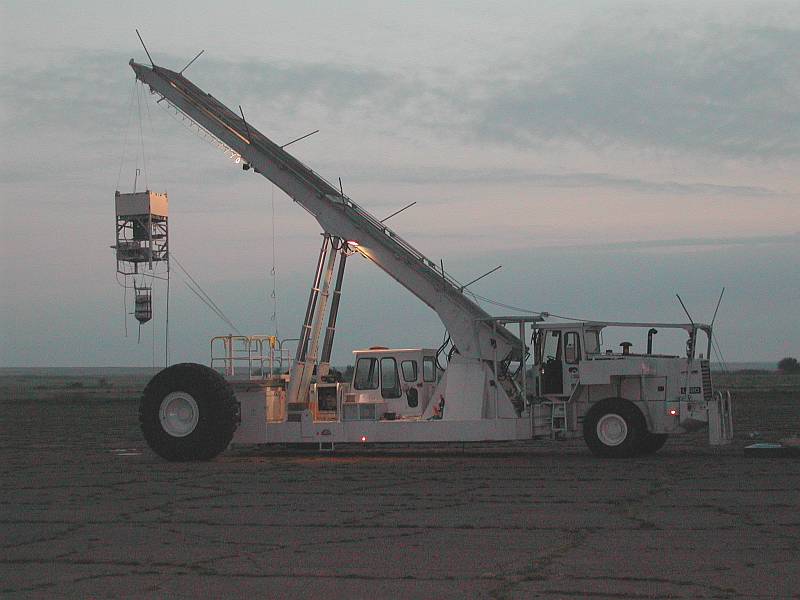
It consists of 26 sample tubes immersed in dewar containing liquid neon cryogen. The sample manifold, dewar and control electronics are housed in a gondola that is approximately 1.1 m x 1.1m x 1.9 m, with a gross weight (including cryogen and Communication Interface Package of approximately 335 kg.
The instrument adds additional sample capacity to allow collection of 2526 samples per profile, compared to 1216 of current use. Samples are collected only after about one hour at float altitude (100110 kft), and during controlled descent at approximately 300 ft/min.
Details of the balloon flight
Balloon launched on: 9/29/2004 at 13:26 utc
Launch site: Scientific Flight Balloon Facility, Fort Sumner, (NM), US
Balloon launched by: National Scientific Balloon Facility (NSBF)
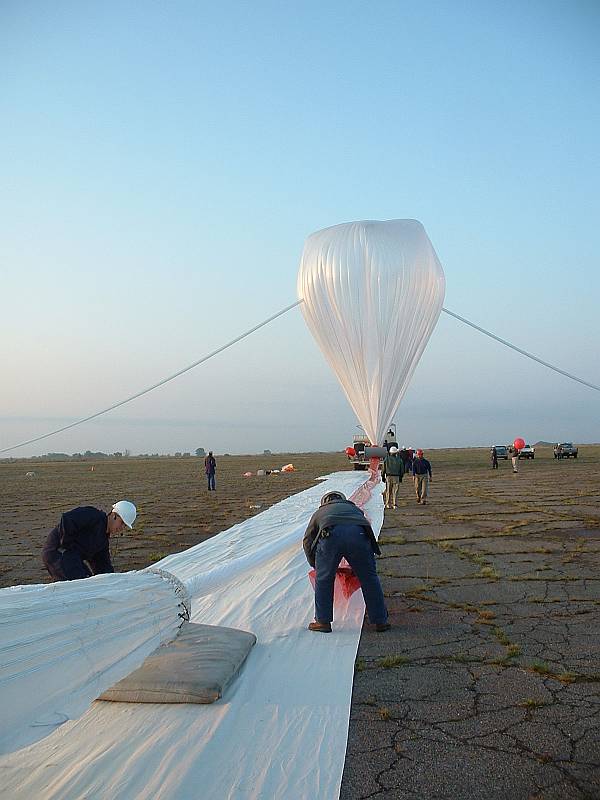
Balloon manufacturer/size/composition: Zero Pressure Balloon Raven - 4.000.000 cuft (0.8 mil) - SF3-4.001-.8/.8-NAR
Balloon serial number: R4.00-1-27
Flight identification number: 535N
End of flight (L for landing time, W for last contact, otherwise termination time): 9/29/2004 at 20:59 utc
Balloon flight duration (F: time at float only, otherwise total flight time in d:days / h:hours or m:minutes - ): 8 h 9 m
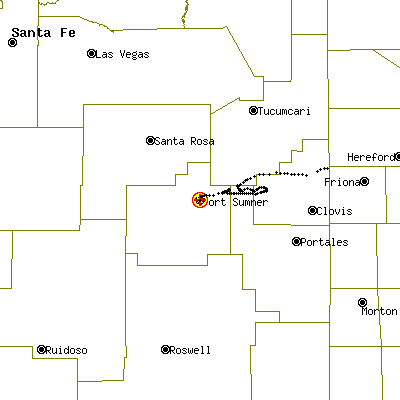
Landing site: 20 miles NNE of Clovis, New Mexico, US
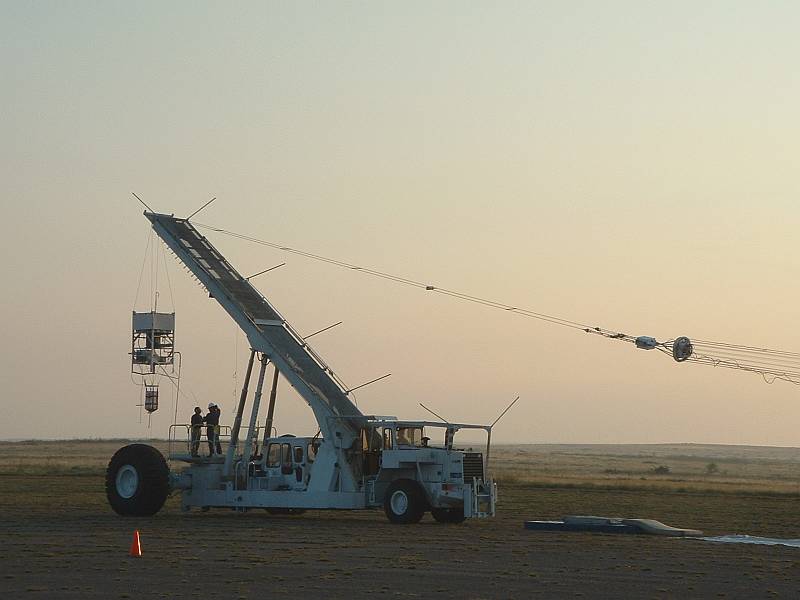
The balloon was launched at 13:27 utc on September 29th using the dynamic method assisted by a launch vehicle.
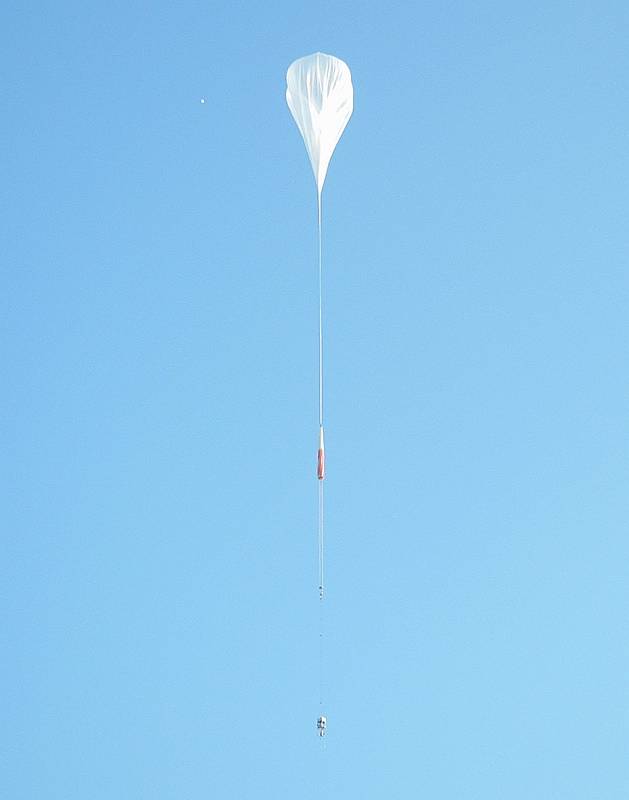
Following a nominal ascent phase, the balloon reached a float altitude of 110.400 feet. In the map at left can be seen the balloon path (click to enlarge).
After one hour of flight at float level a controlled valve-down profile was initiated to allow to obtain atmospheric samples at several levels during a slow descent on three hour and 35 minutes of duration.
Once the balloon attained the 49.900 feet at 20:59 utc, the separation command was transmited and the flight ended. The payload landed 20 nm N-NE of Clovis, NM at coordinates 34º 46.5' North and 103º 00.7' West and the recovery was delayed near 4 days by unknown reasons.
This was the second sampler deployment flight as an engineering trial. On it were successfully retrieved samples, with only one sample lost. The gondola recovery was delayed several days.
External references
- Dr. Elliot Atlas, CWAS Principal Investigator University of Miami
Images of the mission

If you consider this website interesting or useful, you can help me to keep it up and running with a small donation to cover the operational costs. Just the equivalent of the price of a cup of coffee helps a lot.