
Purpose of the flight and payload description
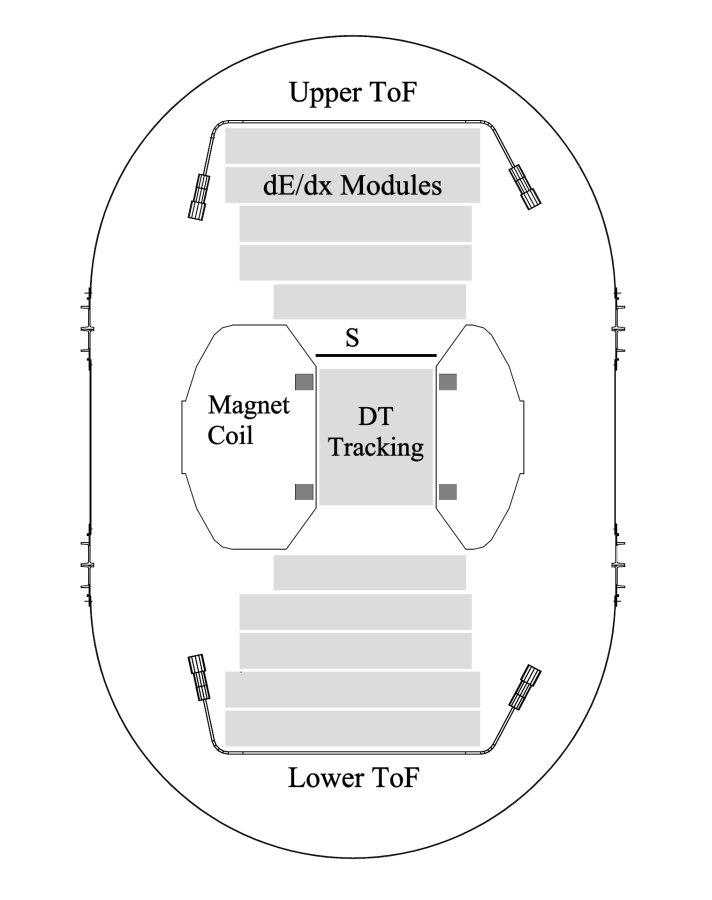
An instrument optimized for the measurement of the cosmic ray antiproton flux up to at least a range of energy of 50 GeV, that identifies particles through the combination of a superconducting magnet, a drift tube hodoscope (DTH), time-of-flight scintillators (ToF), and multiple energy loss wire chambers (dE/dx). At left can be seen a scheme of it (click to enlarge)
Its an evolved version of a similar experiment that was focused on the detection and identification of cosmic-ray electrons and positrons, flown succesfully in 1994 and 1995.
The superconducting magnet, with two circular Niobium-Titanium coils held at 4.2 K in a liquid-helium bath, provides an approximately uniform field of about 1 Tesla within a rectangular room-temperature bore. The cryostat employs a vapor-cooled radiation shield and superinsulation to isolate the inner helium vessel from the ~300 K environment. The total liquid helium capacity for the system is 260 liters, with a maximum hold time of ~7 days.
The drift-tube hodoscope (DTH) consists of 479 thin-walled drift tubes, each 2.5 cm in diameter, arrayed in 26 layers. Of these, 18 layers are aligned with the tube axes parallel to the magnetic field, and provide trajectory measurements used to determine rigidity. The remaining 8 layers, aligned with axes normal to the magnetic field, provide the additional information required to reconstruct trajectories in three dimensions. A drift gas based on CO2 with hexane as an organic quencher flows through the tubes.
The time-of-f1ight detector discriminates against upward particles, which can masquerade as antiprotons. In addition, ToF signals are combined with coincident hits in S (a separate layer of scintillator in the magnet bore just above the DT hodoscope) to provide a fast trigger. The ToF detector consists of two 1 m x 1 m layers of plastic scintillator separated by 2.76 m. Each scintillator layer is divided into four paddles 1 cm x 25 cm x 1 m in size and each end of a paddle is viewed by a photomultiplier tube (PMT). Each PMT detects approximately 40 photoelectrons for a vertical atmospheric muon traversing the center of the paddle. For a triggered event, timing and charge-integrated signal size are digitized for each participating PMT. Thus, upward and downward going particles are easily distinguished by the TOF detector.
The dE/dx detector system contains a total of 140 multiwire proportional chambers, each with a thickness of 1 cm, and is divided into two stacks, one above and one below the magnet. A combination of Xenon and Methane (95% and 5% of the mixture respectivelly) provides the highest possible velocity resolution and stability. Anode wires are connected in groups of 4-6 and read out by an AMPLEX amplifier. Custom 8-bit ADCs digitize the amplified signals.
Details of the balloon flight
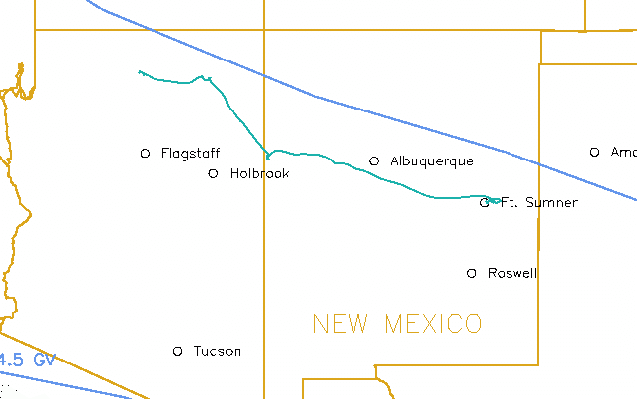
Balloon launched on: 6/3/2000 at 14:34 utc
Launch site: Scientific Flight Balloon Facility, Fort Sumner, (NM), US
Balloon launched by: National Scientific Balloon Facility (NSBF)
Balloon manufacturer/size/composition: Zero Pressure Balloon 1.100.000 m3 - SF3-39.57-.8/.8/.8/.8-NA
Balloon serial number: W39.57-3-20
Flight identification number: 484N
End of flight (L for landing time, W for last contact, otherwise termination time): 6/4/2000 at 15:20 utc
Balloon flight duration (F: time at float only, otherwise total flight time in d:days / h:hours or m:minutes - ): 25 h 30 m
Landing site: 20 miles N of Cedar Ridge, Arizona, US
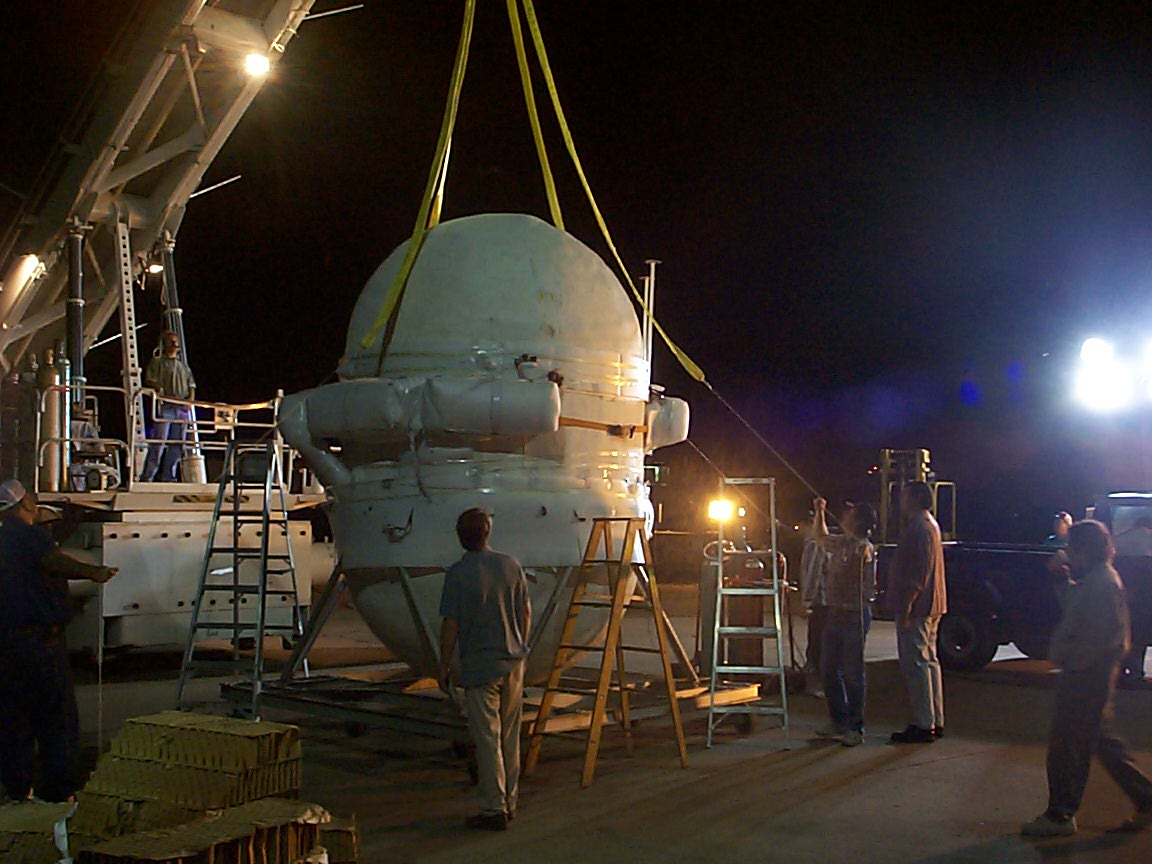
The balloon was launched by dynamic method with assistance of launch vehicle (Big Bill) in the morning of June 3, 2000. The launch and climbing phase to float were flawless.
The balloon took a heading due to the northwest during the rest of day and night and after a total flight time of near 25 hours 30 minutes the package was brought down safely, north of Flagstaff, Arizona. The flight was ended early to avoid a landing of the payload within the Great Canyon, which would have considerably complicated recovery operations.
Third flight of the instrument and the first to yield useful data.
The detector operated for 22 hours at an altitude between 32 and 37 km, recording more than 1.9 million events over an integrated live time of 16.2 hours.
A total of 78 antiproton candidates were identified, of which approximately 5 are estimated to be background events.
External references
- A new measurement of the altitude dependence of the atmospheric muon intensity Phys.Rev. D70 (2004) 092005
- Balloon Launch Inside Wallops - Volume XX-00 Nº 25
- Measurement of the Cosmic-Ray Antiproton Energy Spectrum with HEAT-pbar 28th International Cosmic Ray Conference. July 31-August 7, 2003. Trukuba, Japan
- Measurement of the Cosmic-Ray Antiproton to Proton Abundance Ratio between 4 and 50 GeV Phys.Rev.Lett. 87 (2001) 271101
- New Measurement of the Cosmic-Ray Positron Fraction from 5 to 15 GeV Phys.Rev.Lett.93:241102,2004
- Particle Identification with the HEAT dE/dx vs. Rigidity Detector System 26th International Cosmic Ray Conference. August 17-25, 1999. Salt Lake City, Utah, USA.
- The HEAT-pbar cosmic ray antiproton experiment 26th International Cosmic Ray Conference. August 17-25, 1999. Salt Lake City, Utah, USA.
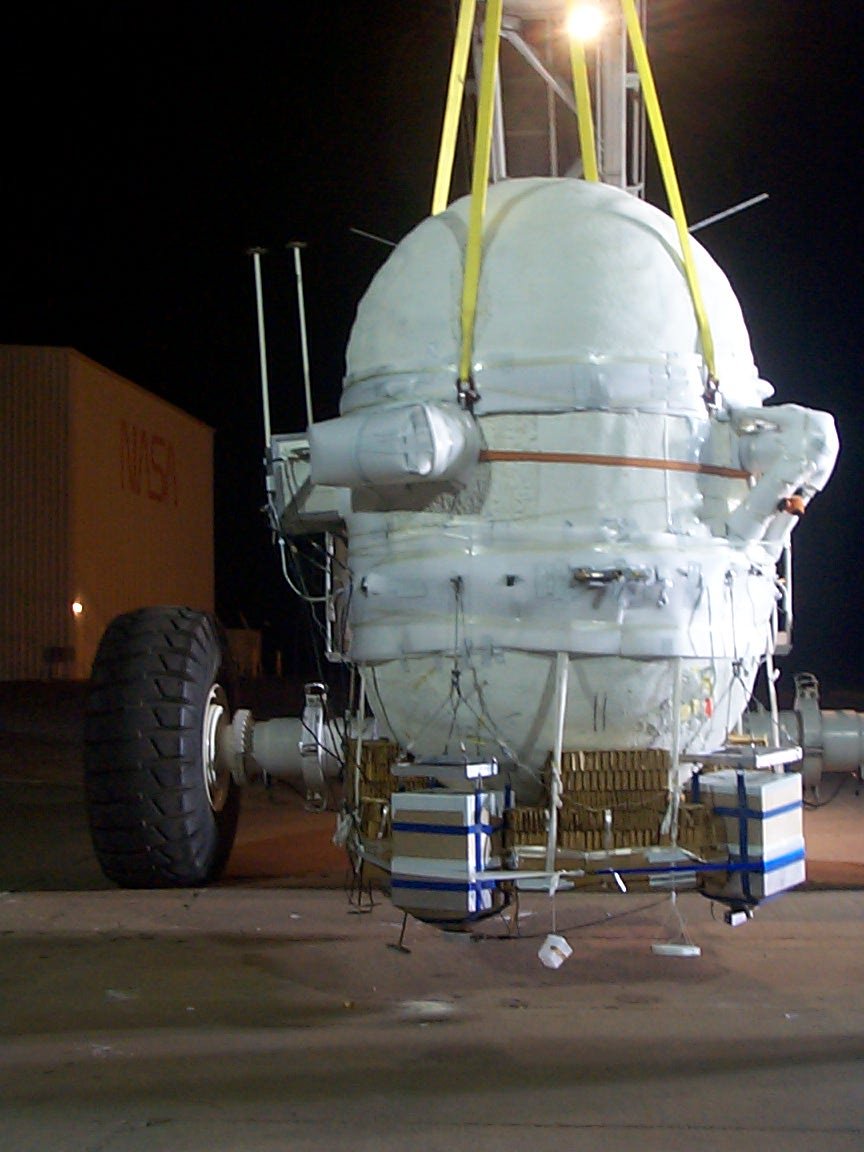
Images of the mission
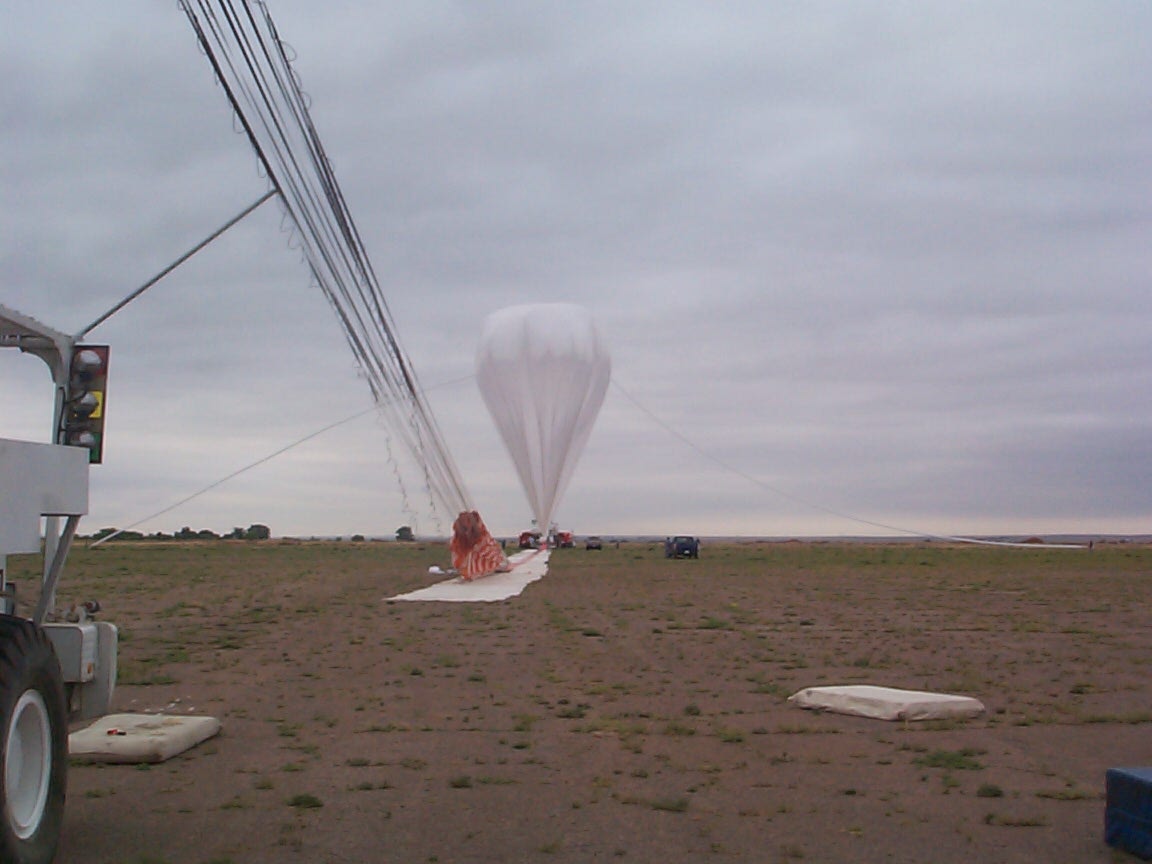
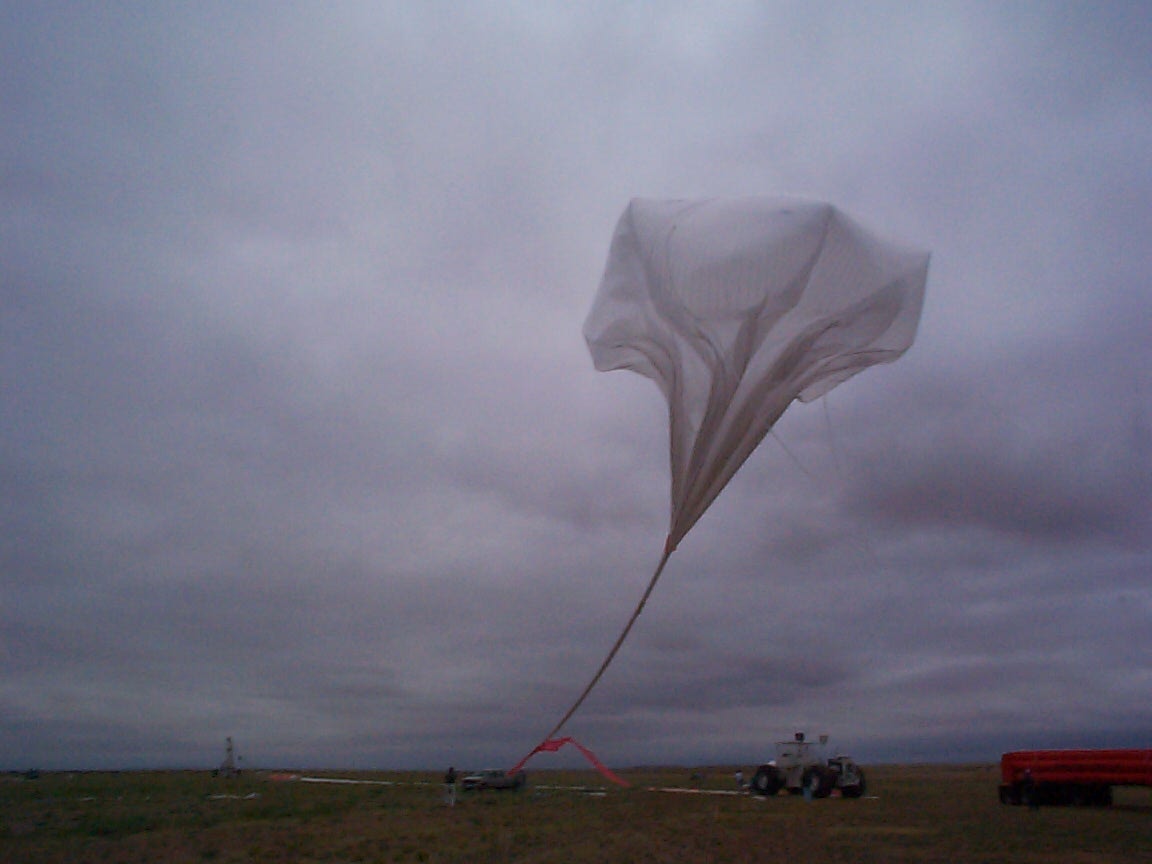
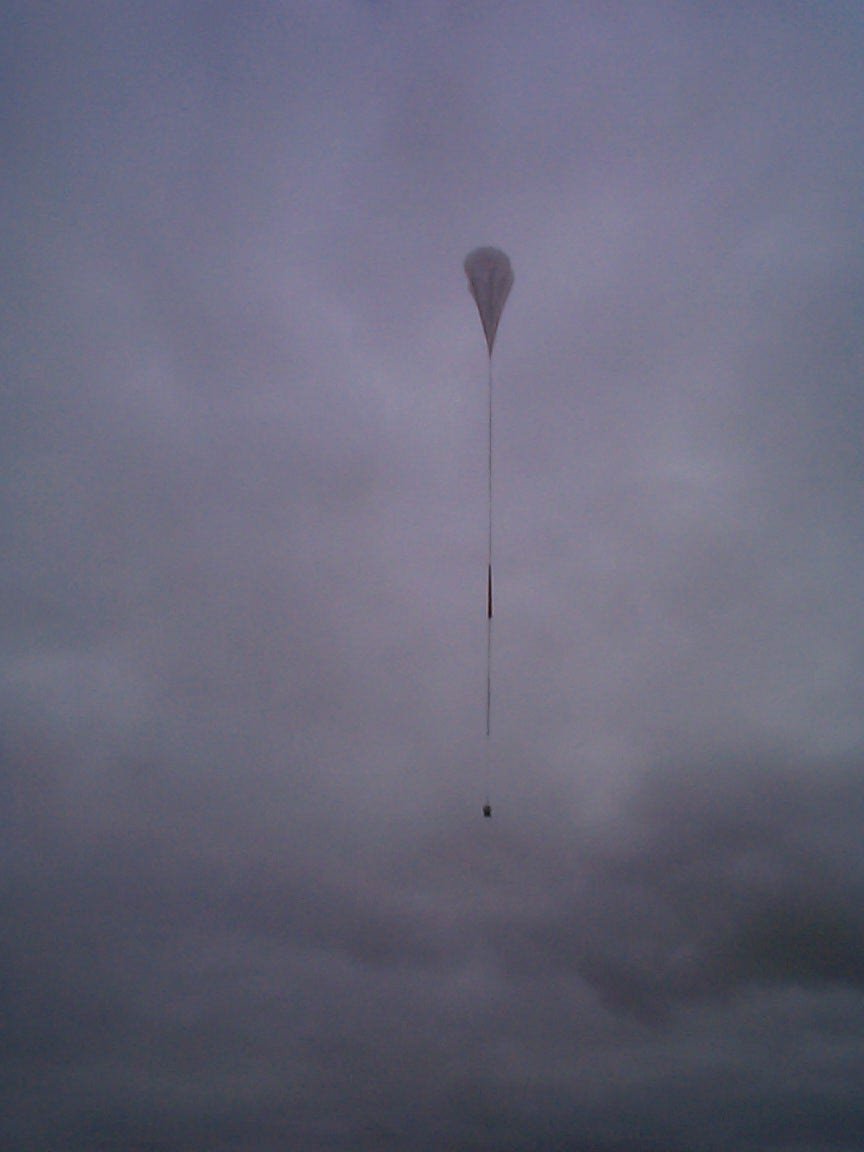
If you consider this website interesting or useful, you can help me to keep it up and running with a small donation to cover the operational costs. Just the equivalent of the price of a cup of coffee helps a lot.