
Purpose of the flight and payload description
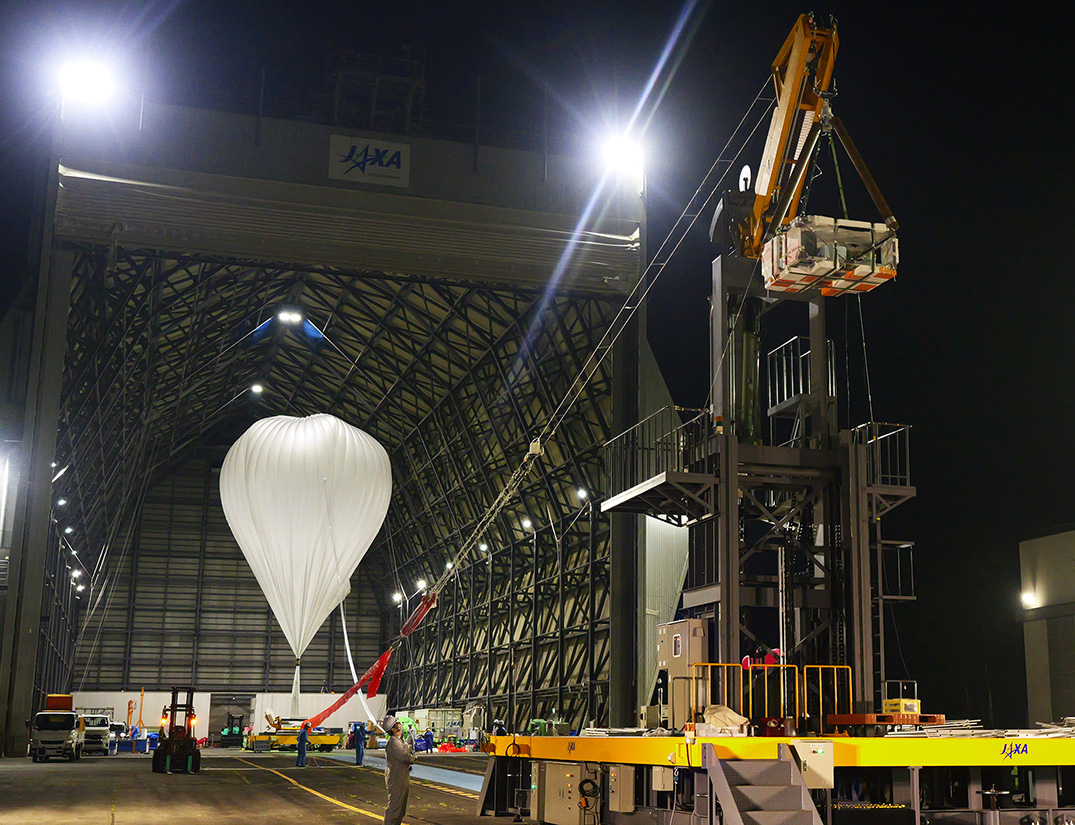
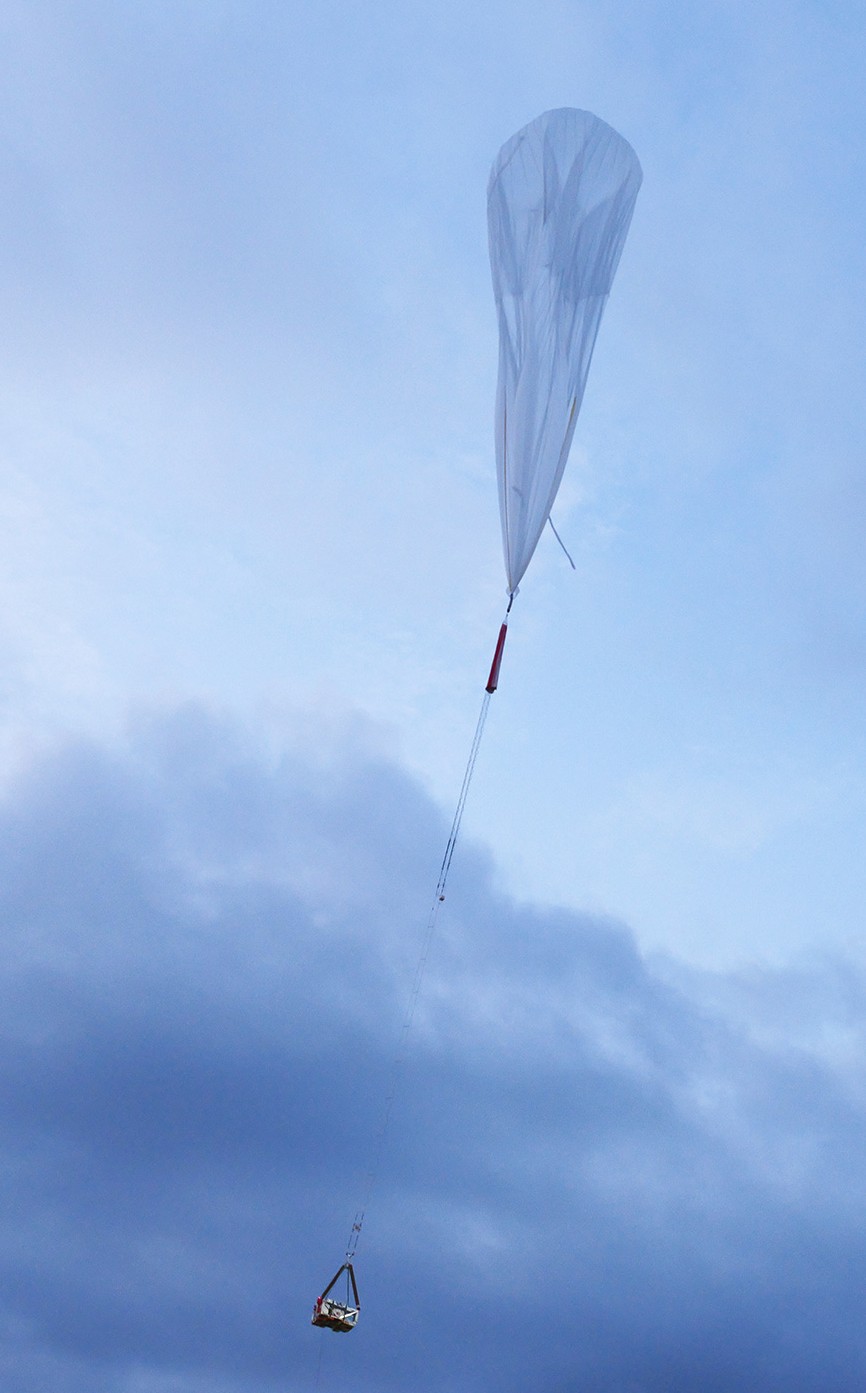
BACS0 acronym for Balloon-borne Attitude Control System 0 is an experiment developed by JAXA's Institute of Space and Astronautical Science (ISAS) as an engineering experiment to advance attitude-control technology for balloon-borne payloads. Precise attitude control is required for balloon-borne astronomical observations because instruments such as telescopes must be oriented accurately toward celestial targets while suspended from a balloon and exposed to disturbances that can alter the payload's pointing direction. The BACS development combines attitude-control technologies used in previous balloon experiments with displacement-measurement technologies developed more recently, with the objective of producing a compact, lightweight and high-performance attitude-control system suitable for a range of future balloon experiments, particularly astronomical observations.
BACS0 represents the initial stage of this development. The experiment incorporated the coarse attitude-control system into an attitude-control unit and evaluated its operation under actual balloon-flight conditions. The system is intended to provide the initial, relatively broad control of the payload's orientation. A fine attitude-control system is being developed separately and is planned to be integrated with the coarse-control system in a subsequent stage. BACS0 therefore serves as a flight test of the coarse-control portion and as the first step toward a combined system capable of more precise attitude control.
Details of the balloon flight
Balloon launched on: 9/1/2026 at 4:35 JST
Launch site: Multipurpose Aviation Research Field, Taiki-Cho, Hokkaido, Japan
Balloon launched by: Institute of Space and Astronautical Science (ISAS) / Japan Aerospace Exploration Agency (JAXA)
Balloon manufacturer/size/composition: Zero Pressure Balloon model B30 30.000 m3
Flight identification number: B26-03
End of flight (L for landing time, W for last contact, otherwise termination time): 9/1/2026 at 10:55 JST
Balloon flight duration (F: time at float only, otherwise total flight time in d:days / h:hours or m:minutes - ): 6 h 20 m
Landing site: In the Pacific Ocean, 110 km E of Taiki, Japan
The balloon was launched from the Taiki Aerospace Research Field in Hokkaido, on 1 September 2026 at 4:35 JST. Following launch, it ascended at approximately 230 m/min. About 1 hour 30 minutes after launch, it reached its float altitude of approximately 21 km over the Pacific Ocean, at a position about 100 km east of the Taiki Aerospace Research Field. The balloon remained at altitude until the flight was terminated at 10:55 JST by radio command. The flight train and payload subsequently descended toward the Pacific Ocean to a point located 110 km east of the Taiki Aerospace Research Field. Recovery boats retrieved the equipment at approximately 12:29 JST.
External references
- Press release about the launch JAXA website
Images of the mission
StratoCat is an independent, non-commercial project maintained to preserve and share the history of scientific and stratospheric ballooning. If you find the site useful, you can help keep it running with a small donation toward its operating costs. Every contribution, even the equivalent of a cup of coffee, is greatly appreciated.