
Purpose of the flight and payload description
BEXUS which stands for Balloon Experiments for University Students is a project part of the REXUS/BEXUs initiative that allows students from universities and higher education colleges across Europe and more recently also Canada to carry out scientific and technological experiments on stratospheric research balloons. The basic idea behind BEXUS is to provide an experimental space platform for students in different areas of interest such as atmospheric research, fluid physics, magnetic field, materials science, radiations physics, astrophysics, biology and also to serve as a platform for new technology demonstrations.
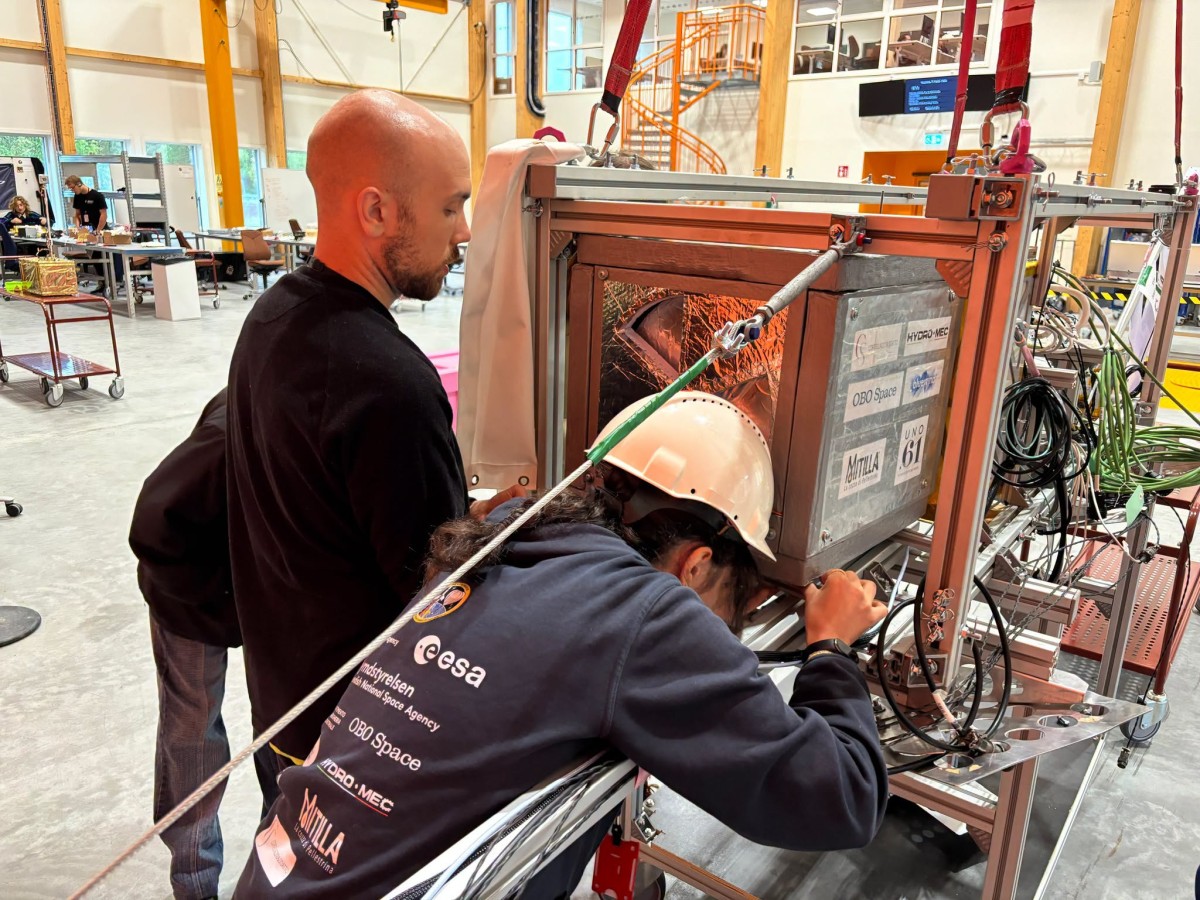
Each year, two balloons are launched from the European Space Range (ESRANGE) base near Kiruna, Sweden each carrying several experiments assembled on a medium-sized gondola (1.16 m x 1.16 m x 0.84 m). The total lifted-mass is approximately 300kg on each flight. With each payload weighing between 30 and 112 kg that means that 4 student experiments can be accomodated per gondola.
The first five flights of the program were carried out under sponsorship of the Swedish Space Corporation that offered available space on yearly technological flights carried out at ESRANGE. Since 2008, BEXUS is realised under a bilateral Agency Agreement between the German Aerospace Center (DLR) and the Swedish National Space Agency (SNSA). The Swedish share of the payload is made available to students from other European countries through a collaboration with the European Space Agency (ESA). EuroLaunch, a cooperation between ESRANGE and the Mobile Rocket Base (MORABA) of DLR, is the organism responsible for the campaign management and operations of the launch vehicles.
On each cycle of the initiative, experts from DLR, SSC, ZARM (Center of Applied Space Technology and Microgravity, University of Bremen) and ESA provide technical support to the student teams throughout the project. It begins with a Call for Proposals, followed by a condensed space project lifecycle, including typical design phases and reviews, culminating in the launch of the experiments and publication of the final reports.
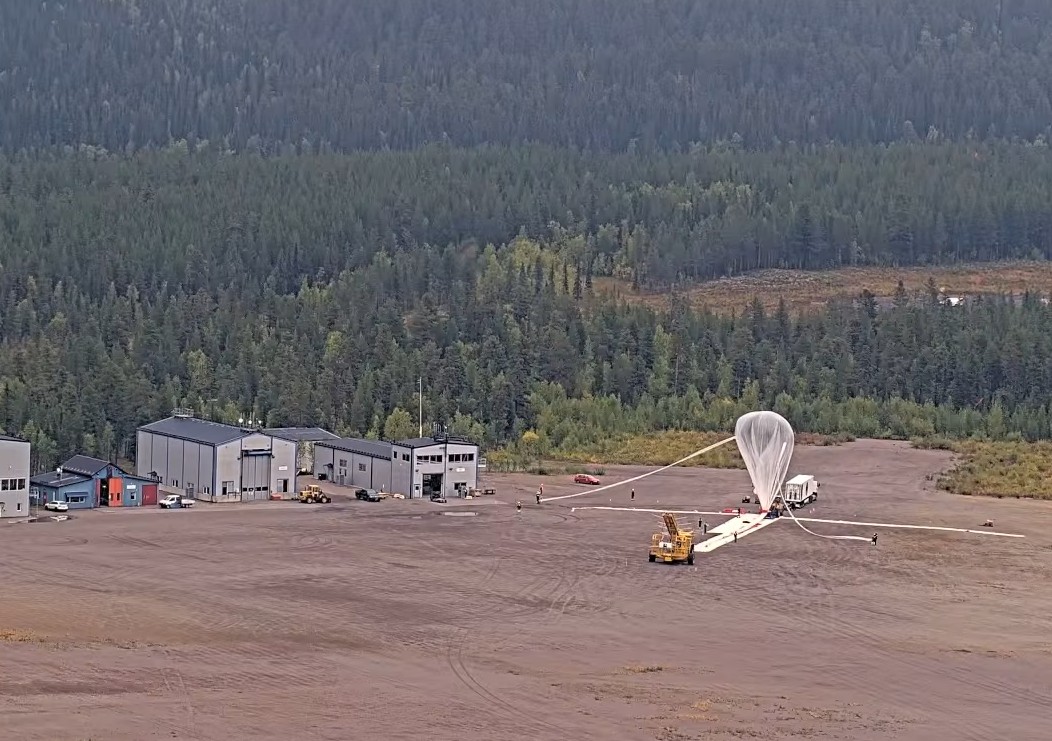
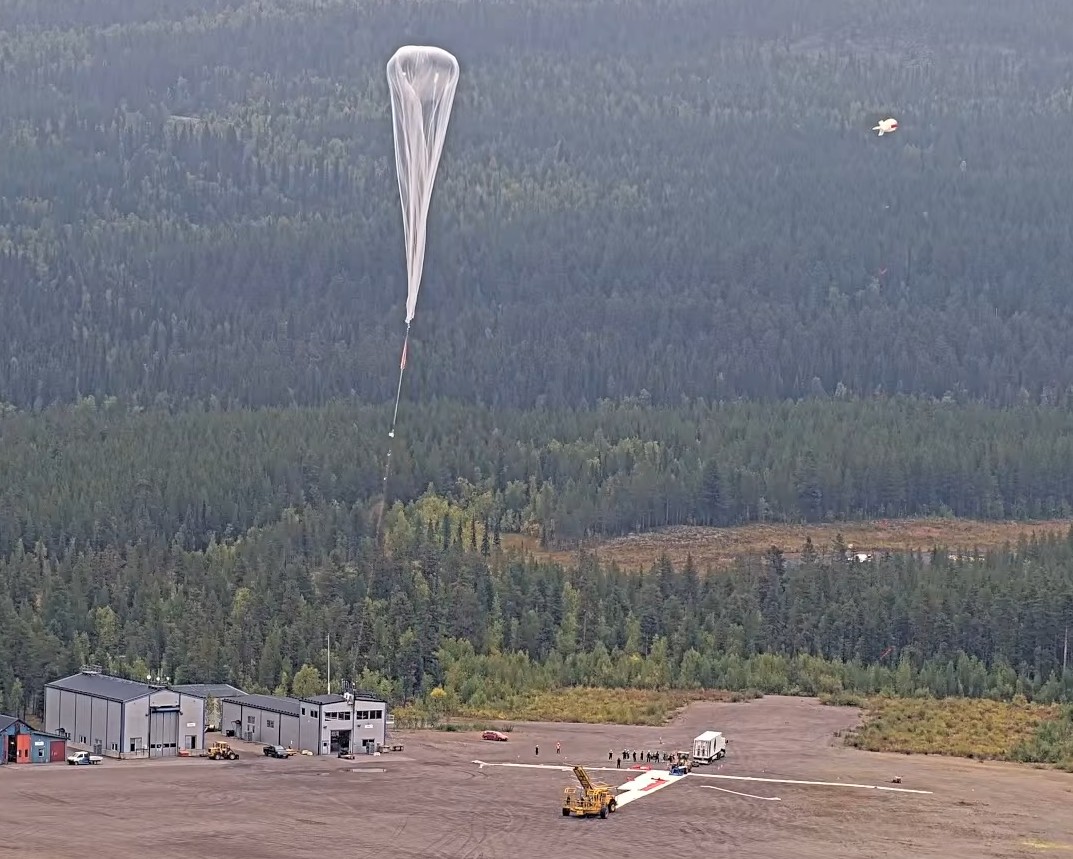
Video footage of the launch
Details of the balloon flight
Balloon launched on: 8/21/2026 at 9:02 UTC
Launch site: European Space Range, Kiruna, Sweden
Balloon launched by: Swedish Space Corporation (SSC)
Balloon manufacturer/size/composition: Zero Pressure Balloon
End of flight (L for landing time, W for last contact, otherwise termination time): 8/21/2026
Balloon flight duration (F: time at float only, otherwise total flight time in d:days / h:hours or m:minutes - ): 4 h 43 m
Landing site: 10 km SW from Tuolpukka, Sweden
BEXUS 36 was launched on August 21, 2026 as a reflight of a failed attempt performed in October 2025. The balloon was launched at 9:02 UTC and remained in flight for 4 hours and 43 minutes before landing 10 km SW from Tuolpukka, Sweden.
The BEXUS 36 mission carried experiments covering optical communications, photovoltaic energy generation, radiation effects on electronics, optical navigation, biological systems and solar-sail technology.
CRAB (Communication via Retroreflectors and ABsorption modulators), developed by TU Dresden, investigated optical communication using modulating retroreflectors. Instead of carrying a high-power laser transmitter, the system receives laser light from a ground station, modulates the reflected beam and sends the information back. The experiment tested optical tracking of the balloon gondola and the operation of the modulator under stratospheric conditions, evaluating the concept as a low-power and compact communication system for small spacecraft.
EVE CURiE (ExtraVehicular Energy from Composite photovoltaics Undergoing Radiation Exposure), from the Warsaw University of Technology, investigated photovoltaic devices incorporating plastic scintillators. The scintillators convert incident radiation into additional light that can be used by photovoltaic cells. The experiment measured electrical power generation and maximum-power-point behaviour under different loads, studying the performance of the technology under the radiation and environmental conditions encountered at high altitude.
GLITCH (Gamma Light Interference in Technological Circuitry and Hardware), developed by Luleå University of Technology, studied radiation-induced effects in electronic circuits. It focused on Single Event Upsets in SRAM memory, which occur when energetic particles alter the stored state of semiconductor memory cells. The experiment recorded these events during the flight to characterize the radiation environment and assess its effects on electronic hardware.
SHAREon (Sensors for High Altitude Research Experiment Optical Navigation), from EAH Jena, investigated optical methods for determining vehicle attitude. The experiment tested sensors based on photodiodes and infrared cameras, using radiation and atmospheric features observed around the horizon to derive orientation information. The flight provided operational data on these optical navigation techniques under stratospheric conditions.
SUNFLOWER (SUN FLux Optimized Wide-ranging Efficient Radiator), developed by the University of Padova, investigated autonomous control of the thermal and illumination conditions required by biological systems. The experiment used adaptive covers over a window and radiator to regulate incoming radiation and heat rejection. Their configuration could be adjusted according to environmental conditions to maintain suitable conditions for plant-related biological experiments.
Project Svarog, from Imperial College London, demonstrated the deployment and rotation of a CubeSat-like solar sail. The experiment used a deployable membrane and supporting structures to investigate sail deployment and behaviour at high altitude. The flight provided data on the deployment mechanism and the configuration of the sail after deployment, supporting the development of future solar-sail systems.
External references
- BEXUS 36 returns to flight ESA Website
- Rexus / Bexus website
Images of the mission
StratoCat is an independent, non-commercial project maintained to preserve and share the history of scientific and stratospheric ballooning. If you find the site useful, you can help keep it running with a small donation toward its operating costs. Every contribution, even the equivalent of a cup of coffee, is greatly appreciated.