
Purpose of the flight and payload description
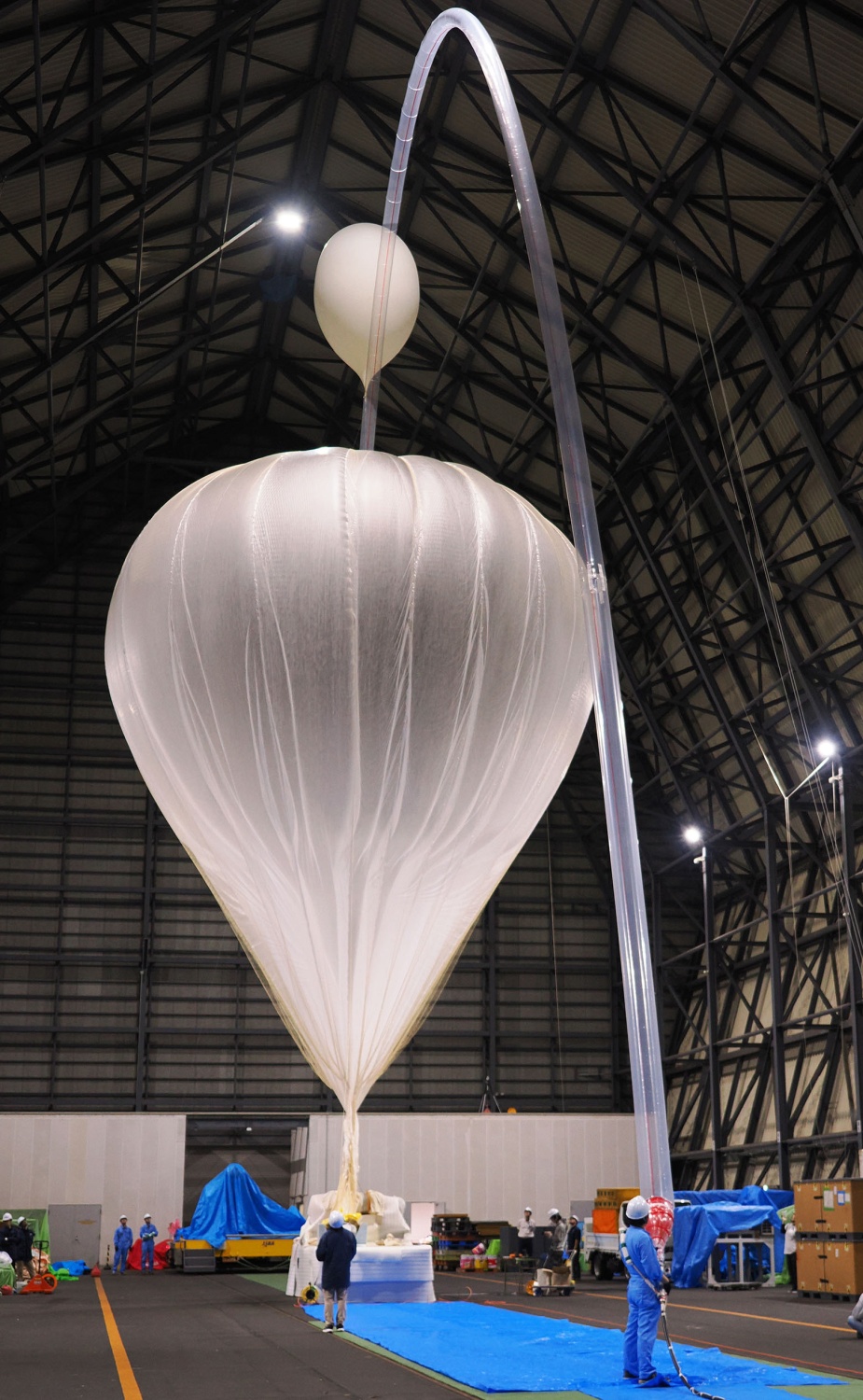
This was a test flight of a super pressure balloon with a volume of 2,000 m3 of new design manufactured by covering the film with a net. The main characteristic of the new balloon is that it have more resistance to over pressure and is lightweight so it could potentially carry a heavy payload during long time.
In the B20-03 experiment conducted in 2020, it was found that the conventional launch method could cause interference between the net and the balloon film, leading to damage. Therefore, a quasi-static launch method using a winch was newly developed. In this experiment, a super-pressure balloon with a volume of 2,000 m³ was launched using this new method to verify the effectiveness of the launch procedure and the validity of operations throughout the flight, from launch to recovery. The envelope deployment and pressure resistance of the balloon were also evaluated during the flight.
Details of the balloon flight
Balloon launched on: 8/31/2025 at 4:37 JST
Launch site: Multipurpose Aviation Research Field, Taiki-Cho, Hokkaido, Japan
Balloon launched by: Institute of Space and Astronautical Science (ISAS) / Japan Aerospace Exploration Agency (JAXA)
Balloon manufacturer/size/composition: Super Pressure Balloon 2000 m3
Flight identification number: B25-04
End of flight (L for landing time, W for last contact, otherwise termination time): 8/31/2025
Balloon flight duration (F: time at float only, otherwise total flight time in d:days / h:hours or m:minutes - ): ~ 1 h
Landing site: In the Pacific Ocean, 35 km ESE of Taiki, Japan
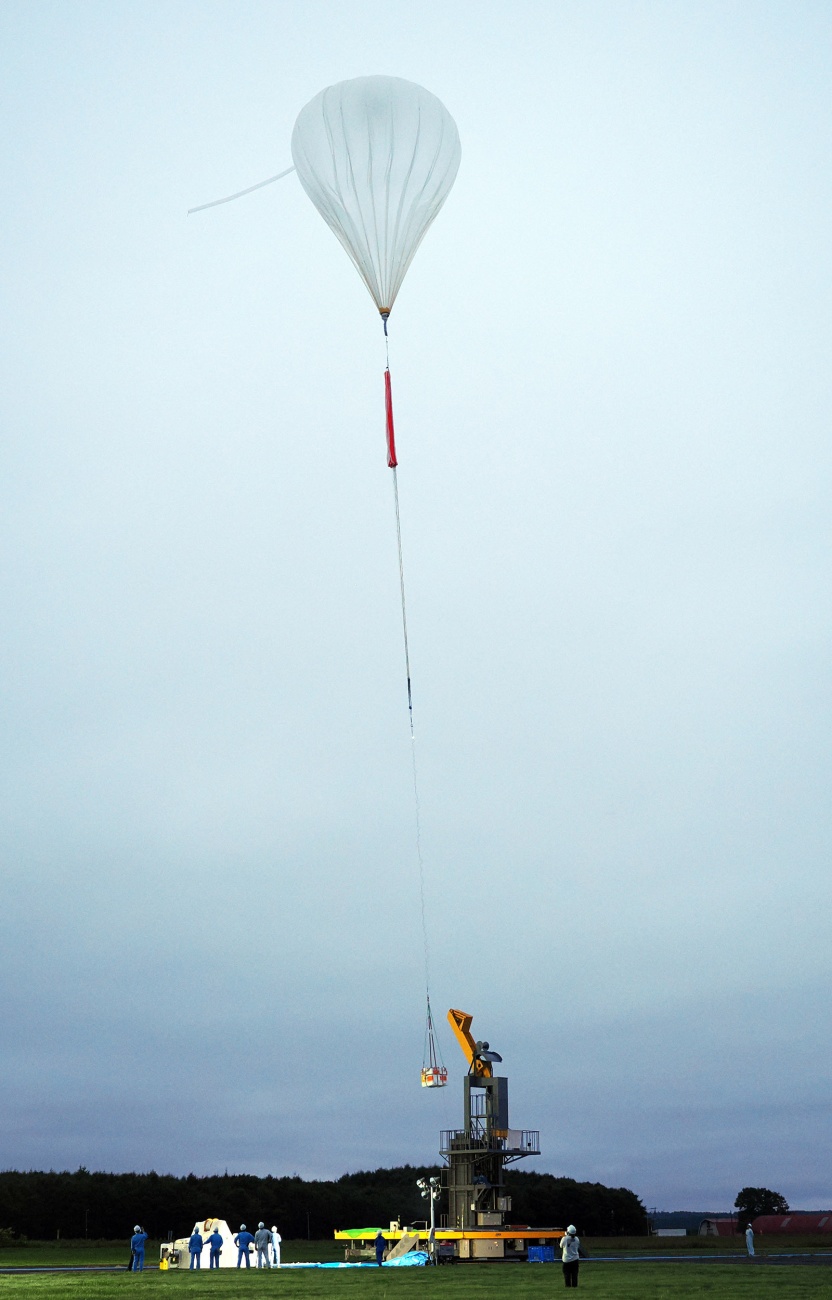
The balloon was launched from the Taiki Aerospace Research Field, in Hokkaido, Japan at 4:37 JST on August 31, 2025. Ascending at a rate of 340 m per minute the balloon reached an altitude of 9 km at 5:03 JST. After that, the balloon was separated from the payload and fell to the Pacific Ocean while flying 35 km east-southeast of Taiki. Both elements were retrieved by a recovery ship from sea surface at different points near 5:32 JST.
External references
Images of the mission
If you consider this website interesting or useful, you can help me to keep it up and running with a small donation to cover the operational costs. Just the equivalent of the price of a cup of coffee helps a lot.