
Purpose of the flight and payload description
ELVES (Electron Losses driven by VLF EmissionS) mission was a multi-instrument payload aimed to determine the effectiveness of VLF emissions in precipitating inner belt electrons in various geomagnetic conditions. The mission is part of a inititative called Electron Losses and Fields Investigation (ELFIN) a twin satellite mission that studied space weather using three scientific instruments in a 3U+ CubeSat form factor. ELFIN was rocket-launched on 9/15/2018 and was first satellite mission designed, built, tested, and operated at the University of California Los Angeles, primarily by undergraduate students.
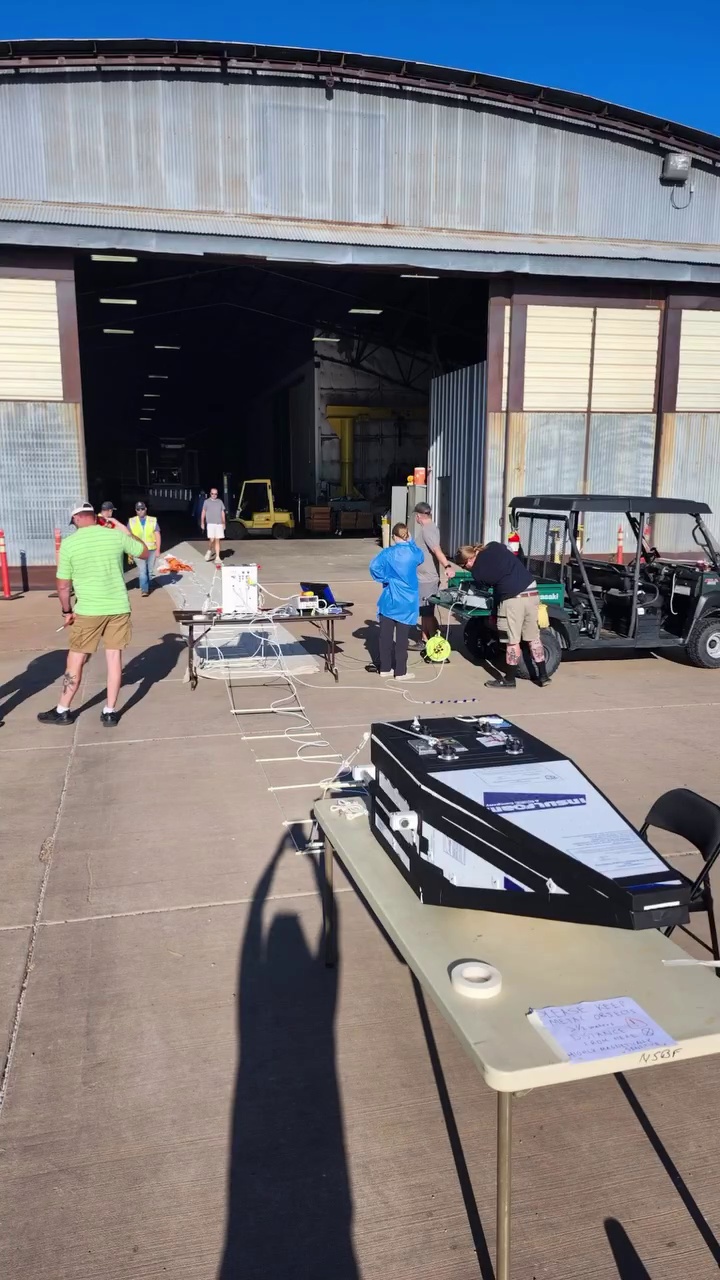
The ELVES payload was built around a Software Defined Payload Interface (SDPI), which acted as the backbone for powering and controlling all the instruments.
One of the core instruments in ELVES was the UCLA High Frequency Loop (HFLoop) sensor designed to measure VLF (very low frequency) electromagnetic waves, in particular the wave-normal angle distribution and polarization of VLF transmissions before they escape into the magnetosphere.
Another instrument was the UCLA/APS Fluxgate Magnetometer (FGM), which measured the vector magnetic field in the region of interest, allowing for the context of wave and particle interactions to be more fully understood.
In addition, the mission carried two PNI RM3100 integrated magnetometers that served for magnetic field vector measurements at a smaller scale than the primary fluxgate. The RM3100 is known from other literature to be a low-power, three-axis, commercial off-the-shelf (COTS) magneto-inductive sensor, used here presumably for auxiliary or fine-scale measurements.
Finally, the instrument suite included a particle detector called MediPIX EDU, for measuring the precipitating energetic electrons (or particles). It allowed the team to investigate how VLF waves and magnetic fields may cause particle losses.
Details of the balloon flight
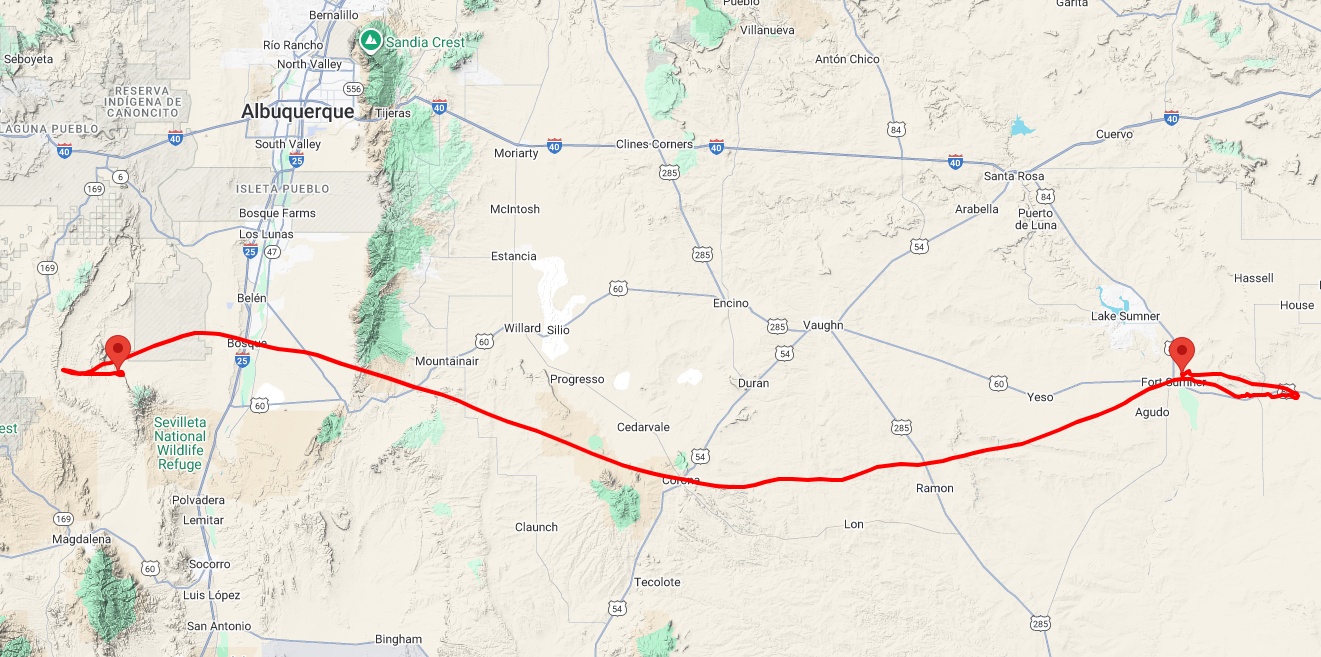
Balloon launched on: 9/15/2025 at 14:05 UTC
Launch site: Scientific Flight Balloon Facility, Fort Sumner, (NM), US
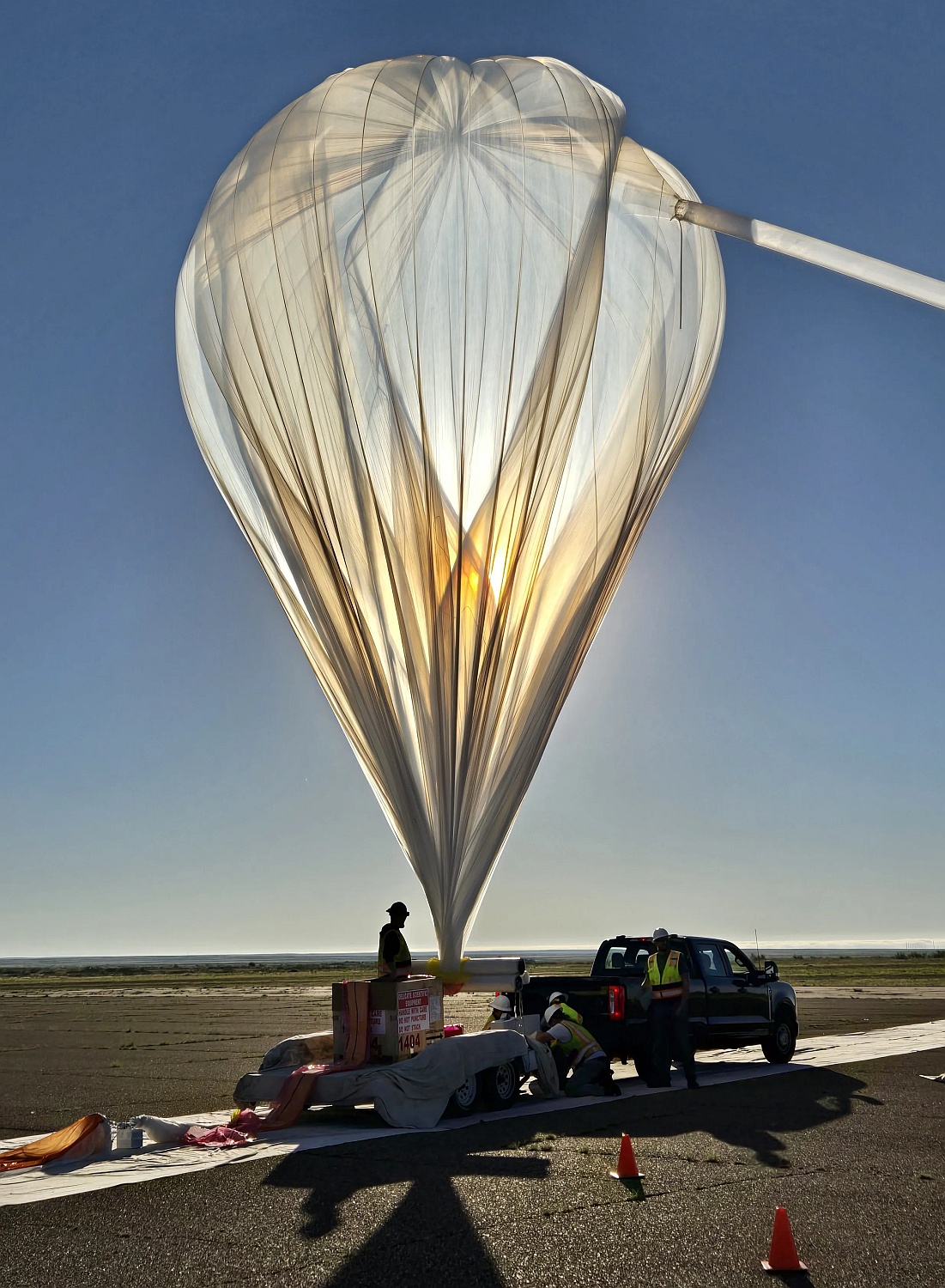
Balloon launched by: Columbia Scientific Balloon Facility (CSBF)
Balloon manufacturer/size/composition: Zero Pressure Balloon
Flight identification number: 756N
End of flight (L for landing time, W for last contact, otherwise termination time): 9/15/2025 at 22:30 UTC
Balloon flight duration (F: time at float only, otherwise total flight time in d:days / h:hours or m:minutes - ): 8 h 20 m
Original plan was that this mission would be onboard of the first two balloons launched from the new NASA balloon launch site in Burns, Oregon and study VLF emissions from the NLK station in Washington. However, due to funding issues at NASA, the launch campaign was cancelled pretty late, and so the mission was rescheduled to fly from New Mexico instead.
External references
Images of the mission
If you consider this website interesting or useful, you can help me to keep it up and running with a small donation to cover the operational costs. Just the equivalent of the price of a cup of coffee helps a lot.