Purpose of the flight and payload description
The objective of the flight was to extend the measurements of atmospheric trace gases and aerosols, previously carried out with high-altitude U-2 aircraft, to even higher altitudes using a balloon-borne platform. The aim was to collect uncontaminated air samples for identifying fluorocarbons, nitrous oxide, and other trace gases, as well as to collect aerosols for physical and compositional analysis. A significant secondary objective was to test and evaluate the performance of a wind-pointing gondola system that could orient itself into the differential wind to ensure clean sampling conditions. The experiment was a collaborative effort involving the Ames Research Center of NASA, and the National Center for Atmospheric Research (NCAR). Key technical support, such as air ejector systems and components, was also provided by the U.S. Air Force.
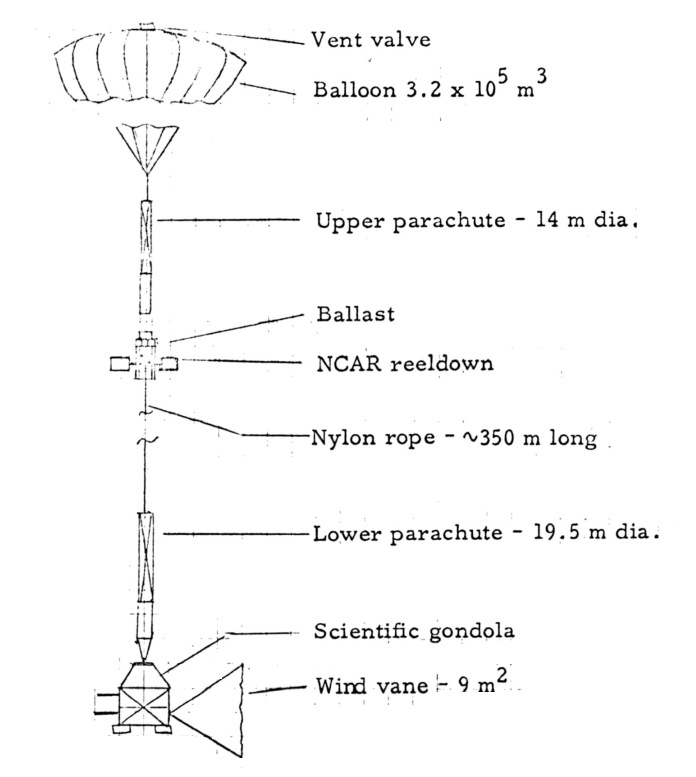
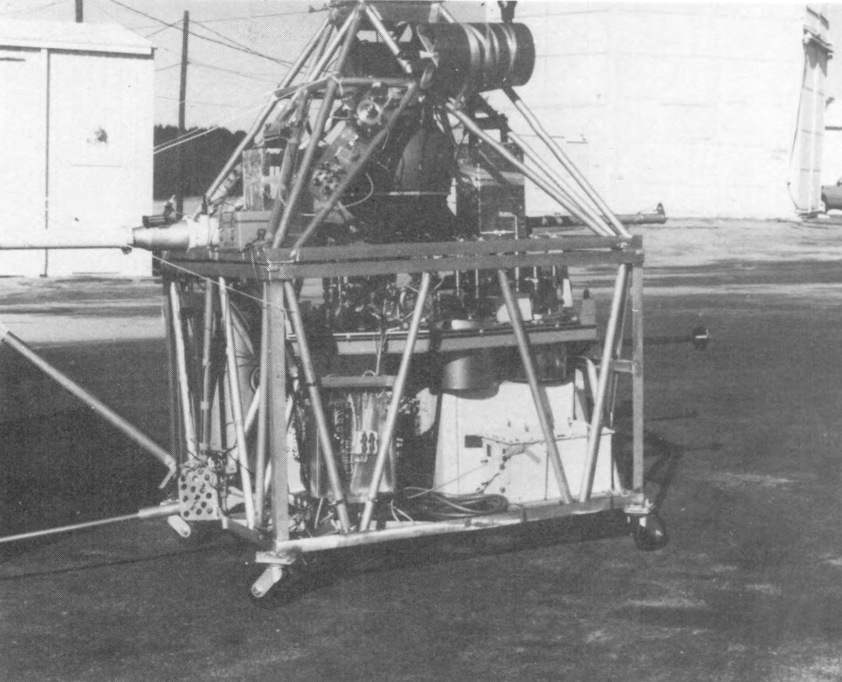
The experimental setup was carried on a gondola suspended approximately 350 meters below a stratospheric balloon to reduce contamination from the balloon itself. Two primary scientific experiments were deployed: a gas sampling cryosampler and an aerosol collection system.
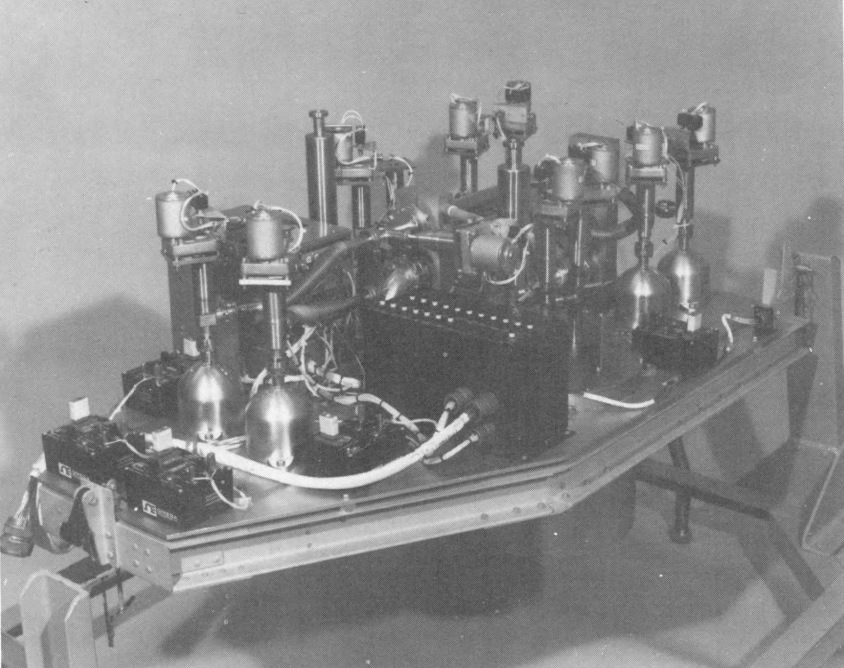
The cryosampler was cooled with liquid nitrogen and used a large molecular sorption pump capable of handling 2000 liters of standard temperature and pressure (STP) air while maintaining a vacuum. This system included four vacuum-jacketed dewars filled with stainless steel wool for trapping trace gases via condensation. Airflow was measured precisely, and motor-driven bellows valves ensured sealed, contamination-free operation. The system was thoroughly cleaned, baked, purged, and sealed before flight.
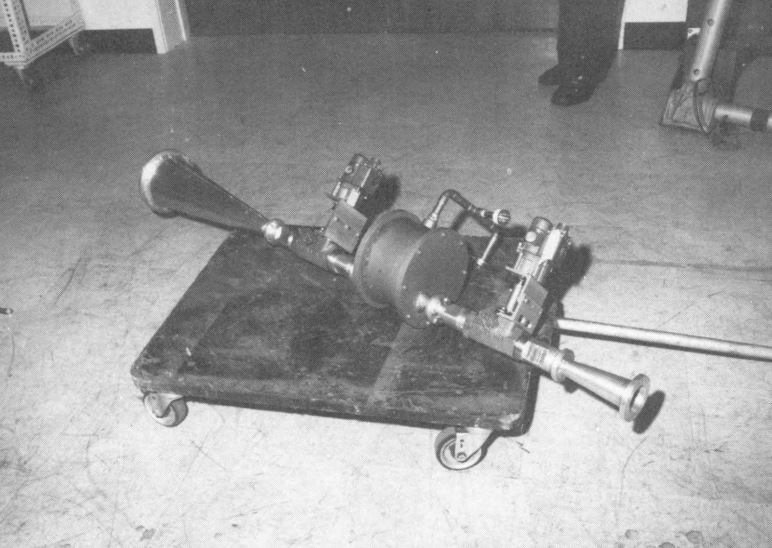
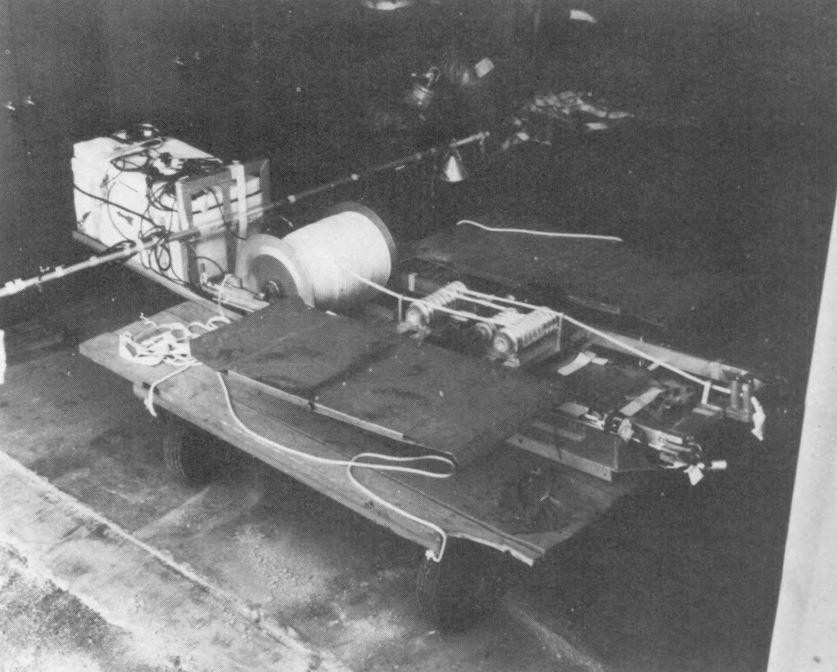
The aerosol experiment used an air ejector pumping system to draw high-speed ambient air through a rotating sampling chamber. Each of the four sampling positions held a particle collector consisting of a fine wire and electron microscope screen. Gold shadowing techniques were employed before and after sampling using subminiature lamps to vapor-deposit gold at oblique angles, allowing collected particles to be distinguished from preexisting contaminants based on shadow patterns. All operations of the aerosol systemincluding valve actuation and gold depositionwere ground-controlled via telemetry.
The gondola itself was built with modular aluminum framing, accommodating standard U-2 experiment racks. Its electronics were powered by a large, high-capacity silver-zinc battery. Data handling and command functions were supported by NCARs Consolidated Instrument Package, interfaced with custom-designed signal conditioning and latching relay circuits. Motor and valve status were monitored via LED indicators and command boxes designed for ground testing and pre-launch validation.
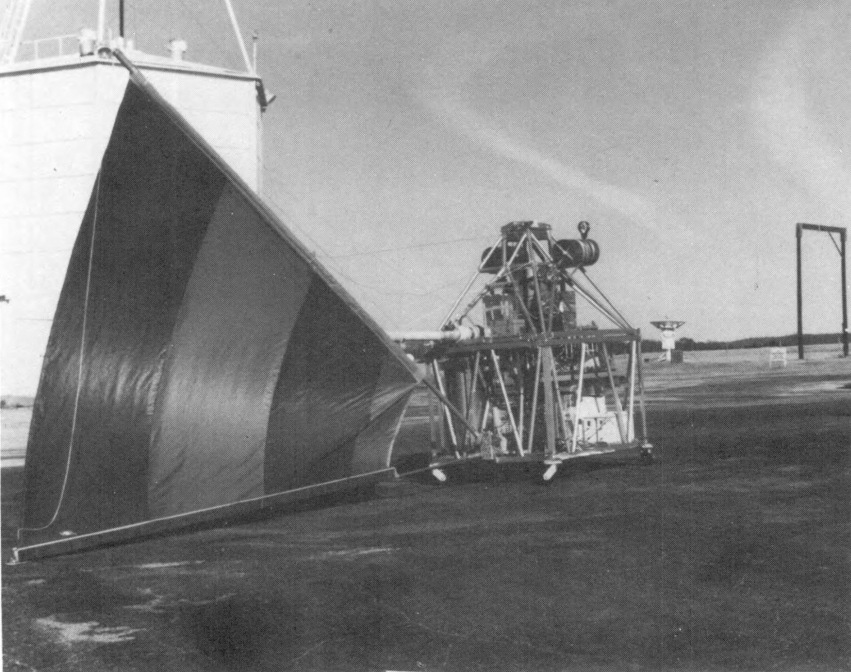
The gondola's orientation was maintained by a large wind vane sail, deployed after launch to weathercock the gondola into the shear wind. The sail, constructed from lightweight nylon and supported by aluminum booms, exerted a restoring torque sufficient to align the gondola into the relative wind at high altitudes. This pointing was verified through two flux gate magnetometers and three onboard anemometers, including modified Gill propeller types and a commercial Davis model. These devices measured the yaw angle and wind speed respectively, allowing for real-time assessment of orientation and the presence of wind sufficient to support contamination-free sampling.
To overcome extremely low temperatures and pressures, valves and motors were cold-soaked or immersed in liquid nitrogen during pre-flight checks. Heaters and insulation were applied to critical electronic enclosures to maintain function during extended high-altitude exposure.
Details of the balloon flight
Balloon launched on: 1/17/1976
Launch site: National Scientific Balloon Facility (NSBF), Palestine, Texas, US
Balloon launched by: National Scientific Balloon Facility (NSBF)
Balloon manufacturer/size/composition: Zero Pressure Balloon Winzen 329.213 m3 (12.70 Microns - Stratofilm)
Flight identification number: 941P
End of flight (L for landing time, W for last contact, otherwise termination time): 1/17/1976
Balloon flight duration (F: time at float only, otherwise total flight time in d:days / h:hours or m:minutes - ): F 5 h 55 m
Payload weight: 1085 kgs.
The balloon was launched on January 17, 1976 from the NCAR's scientific balloon flight station in Palestine, Texas. While ascending, the gondola was lowered by NCAR's reel-down system. At around 15 km, the wind vane was deployed. The aerosol experiment collected samples at four discrete altitudes (approximately 20, 24, 28.3, and 32 km) during ascent, each for about 10 minutes. Following ascent, the balloon was held at 36 km for two hours while the cryosampler collected 300 liters of air. The balloon was then vented and re-ballasted to a second float altitude of 28.5 km for another hour of gas sampling, collecting an additional 400 liters. Whole-air grab samples were also taken at both float altitudes.
Wind-pointing performance varied according to wind conditions. The gondola demonstrated stable pointing for the majority of the flight. It behaved like a torsion pendulum, oscillating around the wind direction when disturbed by gusts or changes in wind speed and direction. Analysis of yaw motion and wind speed during periods of stable and unstable wind showed good correlation between predicted aerodynamic forces and actual gondola behavior. In-flight data confirmed the efficacy of the wind vane and the propeller anemometers, although one modified anemometer failed early, and another experienced intermittent electronic issues due to temperature. Nonetheless, sufficient data were collected to confirm the utility of the wind-pointing concept.
Throughout the flight, brief intervals of gondola drift occurred when wind speeds dropped below threshold levels. However, the design effectively minimized contamination, and performance during higher wind periods was excellent. The experiment validated the feasibility of using a wind-pointing gondola for high-altitude trace gas and aerosol collection, and recommendations for improvements included better magnetometer resolution, improved anemometer sensitivity, and automation of inlet valving based on wind conditions to further reduce contamination risk.
External references
- Gas sampling and aerosol experiments on a wind-pointing gondola Proceedings, Ninth AFGL Scientific Balloon Symposium (1976)
- National Scientific Balloon Facility Annual Report FY 1976 National Center for Atmospheric Research, March 1977
Images of the mission
If you consider this website interesting or useful, you can help me to keep it up and running with a small donation to cover the operational costs. Just the equivalent of the price of a cup of coffee helps a lot.